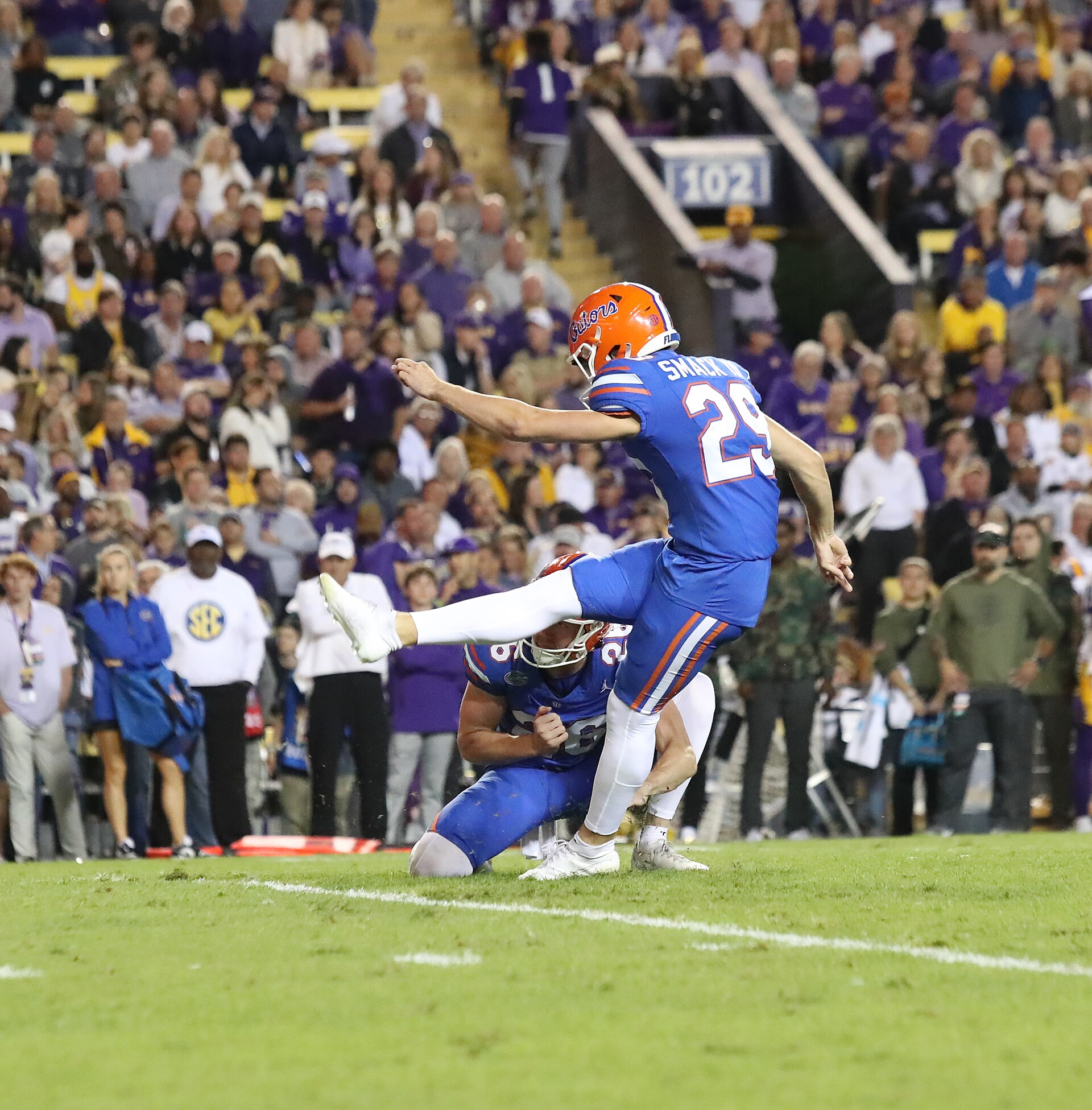
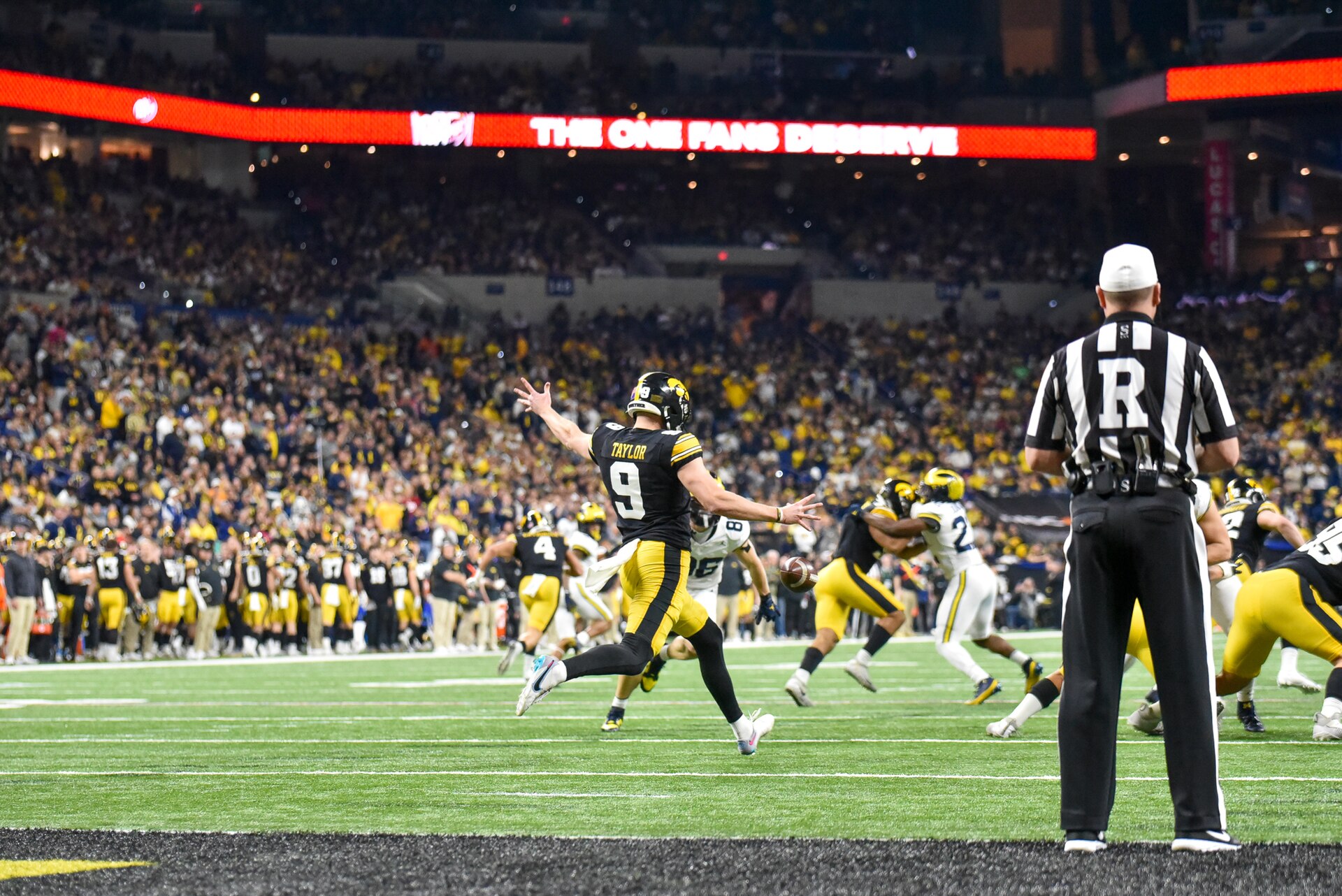
Crawshaw’s first major break came when ProKick Australia coach John Smith helped bring him to Florida’s attention. He earned the Gators’ starting punting role as a freshman in 2021 and averaged 46.3 yards per punt during his first season as a starter.
Jeremy in the news
NFL
Jeremy Crawshaw’s eight-punt workload made Denver’s overtime win a field-position fight
In a low-scoring Thursday night battle, Jeremy Crawshaw was repeatedly asked to tilt the field for Denver. His eight-punt workload did not decide the Broncos’ 17-14 overtime win alone, but it underlined how central Australia’s latest NFL punter has become to Denver’s developing identity.
A game shaped by territoryThere was little room for Denver to hide against Seattle on Thursday night. The Broncos led early, watched the Seahawks force overtime and ultimately needed an interception and a 53-yard field goal to secure a 17-14 win. Between those decisive moments, the game was repeatedly compressed into a contest over field position.
That made Jeremy Crawshaw one of Denver’s most important players, even though his name never appeared on the scoreboard. The Australian punter was called upon eight times, driving the ball 395 yards at an average of 49.4 yards per punt. Two of those kicks finished inside Seattle’s 20-yard line, while his longest travelled 56 yards. The official Broncos game log records the same workload and confirms that he helped flip the field in several key moments. (denverbroncos.com)
The value of being neededEight punts is not simply a statistical curiosity in a 60-minute game that went to overtime. It is a sign that Denver’s offence was repeatedly failing to sustain drives, and that the Broncos trusted Crawshaw to prevent those stalled possessions from becoming damaging field-position losses.
That distinction matters. Punting is often treated as the clean-up act of an offence that has not done enough, but Denver’s night required more than distance. Crawshaw’s job was to make Seattle start again, ideally from deep, and give the Broncos’ defence the length of the field to work with. The 343 net yards recorded from his eight punts show that the overall territorial exchange was not perfect—Seattle generated 52 return yards—but Crawshaw still supplied Denver with consistent relief in a game where every possession carried disproportionate weight. (denverbroncos.com)
A quieter part of Crawshaw’s second seasonThis was a different test from the Thursday-night spotlight that had been waiting for him at altitude. The earlier question was whether Crawshaw’s second-season progress could withstand the unusual demands of Denver’s environment and a prime-time opponent. Against Seattle, the question became more practical: could he keep delivering when the Broncos’ offence kept sending him back onto the field?
The answer was largely yes. Crawshaw did not produce a spectacular single kick that defined the night, nor did he need to. His performance was built around repetition—eight chances to create distance, eight chances to protect Denver from poor starting position and eight chances to give the defence a more manageable assignment. That is a different form of development, one that reflects trust rather than novelty.
The Australian connection in Denver’s formulaCrawshaw, who was born in Emu Plains, New South Wales, arrived in Denver as a sixth-round pick in the 2025 NFL Draft after developing through Florida and the ProKick Australia pathway. His route into the league was always likely to be judged through specialist details: hang time, placement, consistency and the ability to respond when a game becomes a field-position contest. (pro-football-reference.com)
Thursday’s performance offered a clear example of why that role matters. Denver did not win because its offence dominated Seattle. It won because the Broncos stayed alive in a narrow game, their defence made the critical overtime play and Wil Lutz finished the job. Crawshaw’s contribution sat underneath all of it, helping keep the contest from tilting too far while Denver searched for its opening.
More than a big numberThe eight-punt workload should not be mistaken for a perfect night or treated as proof that Denver has solved its offensive inconsistencies. It was, instead, a meaningful snapshot of Crawshaw’s current place in the team: no longer simply a young Australian learning the rhythms of the NFL, but a specialist Denver was willing to lean on when the margin for error disappeared.
For a punter, that trust is often measured in the moments when the rest of the game becomes uncomfortable. On October 15, Denver needed someone to keep its defence in the fight, and Crawshaw was asked to do it again and again. The Broncos left with a 17-14 overtime victory and a 4-2 record. Crawshaw left with a performance that made his importance impossible to overlook. (seahawks.com)
SourcesJeremy CrawshawJeremy Crawshaw Stats, Height, Weight, Position, Draft, College | Pro-Football-Reference.comSeahawks at Broncos Game Center | Seattle Seahawks – Seahawks.comJeremy Crawshaw player logs — Denver BroncosCover 4: Broncos knock off defending champs with 17-14 prime-time win over SeahawksJeremy Crawshaw Stats, Height, Weight, Position, Draft, College — Pro-Football-ReferenceSeahawks-Broncos on Thursday Night Football: What We Learned from Denver’s 17-14 overtime victory — NFL.comHeader image: 111123 LSU Tigers vs Florida State Gators 054.jpg (CC BY 2.0) — Wikimedia Commons · CC BY 2.0
NFL
Jeremy Crawshaw’s second-season progress gets a Thursday-night stress test at altitude
Denver’s Australian punter has built an early-season platform on distance and placement. Against Seattle on Thursday, the next step is showing that progress under the sharper pressure of prime time.
The next test is less about volume than controlJeremy Crawshaw arrives at Thursday night’s meeting with Seattle carrying the kind of early-season numbers that invite closer inspection rather than easy celebration. Denver’s official player page credits the Australian with 19 punts for a 49.74-yard average, including nine placed inside the 20. His longest kick has travelled 68 yards. (denverbroncos.com)
Those figures describe a punter giving Denver both distance and territory. But the more important development is the shape of his role: Crawshaw is no longer simply trying to establish that he belongs in the NFL. After a rookie season in which he punted in every regular-season game and set a Broncos single-season record with a 47.6-yard average, he is now being asked to turn that baseline into week-to-week influence. (denverbroncos.com)
Prime time makes the hidden work visibleThe Seahawks visit Empower Field at Mile High on Thursday, October 15, in a nationally featured Week 6 game scheduled for 8:15 p.m. Eastern time. Both teams enter at 3-2, giving the matchup a meaningful early-season edge even before field position becomes part of the conversation. (nfl.com)
For Crawshaw, the spotlight changes very little about the job itself. The operation remains a sequence of decisions made in seconds: how much height to put on the ball, where to challenge the returner, and how aggressively to pursue distance without conceding a return lane. Yet Thursday football compresses the margin for a mistake. A short field can become an immediate scoring opportunity, while a well-executed punt can alter the terms of an entire possession.
That is where the nine punts inside the 20 matter. They are not merely a record of kicks that travelled far enough. They are evidence of Denver using Crawshaw to finish drives with the opponent pinned back, giving the Broncos’ defence more room to work and forcing Seattle’s offence to build possessions from poor field position.
A second season with a higher expectationCrawshaw’s first year already carried unusual weight. Selected by Denver in the sixth round of the 2025 NFL Draft after his Florida career, he became a full-time starter immediately and was named to the PFWA All-Rookie Team. His first season established reliability; this one is about whether reliability can become a genuine competitive advantage. (denverbroncos.com)
The distinction is important for an Australian punter. The job can be excellent without being conspicuous, particularly when the offence is moving the ball and the defence is controlling games. But Denver’s current profile makes special teams more consequential. The Broncos are 3-2 after beating the Los Angeles Chargers 23-17 on October 11, and Thursday’s short turnaround gives both teams less time to manufacture offensive rhythm. (nfl.com)
That environment should suit a player whose value is measured in repeatable execution. Crawshaw does not need to dominate the game to shape it. A clean exchange, a high ball, a favourable bounce and a tackle that prevents hidden yardage can quietly shift the night towards Denver.
The Australian thread in Denver’s field positionThere is also a human progression behind the numbers. Crawshaw came to the NFL through the Australian punting pathway, then moved from being an intriguing specialist prospect to a player Denver trusted with every regular-season punt as a rookie. Now, in his second season, the challenge is more demanding: not proving that he can survive the league, but demonstrating that he can keep improving after opponents have a full season of evidence on him. (denverbroncos.com)
Seattle provides an appropriate measuring stick. The Seahawks are not a ceremonial opponent, and Thursday’s national platform will make every possession feel more consequential. If Denver is forced to punt, Crawshaw’s response will be part of the game’s tactical fabric—whether he is protecting a lead, relieving pressure after a stalled drive or helping the Broncos’ defence begin another series with the field tilted in its favour.
That is the real second-season spotlight. The question is not whether Crawshaw can produce one impressive kick. It is whether his developing command can keep appearing at the moments Denver needs it most.
SourcesJeremy CrawshawNFL 2026 Denver Broncos Schedule | NFL.comJeremy Crawshaw – Denver Broncos official player page2026 Denver Broncos schedule – NFL.comHow To Watch, Listen And Follow Seahawks at Broncos in Week 6Jeremy Crawshaw statistics and game log – Pro-Football-ReferenceHeader image: 111123 LSU Tigers vs Florida State Gators 054.jpg (CC BY 2.0) — Wikimedia Commons · CC BY 2.0
NFL
Jeremy Crawshaw is turning Denver’s weekly punt duty into a reliability test he is passing
Four games into the 2026 season, Jeremy Crawshaw’s value is becoming less about rookie intrigue and more about repeatable execution for Denver’s special-teams unit.
The role is becoming dependableJeremy Crawshaw has moved beyond the novelty of an Australian punter making his NFL entrance. Through four games of the 2026 season, the Denver Broncos’ second-year specialist has punted 19 times for 945 yards, with nine kicks placed inside the 20 and a 45.3-yard net average. Those figures are recorded by both the NFL and Pro-Football-Reference. (nfl.com)
The important change is not simply that Crawshaw is producing a strong average. Denver is getting a stable result each week, regardless of how often the offence stalls or where the punt is taken. He has already handled six punts in the opening loss to Kansas City, three against Jacksonville, five against the Rams and five in Sunday’s 24-14 loss at San Francisco. (nfl.com)
San Francisco offered the clearest recent evidenceCrawshaw’s Week 4 performance was the most convincing example of his current role. He punted five times for 246 yards, averaged 49.2 yards and produced four punts inside the 20, according to the game log. None of those punts was returned, leaving San Francisco with no return-yardage gain on the night. (pro-football-reference.com)
That is a useful distinction for evaluating a punter. Crawshaw did not need an extraordinary distance figure to influence the game. His strongest contribution came from giving Denver’s coverage unit manageable outcomes: enough length to avoid a short-field concession, enough placement to force the 49ers to begin drives deep in their own territory, and no return that turned a routine punt into hidden field position for the opponent. This is an assessment of the game data rather than a claim that he independently decided the result.
The consistency is visible against last seasonCrawshaw’s 45.3 net average after four games is already well above the 41.1 net average he posted across 75 punts in his 2025 rookie season. His raw 2026 average is also higher, at 49.7 yards compared with 47.6 last year. Denver’s official player page lists 19 punts and nine inside the 20 this season, while also noting that he played all 17 regular-season games in 2025. (denverbroncos.com)
Four games is still a small sample, and the comparison should not be treated as a forecast for the entire season. Return rates, starting field position and game state can shift quickly. But the early evidence suggests that Crawshaw is not merely reproducing last year’s workload. He is beginning this season with fewer wasted outcomes: no blocked punts, a strong net figure and nearly one punt inside the 20 for every two attempts. (nfl.com)
Denver can plan around himThe Broncos’ current relationship with Crawshaw is becoming operational rather than developmental. He is not being used as a specialist the team hopes will eventually settle into the job; he is already the established punter and is giving Denver a predictable answer when a drive ends outside scoring range. The official roster lists him as active, with 19 punts and nine inside the 20 through four games. (denverbroncos.com)
That matters because reliability changes how a coaching staff manages marginal possessions. Denver can accept a punt decision knowing Crawshaw has produced a solid net return on the season and has shown he can combine distance with placement. The next test is sustaining that standard as opponents adjust and the schedule creates different weather, field-position and return-game demands. For now, the evidence supports a narrower but stronger conclusion: Crawshaw has become a dependable weekly weapon, not just an intriguing young player.
SourcesJeremy Crawshaw Career Stats | NFL.comJeremy Crawshaw Stats Summary | NFL.comJeremy Crawshaw Stats, Height, Weight, Position, Draft, College | Pro-Football-Reference.comJeremy CrawshawJeremy Crawshaw Career Stats — NFL.comJeremy Crawshaw Stats — Pro-Football-ReferenceJeremy Crawshaw — Denver Broncos rosterJeremy Crawshaw Stats Summary — NFL.comHeader image: 111123 LSU Tigers vs Florida State Gators 054.jpg (CC BY 2.0) — Wikimedia Commons · CC BY 2.0
NFL
Jeremy Crawshaw is testing Denver’s field-position model beyond raw punt distance
With Denver travelling to San Francisco on October 4, Jeremy Crawshaw’s early-season numbers show why punting value is increasingly being judged by net gain, placement and return control rather than headline distance alone.
The useful number is what Denver keeps after the returnJeremy Crawshaw has already become a relevant Australian lens on the NFL’s changing punting conversation. Through Denver’s first three games, he has punted 14 times — second-most among qualified NFL punters — while producing a 45.29-yard net average, ranked seventh in the league by PFF. He has also placed five punts inside the 20, with one touchback and 45 return yards against. (nfl.com)
That profile is more revealing than his 49.9-yard gross average. Gross distance measures how far the ball travelled. Net average includes the return and therefore says more about the field position Denver actually bought. Crawshaw’s current 4.6-yard gap between gross and net average is manageable, but the broader point is that Denver is not simply asking him to launch the ball. The outcome is being judged after coverage, return and placement have all been accounted for.
Why the discussion is moving nowPunting has become a particularly visible part of the early 2026 field-position battle because the league’s basic statistical menu now makes the trade-offs easier to see. The NFL records gross yards, net yards, punts inside the 20, touchbacks, fair catches and return yards as separate outcomes rather than treating a punt as one distance figure. (nfl.com)
That matters because the best decision is not always the longest kick. A punt from near midfield may be successful if it is downed inside the 10, while a booming kick from deep in a team’s own territory can lose much of its value through a return or a touchback. PFF’s 2026 leaderboard reflects that broader framing by presenting net average, inside-20 totals, return rate, yards per return, touchbacks, fair catches and downed punts alongside distance. (pff.com)
The trend is therefore less about abandoning raw distance than putting it in the correct order. Net average captures immediate field-position efficiency. Inside-20 placement measures whether the punter can finish a drive without gifting the opponent the 20-yard line. Return control shows whether the kick and coverage unit prevented the opponent from recovering the lost field position.
Crawshaw’s Denver case studyCrawshaw’s numbers are useful because the workload is already substantial without making him the story of a single high-volume game. His 14 punts are tied to Denver’s 2-1 start and give the Broncos a meaningful sample ahead of Sunday’s visit to the unbeaten 49ers. Denver’s official preview identifies San Francisco as a 3-0 opponent and confirms the October 4 matchup at Levi’s Stadium. (denverbroncos.com)
The Australian’s value so far is the combination: high usage, top-seven net average and five inside-20 punts. The placement number is not league-leading — PFF ranks him 13th in inside-20 punts — and his return rate is listed at 42.9 per cent, 16th among qualified punters. That prevents an overstatement. Crawshaw is not dominating every efficiency category; he is producing a strong overall field-position profile while Denver has leaned on him more than most teams have leaned on their punters. (pff.com)
San Francisco will test whether that profile travels into a tighter tactical environment. The 49ers’ 3-0 start and Denver’s reliance on defensive pressure create the kind of matchup in which a few yards of starting field position can change play-calling. Crawshaw’s task will not simply be to clear 50 yards. It will be to choose the correct flight and placement for the field location, keep returns contained and avoid turning a defensive stop into a manageable 20-yard possession.
The metric to watch is the interactionThe important development is that no single punting statistic fully explains value. Net average can be helped or hurt by coverage. Inside-20 totals are shaped by where a team punts from. Return rate depends partly on whether the opponent fields the ball and how the coverage unit tackles. Crawshaw’s early season is interesting precisely because it sits across those categories rather than winning the argument with one spectacular number.
For Denver, the field-position model is working when those metrics reinforce one another: a punt that travels far enough, lands in a difficult return situation, finishes inside the 20 and does not produce a touchback. Crawshaw is already close enough to that standard to make Sunday’s game a useful test. The question is not whether he can punt long. It is whether his next set of kicks can keep Denver’s defensive advantage intact after the ball changes hands.
SourcesJeremy Crawshaw Stats Summary | NFL.comJeremy Crawshaw | Denver Broncos P | NFL and PFF statsHow to Watch: Broncos at 49ersJeremy Crawshaw Stats SummaryJeremy Crawshaw — Denver Broncos P and PFF statsDenver Broncos at San Francisco 49ers: How to watch, listen and live stream the Broncos’ Week 4 gameNFL 2026 Denver Broncos ScheduleNFL Record and Fact Book — Individual Punting StatisticsHeader image: 111123 LSU Tigers vs Florida State Gators 054.jpg (CC BY 2.0) — Wikimedia Commons · CC BY 2.0
NFL
Jeremy Crawshaw’s five-punt workload underlines Denver’s reliance on field position
Jeremy Crawshaw’s latest performance did not decide Denver’s 30-26 win over the Los Angeles Rams, but it reinforced how central the Australian punter has become to the Broncos’ ability to manage tight games.
A busy night in a close contestJeremy Crawshaw was called on five times in Denver’s 30-26 victory over the Los Angeles Rams on September 27, producing 247 yards at a 49.4-yard average and placing two punts inside the 20. The workload was notable less for its raw volume than for the game context: Denver trailed 16-0 at half-time before recovering to win by four points. (nfl.com)
The official NFL game log lists Crawshaw’s Rams output as five punts for 247 yards, while third-party reporting has listed the total as 248 yards. The one-yard discrepancy does not materially change the broader picture, but the NFL figure is the safer reference point for this article. (nfl.com)
Denver’s early-season patternCrawshaw’s Week 3 outing followed six punts for 314 yards against Kansas City and three for 137 yards against Jacksonville. Through three regular-season games, the NFL’s log records 14 punts for 698 yards, with three inside the 20 against the Chiefs, none against the Jaguars and two against the Rams. (nfl.com)
That distribution matters because Denver is not using its punter only after extended offensive failures. The Broncos are operating in games where possession and territory remain live late: they lost 31-10 to Kansas City, beat Jacksonville 20-13 and then overturned a 16-point deficit against Los Angeles. In that setting, a punt is often part of a field-position decision rather than a simple surrender of the football. The game results and Crawshaw’s workload support that interpretation, although the available sources do not establish a formal team directive or a specific tactical instruction from coach Sean Payton. (nfl.com)
The value beyond distanceCrawshaw’s average against the Rams was strong, but the more useful measure for Denver was where two of those kicks ended. Inside-the-20 punts can compress an opponent’s starting position and give the defence a longer field, a particularly relevant exchange when a game is decided by a late possession or a narrow margin. That is an inference from the scoring context and the punt locations, not evidence that Crawshaw alone created Denver’s win. (nfl.com)
The early numbers also show why the Broncos’ reliance cannot be reduced to headline distance. Crawshaw’s biggest workload came in the Kansas City loss, while his most recent appearance combined five attempts with two inside-20 results in a game Denver eventually won. The pattern is consistent with a specialist being asked to protect field position across different game scripts, rather than simply being measured by his longest kick or gross average. (nfl.com)
A role becoming more consequentialAt 2-1, Denver has already played three games separated by margins of 11 points, seven points and four points. That is a small sample, and it would be premature to call Crawshaw a decisive factor in the Broncos’ start. But it does make his role increasingly consequential: Denver’s offence has not controlled every game, and the team has repeatedly needed special teams to help manage the space between possessions. (nfl.com)
The next test is whether this remains a recurring feature rather than a short-term workload spike. For now, the confirmed development is straightforward. Crawshaw is active, handling Denver’s full punting responsibility and producing a strong Week 3 average with two inside-20 punts. In a competitive win that swung from a 16-point deficit to a four-point result, those duties gave the Australian another substantial opportunity to influence the field-position battle—even if the final margin belonged to the Broncos’ late offensive and defensive plays. (nfl.com)
SourcesJeremy Crawshaw Logs Stats | NFL.comJeremy Crawshaw Logs Stats | NFL.comLos Angeles Rams at Denver Broncos 2026 REG 3 — Game Center | NFL.comThe Rams felt they should have beaten the Broncos. The reality is they’re 1-2 | NFL.comSean Payton on comeback vs. Rams: Broncos must play better in first half | NFL.comHeader image: 111123 LSU Tigers vs Florida State Gators 054.jpg (CC BY 2.0) — Wikimedia Commons · CC BY 2.0
NFL
Jeremy Crawshaw’s Rams test will show whether Denver’s field-position plan travels beyond the numbers
After nine punts in Denver’s opening two games, Jeremy Crawshaw has already become part of the Broncos’ field-position identity. Against the Rams, the Australian punter faces a more revealing question: can he keep turning stalled drives into defensive leverage against one of the league’s most dangerous offences?
A bigger test than the averageJeremy Crawshaw has been busy enough to matter, but not so busy that his early-season numbers can be treated as a finished evaluation. Through Denver’s 1-1 start, the Australian has punted nine times for 451 yards, averaging 50.1 yards gross and 45.8 net, with three kicks placed inside the 20-yard line. The Broncos’ official statistics also show one touchback, one downed punt and a long of 68 yards. (denverbroncos.com)
The headline figures are strong, particularly the net average. But Sunday night’s meeting with the Los Angeles Rams should provide a sharper test of what those numbers mean in context. Denver hosts Los Angeles at Empower Field at Mile High on September 27, with both teams entering Week 3 at 1-1. (denverbroncos.com)
The Rams change the calculationThe Rams are not simply another opponent to be pushed back by distance. Their offence arrives in Denver after a 28-6 win over the New York Giants on September 21, and the matchup places particular pressure on Denver to avoid giving Matthew Stafford and his supporting cast short fields. The Broncos’ own preview describes Los Angeles as an offence led by a reigning MVP and one that topped the NFL in total offence and scoring offence in 2025. (denverbroncos.com)
That makes Crawshaw’s tactical role more specific than merely producing a respectable average. When Denver cannot finish a drive, the ideal punt must change the starting point of the next one without surrendering a return opportunity or giving the Rams an easy touchback. Three inside-20 punts from nine attempts suggest that Crawshaw has already shown some control, but the Rams should test whether Denver can consistently create that kind of outcome against a more threatening attack.
The detail behind the resultExternal tracking points in the same direction, while also adding some caution. Pro Football Focus lists Crawshaw’s 45.78-yard net average as sixth among qualified punters and his nine punts as seventh in the league by volume. It also records three punts inside the 20, one touchback, one downed punt and an average hang time of 4.15 seconds. (pff.com)
Those rankings are useful context, but they are not the story by themselves. The more meaningful development is that Denver has been able to use Crawshaw in different situations across its first two games: six punts in the Week 1 loss at Kansas City, followed by three in the 20-13 Week 2 win over Jacksonville. The official game log shows three punts for 137 yards against the Jaguars, including two fair catches and no inside-20 placement, after three inside-20 punts in Kansas City. (denverbroncos.com)
That contrast matters. It indicates that Crawshaw’s early value has not come from one repeatable box-score pattern. Some outings have demanded distance; others have offered fewer opportunities and different field-position choices. Against Los Angeles, the question will be whether he can adjust again as the game state changes.
A result that will be felt beyond the punterFor Crawshaw, this is an opportunity to turn promising production into a more established part of Denver’s weekly formula. A clean outing will not necessarily appear in spectacular individual numbers. It may instead be visible in the Rams starting drives farther from midfield, in Denver’s defence receiving room to work, or in the Broncos avoiding the kind of hidden-yardage loss that can swing a close game.
That is the human meaning of the assignment for the Australian: he is no longer simply trying to prove that he belongs on an NFL roster. After a 2025 season in which he punted in all 17 regular-season games and set a Denver franchise record with a 47.6-yard average, Crawshaw is now being asked to help define how the Broncos manage difficult possessions. (denverbroncos.com)
The Rams matchup will not settle his season, and nine punts remain a small sample. But it can show whether Crawshaw’s early field-position profile is portable against a high-end offence — and whether Denver’s 1-1 start has the Australian punter functioning as a genuine strategic lever rather than simply the final player on a stalled drive.
SourcesJeremy CrawshawDenver BroncosJeremy Crawshaw | Denver Broncos P | NFL and PFF statsJeremy Crawshaw — Denver Broncos player profile and 2026 statisticsDenver Broncos gameday — Rams vs Broncos, Week 3Los Angeles Rams 2026 schedule — NFL.comJeremy Crawshaw NFL and PFF statisticsHeader image: 111123 LSU Tigers vs Florida State Gators 054.jpg (CC BY 2.0) — Wikimedia Commons · CC BY 2.0
NFL
Jeremy Crawshaw’s early-season numbers show why punting value is moving beyond distance
Jeremy Crawshaw’s first two regular-season games offer a measured example of the modern Australian punter profile: enough leg strength to change field position, but with value increasingly judged by net outcome, placement and the avoidance of wasted distance.
The headline number has already changedJeremy Crawshaw entered the season with the profile Denver expected from a sixth-round investment: a powerful leg, altitude-assisted upside and the capacity to flip the field from deep positions. After two regular-season games, however, the most useful reading of his performance is not simply the 68-yard long punt or his 50.1-yard gross average.
The Denver Broncos’ official statistics list Crawshaw with nine punts for 451 yards, a 45.8-yard net average and three punts inside the 20-yard line. That is a more current picture than the earlier six-punt sample that showed a 47.8-yard net average. The six-punt figure applied after Week 1; Crawshaw’s three punts against Jacksonville on September 20 lowered the season net average while leaving his inside-20 total unchanged. (denverbroncos.com)
That distinction matters because punting is not a pure distance contest. A punt can travel a long way and still produce a poor result if it allows a return, reaches the end zone for a touchback or gives the coverage unit too much ground to defend. Net average captures some of those consequences, while inside-20 results provide a basic measure of whether the kick has converted field position into defensive pressure.
Why the conversation is shifting nowThe current discussion around Australian punters is being driven by the growing visibility of multi-variable evaluation. NFL statistical pages now place gross average, net average, inside-20 punts, touchbacks, fair catches, returns and return yards alongside one another rather than treating raw distance as the definitive measure. The league’s 2026 punting table follows that structure, and Crawshaw’s own player page reports the same combination of outcomes. (nfl.com)
That framework is especially relevant early in a season, when a small number of punts can create misleading impressions. Crawshaw has nine attempts, so three inside-20 punts equates to one-third of his workload, but the sample is still too small to establish a stable long-term rate. His 45.8-yard net average is useful as an early indicator, not a final verdict. It also sits above the 2026 league-wide net-punting average of 41.4 yards per punt reported by Pro Football Reference, although team and field-position context must be considered before making a direct player comparison. (pro-football-reference.com)
The more important point is that directional control and net field position are now being discussed as complementary skills. A punter who can reduce return opportunities, keep the ball away from the middle of the field and place kicks where the coverage team has an advantage may create more defensive value than a punter who wins the gross-distance column but concedes field position through touchbacks or returns. Research on NFL punting evaluation has similarly treated inside-20 outcomes, return suppression and net yardage as connected measures rather than isolated statistics. (journals.sagepub.com)
Crawshaw is the useful Australian lensCrawshaw’s opening two games illustrate that balance without requiring the numbers to be overstated. His Week 1 performance at Kansas City produced six punts, a 52.3-yard gross average, a 47.8-yard net average and three inside-20 punts. In Week 2 against Jacksonville, he punted three times for a 45.7-yard average and a 41.7-yard net average, with no additional inside-20 result. (denverbroncos.com)
The Week 2 figures are not necessarily a setback. Denver won 20-13, and Crawshaw’s workload came in a different game script and from different field positions. The correct interpretation is that the early sample has already moved from a spectacular six-punt opening to a more ordinary nine-punt profile. That is precisely why net average and placement are more informative than a single long punt: they force evaluation to account for the full set of outcomes.
For Australian specialists, the lesson is practical. The pathway still rewards a powerful leg, but NFL survival depends on converting that power into repeatable field-position advantages. Crawshaw’s three inside-20 punts, 45.8-yard net average and four recorded returns for 19 yards show a player whose early value is being assessed across several dimensions, not through distance alone. (denverbroncos.com)
It is too early to describe Crawshaw as an established elite punter, and the available sample does not yet prove a durable directional profile. It does, however, make him a relevant case study for the current Australian blueprint: generate enough force to change the field, then show the control to ensure the kick’s final location matters as much as its flight distance.
SourcesJeremy CrawshawJeremy Crawshaw Stats Summary | NFL.comAll Leagues Season By Season Punting | Pro-Football-Reference.comA flight-based metric for evaluating NFL puntersJeremy CrawshawJeremy Crawshaw — Denver Broncos official roster and 2026 statisticsJeremy Crawshaw — Denver Broncos official game logsJeremy Crawshaw — NFL.com statistics2026 NFL punting statistics — Pro Football ReferenceA flight-based metric for evaluating NFL puntersHeader image: 111123 LSU Tigers vs Florida State Gators 054.jpg (CC BY 2.0) — Wikimedia Commons · CC BY 2.0
NFL
Jeremy Crawshaw’s season opener shows Denver’s big-leg promise still needs field-position precision
Jeremy Crawshaw produced the distance Denver drafted him for in Kansas City, but his six-punt workload also exposed the next step in the Australian’s development: turning power into repeatable control when the Broncos are under pressure.
The leg was never the questionJeremy Crawshaw’s 2026 season began with the sort of numbers that make a punter’s raw ability impossible to miss. In Denver’s 31–10 loss to Kansas City on September 14, the Australian punted six times for 314 yards, averaged 52.3 yards and launched a 68-yard long. The gross figures were not merely strong; they were the clearest expression yet of the power that helped make Crawshaw a sixth-round Broncos selection in 2025. (nfl.com)
It is worth correcting one detail in the original framing: this was not Crawshaw’s NFL debut. He played all 17 regular-season games for Denver in 2025, when his 47.6-yard average set a Broncos franchise record. This was his 2026 season opener — and a particularly demanding one, with Denver’s offence repeatedly unable to sustain drives against the Chiefs. (denverbroncos.com)
Distance against the scoreboardThat distinction matters because Crawshaw’s night was less a first impression than an early test of whether last season’s promise can become dependable weekly value. Denver needed its punter six times as Kansas City controlled the game, ran for 220 yards and held the ball for more than 33 minutes. The Broncos’ offence managed only 176 total yards and converted two of 12 third downs, creating the kind of field-position pressure in which every punt carries more tactical weight. (footballdb.com)
Crawshaw’s gross average supplied territory, but three of his six punts landed inside the 20. His net average was 47.8 yards, while Kansas City returned two punts for only seven yards. That is a useful baseline: the Chiefs did not turn Denver’s punting into a hidden weakness, and Crawshaw’s coverage unit limited the return damage. But neither did the night offer the complete field-position performance that his best 2025 games suggested was possible. (nfl.com)
The next layer of his roleFor Crawshaw, the meaningful question is therefore not whether he can hit a 68-yard punt. Denver already knows the answer. The more important question is how often that power can be shaped to the game situation: shorter, higher-control kicks when the opponent is backed up; touchline angles when the returner has room; and repeatable placement inside the 20 when the offence has handed him a difficult field. A big leg can flip the field. A complete punter can decide where the next possession begins. (denverbroncos.com)
Crawshaw showed evidence of that broader skill set last season. He finished 2025 with 30 punts inside the 20, ranking third in the NFL, alongside his franchise-record gross average. That combination is why the Denver job is about more than distance. The Kansas City numbers do not undermine his value; they establish the tension that will follow him through the season — whether his explosive range and his placement can consistently arrive together. (denverbroncos.com)
A meaningful opening, not a verdictThe loss also makes it difficult to isolate Crawshaw’s impact from Denver’s wider problems. A punter operating six times in a 21-point defeat is not being judged in a neutral environment. Field position was part of the Broncos’ survival plan, but it could not compensate for a struggling offence and a defence that allowed Kansas City to dictate the second half.
That is why the September 14 performance is best read as a development marker rather than a verdict. Crawshaw’s power translated immediately to NFL territory, and his net result remained strong. The next challenge is subtler and more valuable: making the punt less about how far the ball can travel and more about how reliably Denver can use it to constrain the opponent. For an Australian who has already established that he belongs in the league, that is the next step from promising specialist to field-position weapon.
SourcesJeremy Crawshaw Stats Summary | NFL.comJeremy CrawshawBroncos vs. Chiefs Box Score, September 14, 2026 | The Football DatabaseJeremy Crawshaw Stats Summary — NFL.comJeremy Crawshaw Career Stats — NFL.comJeremy Crawshaw — Denver Broncos official profileDenver Broncos at Kansas City Chiefs box score, September 14, 2026 — Football DatabaseHeader image: 111123 LSU Tigers vs Florida State Gators 054.jpg (CC BY 2.0) — Wikimedia Commons · CC BY 2.0
NFL
Tory Taylor is part of an Australian punting wave the NFL can no longer treat as a novelty
As the 2026 season approaches, Tory Taylor’s place on Chicago’s active roster helps show how Australian specialists have become a durable NFL presence across several clubs.
The conversation has changedFor years, Australian punters in the NFL were discussed as intriguing exceptions: gifted kickers arriving from a distant football culture, usually needing time to prove they could handle the league’s operation, pressure and tactical demands. That framing is becoming harder to sustain in 2026.
The reason is visible in the final roster picture. With the regular season beginning this week, Australia has four established punting options spread across different NFL teams: Michael Dickson remains Seattle’s long-term specialist, Cameron Johnston has won Pittsburgh’s punting job, Jeremy Crawshaw enters his second Denver season as the Broncos’ starter, and Tory Taylor is on Chicago’s active roster. Brett Thorson’s selection in Minnesota adds another Australian name to the wider discussion, although the central story is the number of credible specialists already occupying real NFL roles. Recent Australian coverage has consequently treated the group as a pipeline rather than a collection of isolated stories. (foxsports.com.au)
Taylor is the useful test caseThe cleanest lens for that shift is Tory Taylor. The Bears have not carried him into 2026 as a speculative camp arm or a developmental stash. Chicago’s official roster lists Taylor as its active punter, while the NFL’s roster page also identifies him as active. The Bears’ initial 53-man roster likewise included him among the team’s specialists. (nfl.com)
That matters because punters occupy a particularly unforgiving roster niche. There is generally one job, one game-day specialist and little room for a developmental compromise. A club can experiment with a backup quarterback or carry a young receiver behind veterans; it does not usually carry two genuine punters for long. Taylor’s continued place in Chicago therefore represents a direct decision: the Bears believe his value is ready for the regular season, not merely worth exploring.
His preseason workload offered a current reminder of what Chicago is backing. Across three games, Taylor punted 12 times for 611 yards, with a 50.9-yard gross average and three punts inside the 20, according to the NFL’s 2026 logs. Those numbers are preseason evidence rather than a forecast of regular-season performance, but they provide a concrete starting point as the Bears prepare for Week 1. (nfl.com)
Established does not mean identicalThe Australian group is not successful because every punter has followed the same route or carries the same status. Dickson is the veteran anchor. Seattle’s 2026 roster coverage describes him as one of the club’s longest-continuously-tenured players and confirms the Seahawks are returning the same specialist trio for a fourth consecutive season. (seahawks.com)
Johnston represents another form of durability. Pittsburgh’s initial 53-man roster names him as the Steelers’ punter after his return to the club, giving him a settled job rather than another open-ended tryout. (steelers.com) Crawshaw is the younger success story: Denver retained him after a 2025 season in which he played all 17 regular-season games, set a franchise record for season punt average and earned PFWA All-Rookie recognition. The Broncos’ 2026 roster announcement again lists him as the starter. (denverbroncos.com)
That range is the important point. Australian punters are appearing as a veteran constant, a returning starter, a second-year incumbent and an early-career player trying to establish himself. The pathway is no longer being judged solely by whether one exceptional player can survive.
Why the discussion matters nowThe timing gives the trend more weight. September roster decisions are the league’s hard checkpoint: camp invitations and preseason opportunities have been replaced by active-roster jobs, weekly game plans and the risk of being challenged every Sunday. Taylor has cleared that checkpoint in Chicago, while Dickson, Johnston and Crawshaw have done so in Seattle, Pittsburgh and Denver. (chicagobears.com)
That does not prove Australia will dominate the punting market, nor does it guarantee that every name remains in place all season. NFL rosters are fluid, and performance, injury and transaction pressure can change the picture quickly. But the opening-week evidence supports a more durable conclusion: Australian specialists are now entering an NFL season as a recognisable working class of players across multiple clubs.
Taylor is central to that argument because Chicago is not offering him a ceremonial role. The Bears are asking him to execute immediately, in a league where field position is a weekly calculation and one poor punt can flip a game. If he delivers, the result will not simply be another chapter in Taylor’s development. It will strengthen the broader idea that Australian punters have moved from novelty act to dependable NFL infrastructure.
SourcesNFL 2026: Australians in NFL this season, Jordan Mailata, Michael Dickson, Cameron Johnston, Tory Taylor, Aussie players on practice squads, teams, season previewChicago Bears 2026 Player Roster | NFL.comTory Taylor 2026 Logs Stats | NFL.comMichael DicksonSteelers initial 2026 53-man rosterDenver Broncos Rosters | Denver Broncos – denverbroncos.comTeam Roster | Chicago Bears Official WebsiteChicago Bears 2026 Player RosterNFL.com — Tory Taylor 2026 Logs StatsChicago Bears — 2026 Initial 53-Man RosterHeader image: https://www.flickr.com/photos/maizenbluenation/53374068004/ (CC BY 2.0) — Wikimedia Commons · CC BY 2.0
NFL
Jeremy Crawshaw survives Denver’s final cutdown and enters 2026 as the Broncos’ punter
Jeremy Crawshaw has made Denver’s initial 53-man roster, ending the most consequential phase of the Broncos’ unusually extended evaluation of the Australian punter. The roster spot gives him the clearest route yet to open the regular season as the club’s established option at the position.
The decision is now officialJeremy Crawshaw is listed as Denver’s punter on the Broncos’ initial 53-man roster announced on Sunday, August 30. The club carried only two specialists — kicker Wil Lutz and Crawshaw — while leaving long snapper Mitchell Fraboni off the initial group. (denverbroncos.com)
That is the decisive outcome from a position that had attracted more scrutiny than usual during the preseason. Crawshaw was not merely retained as a developmental extra: Denver’s published roster identifies him as the only punter in the squad, and the NFL’s 2026 Broncos roster also lists him at No. 16. (denverbroncos.com)
Why the roster construction mattersThe significance is less about the number 53 than about role clarity. Denver’s initial roster has no second punter listed, so Crawshaw enters the regular-season build as the team’s designated option rather than as one half of an unresolved competition. That does not make the job permanently immune from change — NFL rosters remain fluid after cutdown day — but it removes the immediate threat of being displaced before Week 1. (denverbroncos.com)
The absence of a long snapper is also notable. Denver’s official transaction report says the club released Mitchell Fraboni while finalising the roster, meaning the specialists group was prioritised around the kicker and punter before subsequent roster management. It is not evidence that every operational detail is settled, but it does show Crawshaw was included in the club’s initial 53-man calculation rather than squeezed out to preserve another specialist spot. (denverbroncos.com)
From rookie production to expected responsibilityCrawshaw’s first NFL season supplied a credible statistical base for the decision. Denver’s player profile records 75 punts in 2025, an average of 47.64 yards, a long of 76 yards and 30 punts inside the 20-yard line. The raw average explains why the Broncos have continued to invest in his leg strength; the inside-20 total is more relevant to his expected role, because field-position value depends on where the punt finishes, not simply how far it travels. (denverbroncos.com)
The Broncos’ profile also notes that Crawshaw was named to the Pro Football Writers of America All-Rookie team after finishing with the highest yards-per-punt average among the three rookie punters that season. That recognition does not settle questions about consistency, placement or protection, but it gives Denver a meaningful performance reason to prefer continuity over another late competition. (denverbroncos.com)
The next test is no longer selectionCrawshaw’s development now moves into a different phase. The immediate question was whether Denver would commit a roster place to him after a summer in which the position remained under examination. The answer is yes. The next questions are functional: whether he can translate his power into repeatable field-position gains, how he handles pressure situations and whether the Broncos’ coverage and protection units can support that production.
Denver’s official announcement remains careful to call the list an initial 53-man roster, with waiver claims, practice-squad formation and further transactions still to come. Crawshaw therefore has a roster foothold, not a lifetime guarantee. But on August 31, 2026, the evidence is clear enough to describe him as the Broncos’ established punter entering the regular-season preparation window — a materially stronger position than the uncertainty that defined his recent evaluation. (denverbroncos.com)
SourcesFirst look at the Broncos' 2026 initial 53-man rosterJeremy CrawshawBroncos make series of roster moves to reach 53-player roster limitFirst look at the Broncos’ 2026 initial 53-man rosterBroncos make series of roster moves to reach 53-player roster limitJeremy Crawshaw — Denver Broncos player profileDenver Broncos 2026 roster — NFL.com
NFL
Jeremy Crawshaw’s Denver roster case reaches its final, unusually protected checkpoint
Jeremy Crawshaw remains on Denver’s roster as the Broncos approach Sunday’s 53-man deadline, but the Australian punter’s position is not quite as simple as an ordinary cutdown decision.
The roster still carries Crawshaw — with an important asteriskJeremy Crawshaw remains listed by the Denver Broncos as a punter on August 30, the day every NFL team must reduce its Active/Inactive List to a maximum of 53 players. The league deadline is 4pm New York time, or 2pm in Denver. (nfl.com)
That makes Sunday a legitimate checkpoint for Crawshaw, but not necessarily a clean verdict on whether Denver has committed to him as its regular-season punter. The Broncos’ official roster currently places him in an exempt category, while NFL.com lists him as active on the team roster. (nfl.com)
The distinction matters because Denver has been carrying 91 players rather than the normal 90-man off-season limit. The extra place exists because of the international player exemption attached to Crawshaw, who was born in Australia. (denvergazette.com)
Denver’s decision is about the regular-season list, not just survival todayCrawshaw’s presence on the current roster therefore answers only part of the question. Denver can retain him through the cutdown process while using the exemption to preserve flexibility elsewhere, but the final 53-man roster must still show how the Broncos intend to handle the specialist position for the opening weeks of the season.
The key outcome is whether Crawshaw occupies one of the 53 active-list places, rather than simply remaining visible on the wider roster before the deadline. If he does, the Broncos will have converted an unusual roster mechanism into a clear regular-season decision: the Australian punter is their chosen option alongside kicker Wil Lutz and long snapper Mitchell Fraboni.
If he does not, his current listing will have been a useful but temporary protection during the final evaluation window. That would not automatically end his Denver pathway, with waived players unable to clear the process until Monday and practice-squad construction following afterwards. Denver coach Sean Payton has also indicated the club will delay Monday’s practice to allow time for those moves. (denvergazette.com)
The preseason question has narrowedThis is a different test from Crawshaw’s earlier preseason competition. The immediate issue is no longer whether Denver can carry him while evaluating the rest of the roster; the club has already used the exemption to do precisely that. Sunday asks whether the Broncos now regard the punting job as settled enough to spend a standard roster place on him.
That is a meaningful shift for a second-year Australian specialist. Crawshaw has reached the final cutdown day with his roster status intact, but the exemption means the most important part of the decision is hidden behind the listing. His position will be confirmed only when Denver’s 53-man structure is published and the exempt designation no longer does the explanatory work.
For Crawshaw, then, the final checkpoint is less a dramatic last-minute audition than an administrative reveal. Denver’s current roster says he remains in the picture. The 53-man configuration will say whether the Broncos are prepared to make that picture part of their regular-season plan.
SourcesDenver Broncos 2026 Player Roster | NFL.comBroncos cut at least 10 players as trimming begins to get down to 53-man roster - Denver GazetteDenver Broncos 2026 player rosterDenver Broncos 2026 roster — NFL.com2026–27 NFL important datesBroncos cut at least 10 players as trimming begins to get down to 53-man rosterBroncos roster cuts tracker
NFL
Jeremy Crawshaw’s Denver standing gets a sharper test against Green Bay
For Jeremy Crawshaw, Denver’s second preseason game is less about winning a punting job than showing the Broncos that last season’s promise can be trusted again when the stakes become more immediate.
A different kind of pressureJeremy Crawshaw does not need to turn Friday night against Green Bay into a highlight reel. He needs to make the Broncos feel comfortable handing him the football when the field tilts against them.
That is the quiet pressure attached to Denver’s second preseason game of 2026. The Broncos host the Packers at Empower Field on August 21, with the final preseason fixture against Minnesota still to come on August 28. The schedule gives Crawshaw another live opportunity before Denver’s roster decisions harden into their regular-season shape. (nfl.com)
The official depth chart is uncomplicated: Crawshaw is listed as Denver’s punter and holder, with no other punter shown behind him. The NFL roster also lists the Australian as an active second-year player. That is a strong indication of his current position, but not a guarantee that the evaluation is over. Preseason is where specialist reliability is tested in conditions that practice cannot fully reproduce. (nfl.com)
What Denver is really measuringThe meaningful evidence against Green Bay will sit in the details. Can Crawshaw create useful field position when the Broncos’ offence stalls? Can he combine distance with hang time without giving the returner an inviting runway? Can he place the ball deliberately near the sideline or trust Denver’s coverage unit to defend a more aggressive punt?
Those questions matter more than a raw average. A 50-yard punt that becomes a return opportunity may be less valuable than a shorter kick that forces the Packers to begin a drive deep in their own territory. For a team with playoff expectations, specialist play is part of the infrastructure rather than an isolated statistic.
Denver’s own language around preseason football supports that interpretation. Ahead of the opener against Atlanta, coach Sean Payton described the games as important for evaluation and acclimation, stressing that every competitive repetition has value. The Broncos won that game 27-7, but the result did not settle every roster question; it simply created another set of observations to take into the next week. (denverbroncos.com)
From rookie promise to professional expectationCrawshaw’s case is strengthened by what he achieved in his first NFL season. The Broncos reported that he was selected to the Pro Football Writers of America’s 2025 All-Rookie team after averaging 47.6 yards per punt, ranking 15th in the league, and tying for third in punts downed inside the 20-yard line. Those figures describe a player who was already influencing field position, not merely surviving his introduction to professional football. (denverbroncos.com)
But a promising first season changes the nature of the challenge. Crawshaw is no longer being judged only as the Australian rookie learning the rhythms of the NFL. He is now being asked to repeat the qualities that earned Denver’s trust: a dependable operation, controlled trajectory and the ability to produce a useful answer when the offence has failed to move the chains.
That is also why the holder role matters. The Broncos’ depth chart lists Crawshaw in both punting and holding duties, tying his work to Wil Lutz’s kicking operation as well as to his own punts. Consistency is not confined to the ball travelling downfield; it is also about timing, placement and making the rest of the specialist unit feel invisible. (denverbroncos.com)
An Australian’s place in the Broncos’ next stepFor Australian fans, the appeal of Crawshaw’s opportunity lies in its restraint. There is no need to manufacture a dramatic duel where the available evidence shows him occupying the top punting spot. His meaningful contest is with the standard Denver set for a player who has already shown he belongs.
Against Green Bay, the task is to make the ordinary look repeatable. Clean operations. Conviction under pressure. Punts that help the defence rather than merely ending a possession. If Crawshaw can provide those things, he will leave the Broncos with something more valuable than one booming kick: confidence that his development is moving from promise into permanence.
The final preseason game will follow a week later, but Friday is the next serious checkpoint. For Crawshaw, it is another chance to show that his Australian journey in Denver is not being carried by novelty or momentum from 2025. It is being built, punt by punt, on trust.
SourcesNFL Preseason Week 2 Schedule 2026: Games, Times, Matchups & TicketsDenver Broncos 2026 Player Roster | NFL.comGame preview: Broncos' starters to see action, rookies poised for debut vs. FalconsP Jeremy Crawshaw named to PFWA All-Rookie teamDenver Broncos | Depth ChartDenver Broncos 2026 Depth ChartDenver Broncos’ 2026 preseason schedule finalizedP Jeremy Crawshaw named to PFWA All-Rookie teamDenver Broncos 2026 Player RosterGame preview: Broncos’ starters to see action, rookies poised for debut vs. FalconsAbout Jeremy
Jeremy Crawshaw is an Australian NFL punter for the Denver Broncos. The Emu Plains, New South Wales native developed through ProKick Australia, became Florida’s primary punter and was selected by Denver in the sixth round of the 2025 NFL Draft with pick No. 216. As of August 18, 2026, he is listed as active on the Broncos’ roster.
Jeremy Crawshaw was born and raised in Emu Plains, New South Wales, Australia, and developed as a specialist through ProKick Australia, the pathway programme that has helped numerous Australian athletes transition into American football. He attended the University of Florida, where he became the Gators’ primary punter and handled the role for four consecutive seasons from 2021 through 2024. Crawshaw’s style combines distance, directional control, hang time and the ability to pin opponents deep in their own territory. Florida identified him after ProKick Australia coach John Smith helped bring his performances to the Gators’ attention. Crawshaw earned a starting opportunity as a freshman in 2021 and quickly established himself as one of the leading punters in the Southeastern Conference. His college honours included the 2021 All-SEC Freshman Team, AP All-SEC Second Team recognition in 2023, Reese’s Senior Bowl All-American honours in 2024, and a place on the 2024 Ray Guy Award Punter of the Week list. He also served as a Florida team captain in 2024. In his final collegiate season, Crawshaw recorded 59 punts for 2,699 yards, averaging 45.75 yards per punt, with 25 punts inside the opponents’ 20-yard line. He finished his Florida career with a reported 46.4-yard average. Crawshaw was the only punter selected in the 2025 NFL Draft, when the Denver Broncos took him at No. 216 overall in the sixth round. Denver signed him to a four-year rookie contract in May 2025. The Broncos identified his ability to punt for distance, work directionally, control hang time and hold for field goals as key strengths. He entered the 2026 season as Denver’s active punter, wearing jersey No. 16. His professional path reflects the established Australian punting pipeline: a background in Australian sport, specialist training in Australia, an American college career and progression into the NFL.
At Florida in 2024, Crawshaw punted 59 times for 2,699 yards, averaging 45.75 yards per punt, with 25 punts inside the 20-yard line. Denver reported that he averaged 46.4 yards per punt across his Florida career. His major college honours included All-SEC Freshman Team in 2021, AP All-SEC Second Team in 2023, Reese’s Senior Bowl All-American in 2024, CFN All-American Honorable Mention in 2024, SEC Special Teams Player of the Week in Week 13 of 2024, and Ray Guy Award Punter of the Week recognition in Week 6 of 2024.
Crawshaw’s defining college performances included averaging 47.6 yards on five punts against No. 19 Miami in 2024, including a 61-yard punt, and recording four punts for 173 yards against Texas A&M, including a punt that pinned the Aggies at their own 1-yard line. His selection by Denver at pick No. 216 in the 2025 NFL Draft marked his transition from Australian-developed specialist to NFL player.
Get Jeremy Crawshaw updates
Local start times, yesterday’s best performances and the major stories worth opening.