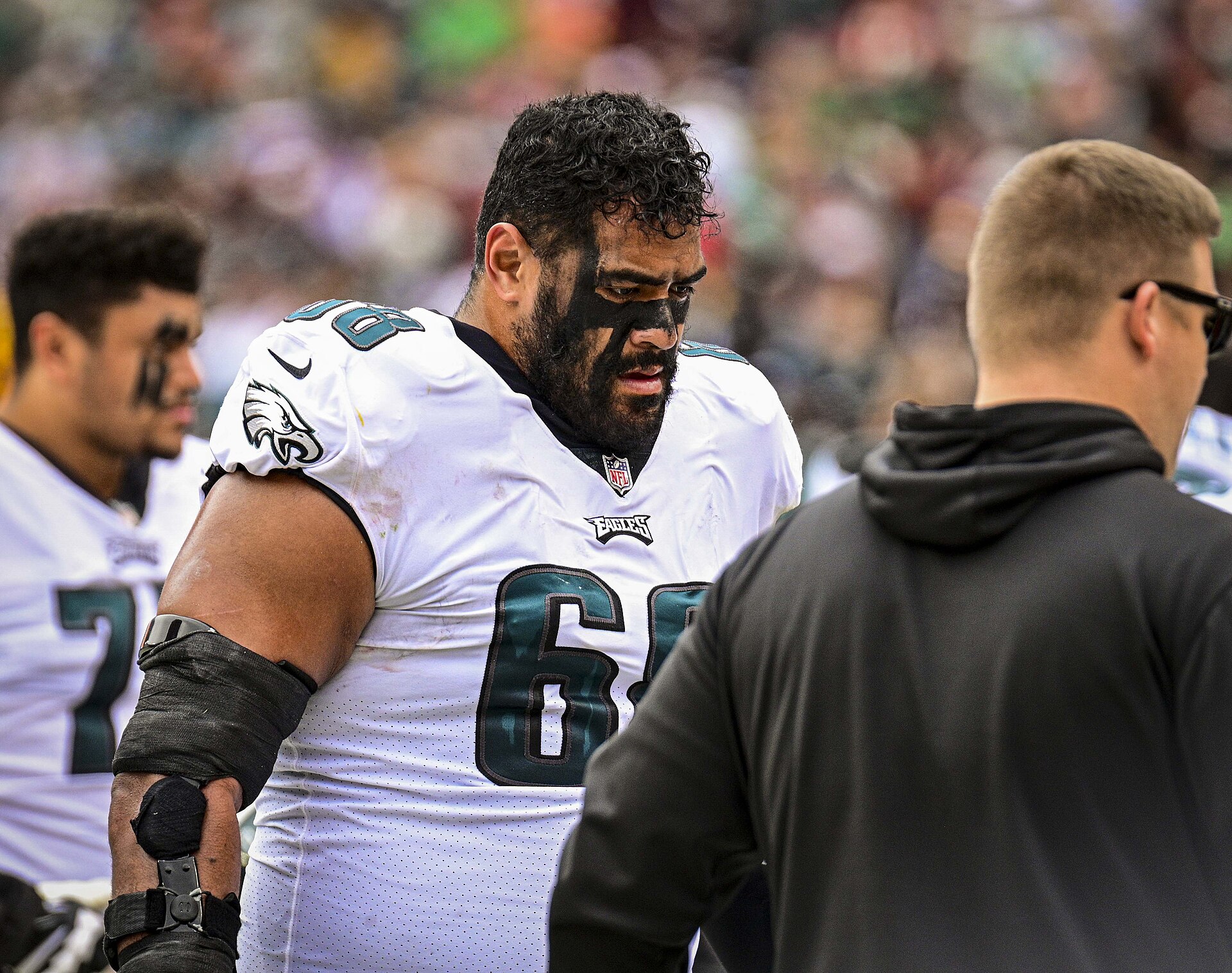
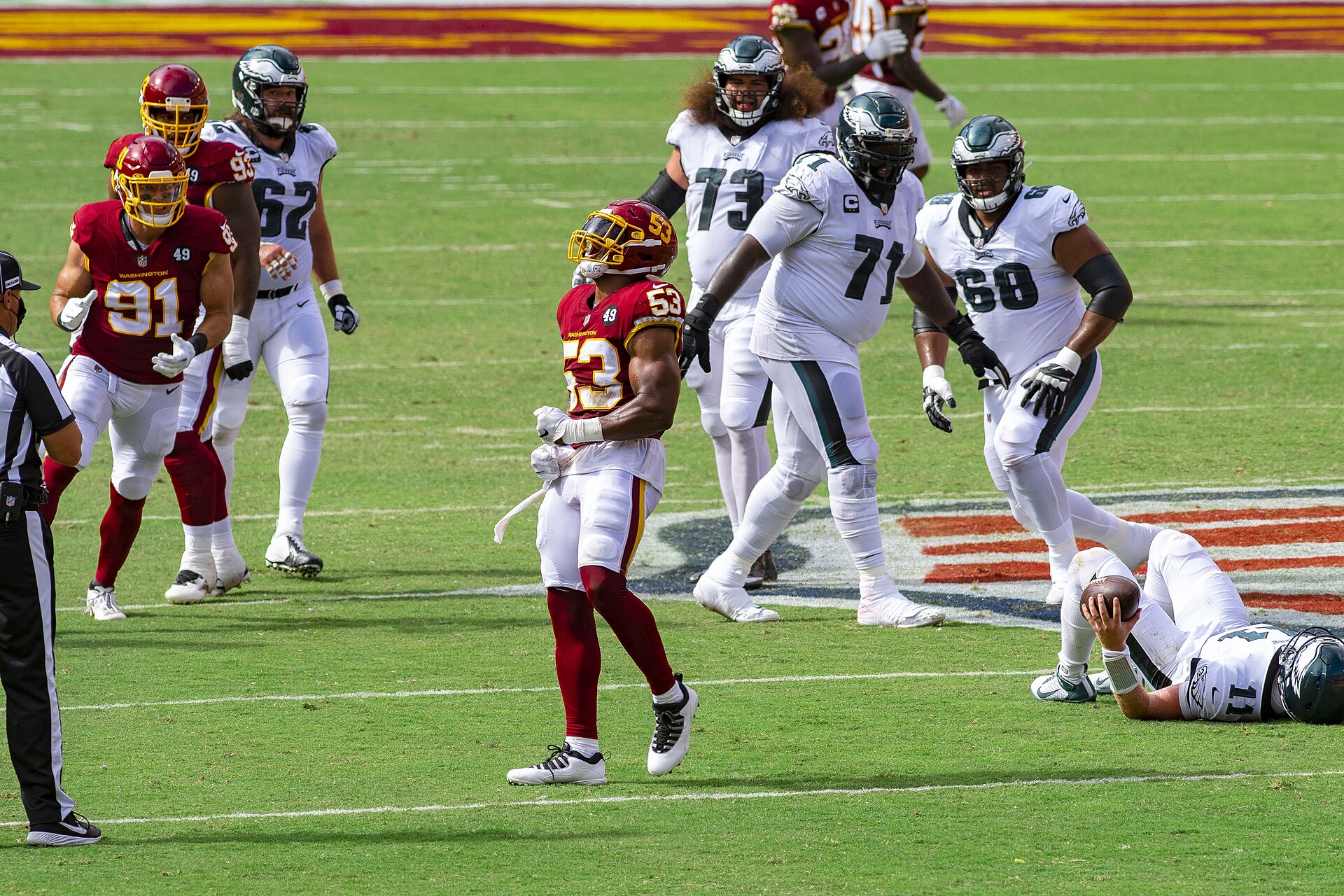
Portrait of Jordan Mailata68
NFL Australia

Jordan Mailata

https://www.flickr.com/photos/joeglo/51804511546/ (CC BY-SA 2.0)SourceCC BY-SA 2.0
Philadelphia EaglesOffensive Tackle
Height
6 ft 8 in · 203 cm
Weight
166 kg · 365 lb
Age
29
Current season 2025 · all
0 Defensive Sacks
1 events Events played
0 Fumbles Touchdowns
0 Passes Defended
Coverage

Jordan in the news

All news
Jordan Mailata’s Eagles face a quarterback-proofing test as Tanner McKee steps into the breach NFL SUBJECT

Jordan Mailata’s Eagles face a quarterback-proofing test as Tanner McKee steps into the breach

Jalen Hurts’ placement on injured reserve has turned Sunday’s Carolina clash into a stress test of Philadelphia’s offensive structure — and Jordan Mailata sits at the centre of the response.

The quarterback change is only the beginning

The Philadelphia Eagles did not simply lose their starting quarterback this week. They lost the player who gives their offence its widest margin for error.

Jalen Hurts was placed on injured reserve on Saturday, October 17, after the club confirmed he is dealing with a superficial blood clot in his calf. The move rules him out for at least four games, beginning with Sunday’s meeting with Carolina, leaving Tanner McKee to make his first start of the 2026 season. (philadelphiaeagles.com)

That is why the broader NFL conversation is moving beyond the familiar question of whether a backup quarterback can play well enough. The sharper question is whether a team with existing structural weaknesses can change its operating system quickly enough to protect him. For Philadelphia, that discussion lands directly on Australian left tackle Jordan Mailata.

Mailata’s value is now measured in stability

Mailata is not being asked to replace Hurts, manufacture explosive plays or carry the Eagles’ passing game. His job is more foundational: make the edge dependable while the offence adjusts its timing, protection calls and run-pass balance around a less mobile quarterback.

The Eagles enter the Panthers game at 2-3, having already endured a turbulent opening month and a 19-17 loss to Jacksonville in London. The club’s own injury reporting has also highlighted pressure elsewhere on the offence, including absences affecting the backfield and receiving corps. (panthers.com)

That matters because quarterback injuries expose every hidden weakness in an offensive line. A starter such as Hurts can extend plays, threaten defences as a runner and punish pressure with movement. McKee’s task is different. The ball may need to come out on schedule, which places greater importance on clean initial protection and clear throwing lanes. If the pocket compresses early, the replacement quarterback has fewer ways to rescue the play.

The real test is whether Philadelphia can simplify without shrinking

The Eagles have confirmed McKee as Sunday’s starter, while the club has also added Joe Milton after Andy Dalton’s departure. That roster activity underlines the scale of the problem: Philadelphia is not just preparing for one altered game plan, but for a minimum four-game stretch without its established offensive engine. (philadelphiaeagles.com)

Yet simplification cannot become predictability. Carolina arrives at Lincoln Financial Field with a 2-2 record, and its recent defensive form has improved after a disastrous opening week. The Panthers’ official game centre notes that they conceded 59 points in Week 1 but only 50 across their next three games. (panthers.com)

That creates the central tactical tension. Philadelphia must make McKee comfortable, but it cannot allow Carolina to know every answer before the snap. Mailata’s side of the line becomes important not only for pass protection, but for preserving enough confidence in the run game to stop the Panthers from treating every down as a passing situation.

Why this matters beyond Sunday

Across the league, backup-quarterback games are often framed as individual auditions. This one is more revealing as a team-building examination. A capable reserve can keep an offence functional, but only if the surrounding structure absorbs some of the lost quarterback value.

Mailata is the clearest Australian lens for that question because his influence is measured in repeatable actions rather than headline statistics. A strong performance will not necessarily produce a highlight-reel moment. It may look like a clean edge, a well-timed combination block or a drive that survives because the pocket remains intact for one extra beat.

The Eagles’ response against Carolina will therefore tell us less about whether McKee can impersonate Hurts and more about whether Philadelphia can build an offence that does not require its starter to solve every problem. For Mailata, that makes Sunday another major responsibility in a season already asking the veteran tackle to provide order amid upheaval.

SourcesEagles place QB Jalen Hurts on Injured Reserve, sign RB Jaydon Blue to the active rosterPanthers vs. Eagles | 2026 Week 6 Game Center | Carolina PanthersEagles place QB Jalen Hurts on Injured Reserve, sign Jaydon BlueJalen Hurts’ health is of ‘utmost importance’ as Eagles sign Joe MiltonPanthers vs. Eagles 2026 Week 6 Game CenterPanthers vs Eagles injury report

Header image: https://www.flickr.com/photos/joeglo/51804511546/ (CC BY-SA 2.0) — Wikimedia Commons · CC BY-SA 2.0

Read article
Jordan Mailata’s ‘week from hell’ response sharpens Philadelphia’s offensive-line pressure after London collapse NFL SUBJECT

Jordan Mailata’s ‘week from hell’ response sharpens Philadelphia’s offensive-line pressure after London collapse

Jordan Mailata’s candid assessment after Philadelphia’s 19-17 loss to Jacksonville in London captured the strain on an Eagles offensive line forced to rebuild on the run — and offered a more revealing measure of his role than another routine protection victory.

A brutal week became a brutal finish

Jordan Mailata did not need to manufacture drama after Philadelphia’s 19-17 loss to Jacksonville at Tottenham Hotspur Stadium. His summary of the Eagles’ preparation — “a week from hell” — landed because the defeat followed a remarkable sequence of disruption rather than a normal game-week setback. (inquirer.com)

Philadelphia lost veteran right tackle Lane Johnson to a surprise retirement on Tuesday, traded centre Cam Jurgens the following day and dealt with a late knee issue involving Drew Kendall. The Eagles then travelled to London only 36 hours before kickoff, with Mailata acknowledging the fatigue that came with the compressed schedule. (inquirer.com)

The timing made Sunday’s collapse especially cruel. Jake Elliott’s 48-yard field goal put Philadelphia ahead 17-16 with eight seconds remaining, only for Ameer Abdullah to return the ensuing kickoff 53 yards and Cam Little to win the game for Jacksonville with a 57-yard field goal. (jaguars.com)

Mailata’s response was about more than survival

The Australian left tackle’s post-game response offered a useful distinction from the earlier story around him as Philadelphia’s fixed point. This was not simply Mailata standing firm while the rest of the line changed around him. It was Mailata assessing what the group had been asked to absorb — and publicly backing the inexperienced players who had to absorb it with him.

At one point, Philadelphia had only one member of its Week 1 starting offensive line still on the field. Willie Lampkin made his first NFL start, Jake Majors made his NFL debut, rookie Markell Bell replaced Johnson and Fred Johnson entered when Tyler Steen briefly left the game. Mailata was the lone veteran presence in a unit that had effectively become a live exercise in emergency combinations. (inquirer.com)

That context matters when judging the Eagles’ offensive performance. Philadelphia finished with 232 total yards, converted six of 15 third downs and managed only 22 rushing yards, while Jacksonville controlled the ball for more than 35 minutes and produced 408 yards. Those numbers point to an offence under pressure, but they do not by themselves establish that Mailata was the source of the problem. (jaguars.com)

The pressure now shifts from replacement to cohesion

The more important development for Mailata is what happens after the international showcase. Philadelphia’s pre-game projected line already featured Lampkin, Majors and Bell in unfamiliar roles alongside Mailata, Steen and the club’s rapidly changing personnel plan. The London game turned that theoretical reshuffle into a full-match test. (philadelphiaeagles.com)

Mailata’s comments therefore carried a tactical undertone. His value was not limited to winning his own left-tackle matchup; he also had to operate as the stable reference point while calls, landmarks and protection relationships changed around him. That is an inference from the personnel situation, rather than a claim that Mailata personally directed the entire unit. The verified point is that Philadelphia entered the game with major line changes and finished it with even more movement. (inquirer.com)

The Eagles return to Philadelphia at 2-3 and face Carolina on Sunday, October 18, 2026. The immediate challenge is not merely recovering from a last-second London defeat. It is determining whether this patchwork line can become a functioning unit before the pressure of the schedule exposes every communication gap. (nfl.com)

A revealing answer from Philadelphia’s constant

Mailata’s response did not erase the result, and it did not disguise the offensive limitations that helped Jacksonville stay alive. What it did was reveal the scale of the task inside the Eagles’ front: a veteran Australian tackle was trying to steady a group that had been reshaped by retirement, trade, injury and travel in less than a week.

That makes his London performance and post-game assessment relevant beyond one neutral-site defeat. Mailata remains Philadelphia’s most established piece up front, but the Eagles now need that stability to become transferable chemistry around him. Until it does, every late-game lead will carry the same uncomfortable question: can the line hold its shape long enough for the offence to finish the job?

SourcesPatchwork Eagles O-line performs admirably despite ‘week from hell’Game Report: Jacksonville Jaguars 19, Philadelphia Eagles 17Game Preview at Jaguars: 6 storylines to followNFL 2026 Philadelphia Eagles Schedule | NFL.comGame Report: Jacksonville Jaguars 19, Philadelphia Eagles 17Patchwork Eagles O-line performs admirably despite ‘week from hell’2026 NFL season, Week 5: What We Learned from Sunday’s gamesNFL 2026 Philadelphia Eagles ScheduleGame Preview at Jaguars: 6 storylines to follow

Header image: https://www.flickr.com/photos/joeglo/50344042991/ (CC BY-SA 2.0) — Wikimedia Commons · CC BY-SA 2.0

Read article
Jordan Mailata is now Philadelphia’s fixed point as the Eagles’ offensive line loses its old shape NFL SUBJECT

Jordan Mailata is now Philadelphia’s fixed point as the Eagles’ offensive line loses its old shape

Lane Johnson’s retirement has transformed Philadelphia’s line crisis from a short-term reshuffle into a structural problem. For Jordan Mailata, Sunday’s London meeting with Jacksonville will test whether one reliable edge can steady an offence whose interior and right side remain unsettled.

The crisis changed between games

Jordan Mailata was already carrying unusual responsibility when Philadelphia hosted the Los Angeles Rams on October 4. Landon Dickerson was unavailable, Lane Johnson was inactive for what was initially described as a personal matter, and the Eagles were forced to build a starting line around replacements and inexperienced combinations. Mailata still played all 61 offensive snaps, but the reshuffle could not prevent the Rams from applying sustained pressure. (inquirer.com)

The situation is now more serious than the planned London storyline suggested. On October 6, Johnson announced his retirement from the NFL, ending his Eagles career rather than simply extending a temporary absence. Philadelphia has therefore lost one of its defining offensive-line constants just as Dickerson remains on injured reserve and centre Cam Jurgens has entered concussion protocol. (philadelphiaeagles.com)

Mailata’s importance is no longer comparative

Mailata’s value in this moment is not merely that he is better established than the players around him. It is that left tackle is the one position Philadelphia can approach with something close to certainty. The Eagles’ own pre-season outlook identified Mailata and Johnson as the experienced pillars of a group expected to include Dickerson, Jurgens and Tyler Steen; after four weeks, only Mailata remains in his original role with the same level of security. (philadelphiaeagles.com)

That does not mean he can repair the line by himself. A left tackle can control his edge, communicate protections and give the quarterback a dependable launch point, but he cannot eliminate breakdowns at right tackle or compensate for an unsettled interior on every passing down. Against the Rams, Philadelphia’s reconstructed group consisted of Mailata, Jurgens, Drew Kendall, Steen and Markell Bell, with each playing the full 61 offensive snaps. The continuity existed in workload, not in familiarity. (phillyvoice.com)

The human meaning of a fixed point

For Mailata, the development is another stage in a journey that has always involved being asked to become more than the original projection of an Australian experiment. He arrived in Philadelphia without a conventional American football background and had to turn extraordinary physical gifts into repeatable technique. The reward was a long-term place at left tackle. The new challenge is quieter but arguably more demanding: becoming the veteran presence an entire side of the offence can trust while the club replaces the player who occupied that role on the other edge for years.

That responsibility is not measured only in sacks allowed or highlight blocks. It is visible in the small, unglamorous tasks that make an unstable unit playable: getting aligned quickly, passing off movement cleanly, staying connected to the guard and centre, and giving Jalen Hurts one less variable to solve before the snap. Mailata cannot restore the Eagles’ previous line. He can make his own section of it feel familiar.

London will expose the limits of stability

Philadelphia is scheduled to meet the Jacksonville Jaguars at Tottenham Hotspur Stadium on Sunday, October 11. The overseas setting adds another layer to an already compressed preparation week, while the Eagles continue to determine who can fill the vacancies created by Johnson, Dickerson and potentially Jurgens. (philadelphiaeagles.com)

That makes Mailata’s role tactically important without making him a cure-all. Jacksonville can test the Eagles by moving rushers, forcing communication between inexperienced blockers and making Philadelphia prove it can protect for longer-developing concepts. Mailata’s task will be to win his match-up and provide the stability around which the other four can operate. The result may not restore the old offensive line, but it will show whether the Eagles can build a new one with Mailata as its left-side foundation.

The difference is significant. Earlier in the week, Mailata was the constant inside a temporary reshuffle. By October 7, the reshuffle had become the club’s new reality. In London, Philadelphia will not simply be asking whether its Australian left tackle can survive another difficult assignment. It will be asking whether his reliability can give an offence enough order to function while the rest of the line searches for its identity.

SourcesLane Johnson’s absence forced the Eagles to scramble in loss vs. RamsLane Johnson announces his retirementEagles 2026 Training Camp Position Preview: Offensive LineGame ball, three stars, and snap count analysis: Week 4, Eagles vs. Rams | PhillyVoicePhiladelphia Eagles in LondonLane Johnson announces his retirementLane Johnson’s absence forced the Eagles to scramble in loss vs. RamsEagles injury list grows: Cam Jurgens enters concussion protocolGame ball, three stars, and snap count analysis: Week 4, Eagles vs. RamsPhiladelphia Eagles in London

Header image: https://www.flickr.com/photos/joeglo/51804511546/ (CC BY-SA 2.0) — Wikimedia Commons · CC BY-SA 2.0

Read article
Jordan Mailata shows how the NFL is turning international players into part of its global pitch NFL SUBJECT

Jordan Mailata shows how the NFL is turning international players into part of its global pitch

As the NFL takes a record nine regular-season games overseas in 2026, Jordan Mailata is being presented as more than an Australian success story. He is becoming evidence for the league’s argument that international expansion can be built through recognisable players as well as overseas fixtures.

The timing has changed the conversation

The NFL’s international strategy has traditionally been easiest to see in the stadium: London, Munich, Madrid, São Paulo and, this season, Melbourne. But the league’s 2026 calendar is large enough to expose a second part of the plan. Nine regular-season games are being staged outside the United States, including the first NFL game in Australia, while the league has also secured approval to increase the international schedule to as many as 10 games beyond 2026. (nfl.com)

That expansion has made the question of who represents the NFL overseas more important. The league is no longer relying only on the novelty of bringing American teams to another country. It is increasingly able to attach those events to players who already have a credible international connection and a substantial NFL identity. Recent NFL coverage of the 2026 London games does exactly that with Jordan Mailata, describing the Philadelphia Eagles’ left side as anchored by the Australian tackle who came through the International Player Pathway. (fantasy-www.nfl.com)

Mailata is the established proof point

Jordan Mailata is the clearest Australian example because his story contains both halves of the league’s message. He arrived from Sydney through the 2018 International Player Pathway, despite having no conventional American football background, and became the first player drafted from the programme when Philadelphia selected him in the seventh round. He is now the Eagles’ established starting left tackle, rather than a developmental curiosity. (operations.nfl.com)

That distinction matters. A prospect can demonstrate that the pathway exists; Mailata demonstrates that it can produce a durable, high-level NFL player. Philadelphia’s own 2026 position preview identifies him as the team’s mainstay blindside protector and notes his second-team All-Pro recognition in 2024. Those credentials give the league something more useful than a recruitment anecdote: a player Australian audiences can recognise as an accomplished professional before the game arrives. (philadelphiaeagles.com)

From development programme to marketing asset

The NFL’s own data suggests the pathway is becoming more institutionalised. Since its launch in 2017, the IPP has provided training opportunities to more than 94 athletes from 21 countries and produced 58 NFL contract signings through September 2026. Entering this season, 20 IPP players from 11 countries and territories were on NFL rosters, although only four were on 53-man active rosters, including Mailata. (operations.nfl.com)

That last qualification is important. The numbers do not yet support the idea that international players are transforming the league’s competitive balance. Most pathway participants remain developmental players, and Mailata remains an exceptional outcome rather than a routine one. But exceptional outcomes have promotional value. The NFL can point to Mailata when explaining what its scouting and development system might make possible, while using London or Melbourne to give that story a physical setting.

Why London brings Mailata into focus

The London schedule provides a particularly clear example of the packaging shift. Philadelphia’s game against Jacksonville is an overseas fixture, but the league’s framing does not stop at the Eagles’ brand or Jalen Hurts’ profile. Mailata appears in the international-talent discussion alongside other players with meaningful connections outside the United States, including Austria’s Bernhard Raimann and Nigeria’s Uar Bernard. (fantasy-www.nfl.com)

Mailata’s role is therefore broader than being the Australian on an Eagles roster. He is a bridge between two league projects: the IPP’s attempt to identify talent globally, and the International Series’ attempt to make NFL football locally relevant. The fact that he is an established starter makes that bridge more credible than one built only around prospects, ceremonial appearances or nationality.

The limits of the model

The strategy still carries a risk. If the league presents international players mainly as symbols, it can reduce genuine sporting careers to marketing shorthand. Mailata’s value to this argument rests on the opposite fact: he is being discussed because he became an elite offensive lineman, not simply because he was born in Australia.

That is why the current attention is worth analysing rather than treating as routine London promotion. In 2026, the NFL has reached a point where overseas games and international-player development can reinforce each other. Jordan Mailata is the most established Australian lens for that convergence — not proof that the global pathway is finished, but evidence that the league’s international story is increasingly being told through players who have already earned their place inside it.

Sources2026 NFL Schedule Release | NFL.comNeil Reynolds' A-Z of the 2026 NFL London GamesNFL Football Operations | NFL Football OperationsEagles 2026 Training Camp Position Preview: Offensive LineNFL Football Operations — International Player PathwayNeil Reynolds’ A-Z of the 2026 NFL London Games2026 NFL Schedule Release and International GamesCommissioner Roger Goodell says there will eventually be an NFL team outside the USEagles 2026 Training Camp Position Preview: Offensive LineEagles International Hub

Header image: https://www.flickr.com/photos/joeglo/50344042991/ (CC BY-SA 2.0) — Wikimedia Commons · CC BY-SA 2.0

Read article
Jordan Mailata’s protection burden is growing as Philadelphia’s line faces another reshuffle NFL SUBJECT

Jordan Mailata’s protection burden is growing as Philadelphia’s line faces another reshuffle

Jordan Mailata remains Philadelphia’s one fixed tackle after Lane Johnson’s late absence exposed the Eagles’ limited depth. With Johnson’s Week 5 status unresolved, the Australian left tackle may again sit at the centre of the protection plan against Jacksonville in London.

Mailata’s stability now matters more than ever

Jordan Mailata has been the Eagles’ constant on an offensive line that has already required adjustment this season. That value became clearer in Sunday’s 24–20 loss to the Los Angeles Rams, when right tackle Lane Johnson was ruled inactive for personal reasons shortly before kick-off. Philadelphia started rookie Markel Bell at right tackle, while Mailata remained at left tackle. (philadelphiaeagles.com)

The significance is not simply that Philadelphia lost an experienced starter. Johnson’s absence removed one of the team’s two established edge protectors, leaving Mailata as the only recognised starting tackle available on the game-day roster. That reduced the Eagles’ margin for error: any issue at left tackle would have forced a more substantial reshuffle rather than a straightforward replacement. (inquirer.com)

The Rams showed how opponents can attack the change

The immediate tactical consequence was visible in the pressure plan. According to Next Gen Stats data reported by The Philadelphia Inquirer, the Rams blitzed on 60.6 per cent of Jalen Hurts’ dropbacks, targeting an Eagles protection unit that was missing two starters. The pressure produced two sacks, including an 11-yard loss on a third-down blitz and a further seven-yard sack by Byron Young. (inquirer.com)

Those numbers do not establish that Mailata was the source of the problem. They show instead why his role becomes more important when the protection structure around him changes. Mailata can continue to handle the left edge, but the Eagles may need to allocate more help, alter the timing of routes or keep a running back and tight end closer to the formation to protect the inexperienced right side. Each adjustment reduces the number of eligible receivers or limits how aggressively Philadelphia can use its passing game.

London creates a short preparation window

Philadelphia now turns to Jacksonville at Tottenham Hotspur Stadium on Sunday, October 11, with Johnson’s availability unresolved. Head coach Nick Sirianni did not provide a firm answer after the Rams loss, saying only that the team would see where it stood. That makes Johnson’s practice participation the central variable for the week, rather than any assumption that Bell’s starting role will continue. (inquirer.com)

The London setting adds a logistical complication. Philadelphia must prepare for an overseas game while also deciding whether to install a protection plan built around Johnson’s possible return or one that assumes Bell will start again. Mailata’s responsibilities could therefore extend beyond his individual matchup: he may need to communicate more frequently with the left guard and centre, provide awareness of pressure movement and help the Eagles maintain a reliable launch point for Hurts.

What Mailata’s role says about Philadelphia’s next step

Mailata’s importance is best understood as structural rather than dramatic. Philadelphia does not need him to compensate for every weakness on the line, but it does need his side of the formation to remain dependable while the right tackle position is clarified. He played every offensive snap through the first four weeks, according to available snap-count data, underlining how fixed his role has become. (pro-football-reference.com)

The Week 5 question is therefore not whether Mailata can single-handedly repair the Eagles’ protection. It is whether Philadelphia can keep his assignment stable while limiting the number of problems created elsewhere. If Johnson returns, Mailata can resume operating within the Eagles’ preferred two-tackle structure. If Johnson remains unavailable, the Australian’s consistency will be one of the conditions required for a workable alternative against Jacksonville.

SourcesRams vs. Eagles InactivesLane Johnson out for Eagles vs. Rams, team cites personal matterLane Johnson’s absence forced the Eagles to scramble in loss vs. RamsPhiladelphia Eagles 2026 Snap Counts | Pro-Football-Reference.comRams vs. Eagles InactivesGame Recap: Rams 24, Eagles 20Lane Johnson’s absence forced the Eagles to scramble in loss vs. RamsNFL 2026 Philadelphia Eagles Schedule2026 Philadelphia Eagles Snap Counts

Header image: https://www.flickr.com/photos/joeglo/51804511546/ (CC BY-SA 2.0) — Wikimedia Commons · CC BY-SA 2.0

Read article
Jarrod Gray is the latest test of the NFL’s Australia-New Zealand talent pipeline NFL MENTIONED

Jarrod Gray is the latest test of the NFL’s Australia-New Zealand talent pipeline

The New York Giants’ Australian offensive lineman sits at the point where the NFL’s International Player Pathway is becoming less of a scouting experiment and more of a repeatable development system.

Gray’s inclusion matters beyond one roster spot

Jarrod Gray’s arrival at the New York Giants is timely because the NFL’s 2026 International Player Pathway class shows the league is continuing to recruit athletes from organised sporting systems rather than waiting for American football backgrounds to emerge overseas.

Gray was one of 13 athletes selected for the 2026 programme, representing 10 nations. The class includes several rugby-derived prospects, as well as athletes from volleyball, basketball and American football. Gray is listed as an offensive lineman with Australia and New Zealand eligibility and rugby as his primary sport. (nfl.com)

That is an important distinction. The IPP is no longer simply a mechanism for finding an unusual athlete with size or speed. It is increasingly a structured conversion process: identify transferable traits, provide concentrated coaching, then place the prospect inside an NFL club’s development environment. Gray’s pathway — from junior rugby league with the South Sydney Rabbitohs and the Western Clydesdales to a 10-week IPP training programme in Florida — is a clear example of that model. (giants.com)

The Giants are the next stage, not the finish line

Gray signed with the Giants on June 1, 2026, and was later listed on New York’s practice squad as an international player. The distinction matters: his current status is evidence of organisational investment, not proof that he is close to an NFL game-day role. (giants.com)

The Giants’ environment gives Gray something the initial IPP programme cannot provide on its own — daily exposure to an NFL offensive line, club terminology, professional strength and conditioning, and the technical demands of pass protection and run blocking. He is listed at 6-foot-7 and 318 pounds, but physical scale is only the entry point for an offensive lineman. The longer evaluation will concern footwork, leverage, hand placement, balance and the speed with which he can process unfamiliar defensive structures.

That makes Gray a useful lens on the broader trend. The question is no longer whether an Australian or New Zealand athlete can attract attention. It is whether an NFL club can absorb that athlete into a repeatable development pipeline and retain him long enough for the technical conversion to take hold.

Why the conversation has shifted in 2026

The NFL’s own numbers explain why the programme is being discussed as a pipeline rather than a one-off initiative. Since its launch in 2017, the IPP has provided training opportunities to more than 94 athletes from 21 countries and produced 58 NFL player-contract signings through September 2026. Entering the 2026 season, 20 IPP players from 11 countries and territories were on NFL rosters, with four on 53-man active rosters. (edge-operations.nfl.com)

The league has also made the roster mechanism more useful to clubs. In 2026, a team can carry up to 17 practice-squad players if at least one qualifies as an international player. That additional developmental place gives clubs a reason to retain prospects while they learn the sport, rather than forcing an immediate decision between an active-roster role and release. (edge-operations.nfl.com)

The NFL has further expanded the discovery side through international regional combines, while allowing an international practice-squad player to be elevated to the active roster up to three times in a season. Those adjustments suggest a system being refined around development and opportunity, not merely public-relations visibility. (nfl.com)

A correction to the Australia-New Zealand framing

The 2026 class announcement includes Gray, but the available NFL participant list does not identify Laekin Vakalahi as a member of this year’s class. Vakalahi is an earlier Australia-New Zealand pathway example, associated with the Philadelphia Eagles, rather than a new 2026 entrant. (nfl.com)

That correction strengthens rather than weakens the story. Gray represents the next intake, while Vakalahi represents the growing continuity around the region’s talent base. Alongside Jordan Mailata’s established success, their different stages illustrate the NFL’s developing sequence: recruit from rugby and other athletic systems, teach the position, place the player with a club, and use roster flexibility to extend the evaluation.

For Gray, the immediate benchmark is therefore not a debut or a comparison with Mailata. It is whether the Giants can turn an Australian rugby league athlete with NFL-level physical dimensions into a technically viable offensive lineman. That is the practical test of whether the IPP has become a recurring talent pipeline — and not simply a collection of compelling individual stories.

SourcesNFL International Player Pathway Program | NFL.comJarrod GrayNFL Football Operations | NFL Football OperationsIPP's International Regional Combine Series aims to grow pool of potential developmental prospects | Latest NFL News, Analysis & Updates | NFL.comNFL announces 2026 HBCU Showcase & International Player Pathway Pro Day participants | Latest NFL News, Analysis & Updates | NFL.comNFL announces International Player Pathway program Class of 2026NFL announces 2026 HBCU Showcase & International Player Pathway Pro Day participantsNFL Football Operations: International Player PathwayJarrod Gray — New York Giants player profileGiants establish practice squad with return of 13 players

Header image: AI-generated editorial illustration.

Read article
Jordan Mailata is Philadelphia’s steady edge as the Eagles reshape their attack for the Rams NFL SUBJECT

Jordan Mailata is Philadelphia’s steady edge as the Eagles reshape their attack for the Rams

With Fred Johnson ruled out and Philadelphia missing several key weapons, Jordan Mailata enters Sunday’s Week 4 clash as the one established pillar on an Eagles offence still searching for protection and rhythm.

The Eagles are losing pieces. Mailata remains in place.

Jordan Mailata arrives at Philadelphia’s Week 4 meeting with the Los Angeles Rams as the rare point of continuity in an Eagles offence being forced into another round of adjustments.

Philadelphia has ruled out offensive tackle Fred Johnson, wide receivers DeVonta Smith and Hollywood Brown, tight end Dallas Goedert, linebacker Zack Baun and safety Marcus Epps. Landon Dickerson is also on injured reserve, leaving the Eagles without one of their usual starters at left guard. The absences are spread across the roster, but their combined effect is especially significant for an offence that has not yet produced consistent football through the opening three games.

Mailata, by contrast, remains the established left tackle and the fixed point of the protection plan. That role matters even more with the Eagles preparing for a Rams defence that has generated pressure without always converting it into sacks, and with Philadelphia’s reshuffled interior line still needing to settle around him.

Protection pressure starts on the blind side

The most immediate change is at tackle, where Johnson’s knee injury removes an experienced reserve from the equation. The Eagles’ official injury report lists Johnson as out after he missed practice throughout the week, while Philadelphia’s game preview confirmed the wider offensive absences ahead of Sunday’s contest. (nfl.com)

That does not automatically place every protection problem on Mailata. It does, however, reduce Philadelphia’s margin for error. If the Eagles need to rotate personnel, use extra protection or alter their sequencing to protect the quarterback, Mailata is the player most likely to remain responsible for the premium edge matchup rather than being moved to accommodate a temporary fix.

His value is therefore less about being asked to do something radically different and more about maintaining normality. The Eagles can change the bodies beside him, redistribute targets and adjust the run-pass balance. They cannot afford for the left tackle position to become another variable.

A stabiliser in an offence still searching for consistency

Philadelphia’s own preview describes the offence as still searching for consistency, with the coaching staff needing to find personnel packages and play-calling sequences that function despite the missing contributors. That places greater importance on the line’s ability to provide a dependable platform for Jalen Hurts and Saquon Barkley. (philadelphiaeagles.com)

The early-season picture has been uneven. The Eagles are 2-1, but the Rams’ preview noted that Philadelphia’s reshuffled line has coincided with Barkley struggling to find his usual traction and Hurts running less often. Independent offensive-line analysis also identified seven pressures allowed by the Eagles’ starting unit in the Week 3 loss to Chicago, with the interior drawing particular criticism. (pff.com)

That context makes Mailata’s assignment straightforward but demanding: win his portion of the protection battle, keep the left edge clean and give Philadelphia one dependable answer while the rest of the offence is being rebuilt on the fly. A strong performance will not solve the Eagles’ receiver shortage or replace Goedert’s role, but it can stop the offensive line from becoming a second crisis.

Mailata’s consistency is the tactical advantage

The matchup also carries a useful tactical contrast. Los Angeles has been effective at limiting explosive passing efficiency, allowing the second-fewest yards per pass attempt in the league according to the Rams’ own game preview. That makes clean early-down execution and manageable passing situations particularly important for Philadelphia. (therams.com)

Mailata’s presence gives the Eagles a stable launch point on the side of the line where mistakes are most costly. Philadelphia can build protection calls around a known left tackle, allow other linemen to focus on their assignments and preserve flexibility for the depleted skill-position group.

This is not a new role for Mailata, who the Eagles describe as their established blindside protector and who earned second-team All-Pro recognition in 2024. But the circumstances sharpen its importance. With Fred Johnson unavailable and multiple offensive starters missing, the Australian’s job is to make the disruption stop at his position.

For Philadelphia, Sunday’s test is not simply whether Mailata can handle the Rams’ edge pressure. It is whether his reliability can help the Eagles keep their offensive structure intact long enough for the replacements around him to find a rhythm. In a week defined by absences, Mailata is the constant the offence cannot afford to lose.

SourcesOfficial Latest NFL Injury Report for Players - Week 4 of the 2026 Season | NFL.comGame Preview vs. Rams: 6 storylines to follow2026 NFL offensive line rankings: Cowboys surge, Chargers dip after Week 3The Los Angeles Rams swoop into Philly for Week 4 clash with the Philadelphia Eagles at Lincoln Financial Field - Game PreviewOfficial NFL Week 4 injury reportRams vs. Eagles Injury Report — Philadelphia EaglesGame Preview vs. Rams: 6 storylines to follow — Philadelphia Eagles2026 NFL offensive line rankings — Pro Football FocusThe Los Angeles Rams swoop into Philly for Week 4 clash — Los Angeles Rams

Header image: https://www.flickr.com/photos/joeglo/50344042991/ (CC BY-SA 2.0) — Wikimedia Commons · CC BY-SA 2.0

Read article
Jordan Mailata remains Philadelphia’s fixed point as the Eagles’ protection plan stalls in Chicago NFL SUBJECT

Jordan Mailata remains Philadelphia’s fixed point as the Eagles’ protection plan stalls in Chicago

Jordan Mailata’s starting streak survived Philadelphia’s first loss, but the 27-7 defeat exposed an Eagles offence that could not sustain its left-side run game or protect its margin for error after half-time.

Mailata’s role was not the problem to solve

Jordan Mailata started Philadelphia’s first three games of the 2026 season, including Monday night’s 27-7 loss to Chicago, keeping the Australian tackle as one of the Eagles’ few fixed points up front. The defeat did not produce a reported change to his status or role; instead, it placed greater pressure on Philadelphia’s offensive structure around him.

That distinction matters. The Eagles did not lose because Mailata suddenly became a rotational piece. They lost because their offence could not keep its early gains alive once Chicago’s defence adjusted. Philadelphia moved the ball effectively enough in the first half to reach the Bears’ one-yard line and led a drive that ended with Jalen Hurts’ late second-quarter quarterback sneak. After the break, however, the Eagles produced only 62 net yards, three consecutive punts, an interception and a turnover on downs. (amp.nfl.com)

The left side needs to turn early movement into sustained answers

The tactical question for Mailata and the Eagles’ left side is not simply whether they can win individual protection reps. It is whether Philadelphia can keep using that side to create a dependable first action once opponents remove the obvious run looks.

Saquon Barkley had 73 rushing yards on 11 first-half carries, a sign that Philadelphia’s front was finding enough initial leverage and space to threaten Chicago’s defence. He gained only nine yards after the interval. The Bears’ second-half response was broader than a single tackle matchup: Chicago forced the Eagles into predictable downs, tightened the interior and allowed its pass rush and coverage to play with a more favourable game script. (amp.nfl.com)

For Mailata, that makes the next adjustment a sequencing issue. Philadelphia needs to preserve the threat of downhill runs, pull action and quarterback movement without allowing the front to settle into a static rush plan. If the Eagles keep asking the line to win obvious drop-back situations after the run threat has been neutralised, Mailata’s physical advantages become less influential because Chicago can attack the timing and spacing of the entire protection scheme.

Protection was tested by game state, not just pressure totals

Chicago’s defence generated three takeaways, held Hurts to a 64.2 passer rating and limited Philadelphia to two conversions from nine third downs. Those numbers describe a wider offensive failure rather than a Mailata-specific breakdown, but they show why the Eagles’ protection work cannot be separated from down-and-distance management. (chicagobears.com)

Philadelphia’s early mistakes — Hurts’ intentional grounding, Tank Bigsby’s fumble and Andy Dalton’s goal-line interception while Hurts was being evaluated — repeatedly shortened the margin for the line. Once Chicago led, the Eagles had fewer opportunities to dictate with the run and more situations in which the defence could anticipate the pass. The result was a poor environment for every offensive tackle, including Mailata, even if the Australian remained the constant presence on the edge.

The more useful evaluation is therefore forward-looking: can the Eagles restore a balanced call sheet before the next opponent forces the same problem? Mailata gives Philadelphia a stable left tackle platform, but stability at one position cannot compensate for an offence that loses its run threat after halftime. The first loss is significant because it showed the Eagles’ margin is thinner than their 2-0 start suggested — not because it changed Mailata’s standing.

The next test is response, not reshuffling

Chicago’s win moved both teams to 2-1 and gave the Eagles their first defeat of the season. The Bears’ official recap credited a second-half defensive surge that forced back-to-back three-and-outs and helped Philadelphia scoreless through the final two quarters. (chicagobears.com)

Philadelphia’s answer should begin with the same left-side certainty it carried into the game: leave Mailata in place, then build more varied answers around him. That means making early-down run success matter, moving the launch point when required and preventing opponents from turning the Eagles’ protection into a series of long-yardage tests.

Mailata remains an every-down constant. The development to watch is whether Philadelphia can make that constant part of a more adaptable offensive plan.

SourcesEagles-Bears on 'Monday Night Football': What We Learned from Chicago's 27-7 win over PhiladelphiaGame Recap: Case Keenum, defense lead Bears to dominant victory over EaglesPhiladelphia Eagles at Chicago Bears, September 28, 2026 game log

Header image: https://www.flickr.com/photos/joeglo/51804511546/ (CC BY-SA 2.0) — Wikimedia Commons · CC BY-SA 2.0

Read article
Jordan Mailata’s Nashville warning puts traction at the centre of the NFL surface debate NFL SUBJECT

Jordan Mailata’s Nashville warning puts traction at the centre of the NFL surface debate

Jordan Mailata’s account of softened cleats and rolled ankles after Philadelphia’s September 20 win in Tennessee gives the NFL’s artificial-surface argument a practical offensive-line dimension: when traction changes, protection technique changes with it.

The problem was under the feet, not just overhead

Jordan Mailata entered the NFL’s surface debate through the part of the game offensive linemen understand best: stability. After Philadelphia’s 24–20 win over Tennessee on September 20, Mailata said he rolled his ankles twice and questioned whether the extreme heat had softened the plastic in his cleats. The comments were reported by ESPN and separately cited by Axios. (players.bio)

The reported playing-surface temperature reached 157°F (69.4°C) during the game, while the air temperature was about 95°F (35°C) at kickoff. Eagles centre Cam Jurgens said two pairs of cleats melted, and head coach Nick Sirianni required an IV after the game. Those details are not proof that Mailata’s ankle rolls or Philadelphia’s blocking issues were caused by the surface, but they establish why the conditions became a football issue rather than a novelty weather story. (weather.com)

Why it matters more to the offensive line

For a tackle, traction is part of the protection call. Mailata must set a wide base, absorb a rusher’s force and keep his hips and shoulders connected through contact. If the cleat outsole softens, or if the foot releases unpredictably from the turf, the adjustment is immediate: the blocker may shorten the set, lose depth or compensate through the ankle, knee and hip. That is a tactical explanation, not a medical diagnosis, but it helps explain why surface conditions can affect both performance and safety at once.

The same problem can appear in the run game. Philadelphia’s linemen need to generate force horizontally without their outside foot sliding or their inside foot sticking. A surface that is excessively hot, unusually hard or inconsistent across the field changes the amount of force players can safely put into the ground. For a skill player, that can alter a cut. For a 365-pound tackle, it can disrupt the first two steps that determine whether the edge is sealed.

This debate has moved beyond players’ anecdotes

Mailata’s comments landed as the league and NFL Players Association were already trying to formalise surface testing. From the 2026 season, clubs must select approved metrics and field styles for natural and synthetic surfaces; by 2028, all NFL stadiums are expected to comply with the new mandatory practices. The league’s testing programme includes the BEAST, which evaluates shoe-turf interaction, and the STRIKE tester, which measures how much energy a field absorbs. (nfl.com)

That is significant because the relevant question is no longer simply whether a field is grass or turf. It is whether the surface delivers predictable traction, impact absorption and playability across weather conditions. The NFLPA’s recent statement on the Brazil field made that distinction explicit: a slick or loose field may be primarily a performance problem, while excessive traction can create a different safety concern. (nflpa.com)

The union continues to argue for natural grass, pointing to its analysis of NFL injury data from 2012–18, which found higher rates of non-contact lower-extremity injuries on artificial turf, including a reported 69 per cent increase in non-contact foot and ankle injuries compared with grass. The figures are NFLPA analysis rather than a new Nashville-specific finding, but they explain why Mailata’s experience was immediately folded into a wider campaign. (nflpa.com)

Mailata is a useful Australian lens

Mailata is not making a generic complaint from the sideline. He is a starting left tackle, a player representative and one of Philadelphia’s primary force absorbers on every offensive snap. His earlier argument that grass used for the 2026 World Cup should be the minimum standard for NFL players showed where he stood before Nashville; the Titans game supplied a concrete example of why he believes consistency matters. (nbcsports.com)

Philadelphia’s September 25 availability listing also kept Mailata central ahead of the Eagles’ September 28 matchup with Chicago, with the club publishing his player press conference from Friday’s practice. That does not establish an injury from the Nashville conditions. It does show the issue remains part of the week’s football context rather than disappearing with the final whistle. (philadelphiaeagles.com)

The key question now is whether Nashville becomes an isolated extreme or a reference point for preparation. Teams can change cleat choices, monitor field temperature and adapt practice routines. But if the playing surface can materially alter the behaviour of the footwear underneath an offensive lineman, the burden cannot sit entirely with the player. Mailata’s warning is that surface consistency is not an aesthetic preference. It is part of the protection system.

SourcesNashville turf temp of 157 F melts cleats, sends Sirianni for IV - ESPNTurf reached 157 degrees for Nashville Eagles vs. Titans gameSafety and Consistency in Field Surfaces: NFL and NFLPA Mandatory PracticesStatement from NFLPA Executive Director JC Tretter on Field Conditions in Rio | NFLPAOnly Natural Grass Can Level The NFL’s Playing Field | NFLPAJordan Mailata: If stadiums are grass for the World Cup, that should be bare minimum for us - NBC SportsPhiladelphia Eagles | Official Site of the Philadelphia EaglesNashville turf temp of 157 degrees melts cleats, sends Sirianni for IV — ESPN reportPlayers’ cleats melted during Tennessee Titans game as turf hit 157 degrees — AxiosSafety and Consistency in Field Surfaces: NFL and NFLPA Mandatory Practices — NFL.com

Header image: https://www.flickr.com/photos/joeglo/50344042991/ (CC BY-SA 2.0) — Wikimedia Commons · CC BY-SA 2.0

Read article
Jarrod Gray’s offensive-line gamble shows Australia’s NFL pathway is growing beyond the specialists NFL MENTIONED

Jarrod Gray’s offensive-line gamble shows Australia’s NFL pathway is growing beyond the specialists

The NFL’s 2026 International Player Pathway class places Jarrod Gray inside a broader experiment: finding Australian and New Zealand athletes who can learn positions once considered inaccessible without years of American football.

The next Australian NFL player may not hold a football like a punter

Jarrod Gray’s inclusion in the NFL’s 2026 International Player Pathway class matters for more than the opportunity it gives one enormous Australian rugby convert. It is another sign that the league’s international search is moving beyond the positions that have traditionally made Australians visible: punter, kicker and, occasionally, long snapper.

Gray is listed as an offensive lineman, alongside fellow Australians and New Zealand-linked athletes Kaia Clarkin and Kaylan Faumui. The class also includes players projected at defensive end, tight end and other non-specialist positions. That mix is why the announcement has become a useful snapshot of where the NFL believes international development can go next. (nfl.com)

For Gray, the opportunity is unusually demanding. A punter can arrive with a transferable kicking action; an offensive lineman has to absorb an entire technical language — stance, hand placement, leverage, pass sets, protections and the constant adjustment demanded by five-man combinations. The physical entry point may be obvious, but the football education is not.

Gray is the Australian test case

Gray’s story gives the trend a human scale. The Giants describe him as a Bankstown native who had never played professional football before moving to Fort Myers, Florida, in January for the ten-week IPP programme. There, he trained on the field and in the classroom before appearing at the league’s pro day in front of club scouts. (giants.com)

That is not a ready-made NFL career. It is a controlled attempt to turn a rugby athlete’s size, movement and competitive instincts into offensive-line technique. Gray’s challenge is therefore more than making a roster. He is learning whether the qualities that made him a promising athlete in one collision sport can be reorganised for another, in a league where the smallest technical error can expose the quarterback.

The Giants’ decision to retain him on their international practice squad has already made the pathway tangible, but it should not be mistaken for completion. It gives Gray time, coaching and a roster mechanism; it does not erase the distance between potential and dependable NFL play. That distinction is important because the IPP is designed to accelerate development, not promise immediate selection.

Why the conversation has broadened now

The timing is significant. The NFL says the 2026 class contains 13 athletes from 10 countries, while its wider international programme has now provided training opportunities to more than 94 athletes from 21 countries. Through September 2026, 58 participants have signed NFL player contracts, and 20 IPP players are on NFL rosters entering the season. (operations.nfl.com)

Those numbers do not prove that international athletes are about to occupy every position group. They do show that the league is building a repeatable development system rather than relying only on occasional discoveries. The roster rules reinforce that intent: qualifying international players can use a club’s additional practice-squad place, creating room for teams to teach athletes who might otherwise be squeezed out by the standard roster limit. (operations.nfl.com)

The Australian evidence is particularly compelling because it now includes both ends of the experiment. Jordan Mailata remains the defining success story, an Australian rugby product who became Philadelphia’s starting left tackle. Gray is not Mailata, and comparisons should be handled carefully, but his position makes the connection unavoidable: the league is willing to keep testing whether Australian collision-sport athletes can become linemen, not merely specialists. (operations.nfl.com)

A pathway with a bigger horizon

The NFL’s first regular-season game in Melbourne in 2026 gives the broader project an obvious backdrop. The league is no longer developing international players in isolation from its commercial expansion; it is linking talent identification, roster mechanisms and live games in new markets. (nfl-ops-prod-umbraco-author.azurewebsites.net)

Gray sits at the centre of that expansion without needing to represent its final answer. His value to the experiment is that he makes the question concrete: can a young Australian athlete who began in rugby be taught the details of NFL offensive line play quickly enough to become useful?

For now, the honest answer remains unfinished. But that is precisely what has changed. Australia’s route to the NFL is no longer defined only by the specialist skill athletes bring with them. Jarrod Gray’s journey is testing whether the league can teach the position after the athlete arrives — and whether the next generation will see that as a realistic choice rather than a sporting fantasy.

SourcesNFL announces International Player Pathway program Class of 2026 | Latest NFL News, Analysis & Updates | NFL.comJarrod GrayNFL Football Operations | NFL Football OperationsNFL International Games | NFL Football OperationsNFL announces International Player Pathway program Class of 2026NFL announces 2026 HBCU Showcase & International Player Pathway Pro Day participantsNFL Football Operations: International Player PathwayJarrod Gray player profile — New York GiantsNFL International Games

Header image: AI-generated editorial illustration.

Read article
Jordan Mailata’s continuity call puts Philadelphia’s offensive-line sturdiness back under the microscope NFL SUBJECT

Jordan Mailata’s continuity call puts Philadelphia’s offensive-line sturdiness back under the microscope

Jordan Mailata has urged Philadelphia supporters not to panic after the Eagles’ 24-20 win over Tennessee, but his postgame assessment also confirmed that the reshaped offensive line remains an unresolved part of the team’s early-season equation.

A win that did not settle the line’s questions

Jordan Mailata’s postgame message after Philadelphia’s narrow 24-20 victory over the Tennessee Titans on September 20 was calm rather than celebratory. The Eagles’ left tackle said he did not want anyone to panic and pointed to continuity as the corrective force for an offensive line that has now endured two difficult performances in as many weeks. (philadelphiaeagles.com)

That distinction matters. Philadelphia is 2-0, but the result in Nashville did not remove the concern around the blocking unit. The Eagles converted 11 of 18 third downs and produced the late nine-play, 65-yard drive that won the game, yet the offence spent long periods struggling to sustain its preferred rhythm. Tennessee’s official review also noted that Philadelphia’s comeback came after the Titans failed to close out the final possession. (inquirer.com)

Mailata’s comments therefore read less like a declaration that the problem has passed and more like an argument that the current group needs time to become functional together.

Continuity is now a necessity, not a preference

Philadelphia entered Week 2 without Landon Dickerson, who had been placed on injured reserve with a knee injury. The Eagles responded by moving Cam Jurgens from centre to left guard and inserting Drew Kendall at centre. It was Jurgens’ first game at left guard and Kendall’s first meaningful regular-season start, creating a significant communication and technique challenge in the middle of the line. (inquirer.com)

Mailata’s assessment was that the group now has its starting five moving forward, along with film showing how it was beaten and where it held up. That is a reasonable football explanation, but it also places pressure on the new combination to improve quickly. The Eagles’ wide-zone scheme depends on consistent aiming points, timing and movement across the front. Right tackle Lane Johnson said after the game that the unit still had plenty to clean up and that the ground game needed to improve. (inquirer.com)

For Mailata, the development is particularly relevant because the left tackle is no longer operating beside the same interior combination that has helped define Philadelphia’s power-based identity in recent seasons. Continuity may be the remedy, but it is not yet evidence of improvement.

Tennessee exposed the cost of uneven execution

Jeffery Simmons created the clearest test of Philadelphia’s reshuffle. The Titans’ interior defender was credited with seven pressures and three hits on Jalen Hurts, while Philadelphia also surrendered three sacks and committed three offensive-line penalties. One Simmons stunt resulted in a play where he knocked Mailata down and reached Hurts, while another pressure contributed to Hurts’ second interception. (inquirer.com)

Those moments should not be reduced to a verdict on Mailata individually. Simmons is one of the league’s most difficult interior match-ups, and Jurgens and Kendall were being asked to manage unfamiliar responsibilities against a strong defensive front. But the sequence reinforced the broader issue Mailata was addressing: the Eagles have not yet produced the reliable blocking platform required by the offence they are trying to install.

The run game was also inconsistent. Philadelphia’s backs other than Hurts combined for 78 yards on 27 carries, while Saquon Barkley was limited after suffering a stinger on the opening play. The Eagles still found enough third-down answers to win, but their intended balance was not consistently available. (inquirer.com)

Mailata’s reassurance carries a test for Week 3

The Australian’s postgame position is measured: the Eagles have enough information to correct their mistakes, and continuity should give the unit a better chance to settle. That is different from claiming that Philadelphia’s offensive line is already sturdy again.

The next evaluation will be whether the new interior pairing can make the run game more dependable, reduce pre-snap and assignment errors, and keep pressure from collapsing the pocket against better-coordinated fronts. Philadelphia’s late win buys the line time, but it does not remove the scrutiny. Mailata’s own assessment has effectively set the standard: if continuity is the answer, the improvement should become visible soon.

SourcesEagles Players Press Conferences: September 20, 2026Eagles win 24-20 thriller over Titans in steamy Nashville, move to 2-0Eagles O-linemen vow to improve after last-minute win over TitansSix Things That Stood Out for the Titans in Sunday's 24-20 Loss to the Eagles

Header image: https://www.flickr.com/photos/joeglo/51804511546/ (CC BY-SA 2.0) — Wikimedia Commons · CC BY-SA 2.0

Read article
Jordan Mailata’s full Week 1 workload gives Philadelphia a fixed point amid offensive-line uncertainty NFL SUBJECT

Jordan Mailata’s full Week 1 workload gives Philadelphia a fixed point amid offensive-line uncertainty

Jordan Mailata’s uninterrupted opening-game role was more valuable than a routine start. In Philadelphia’s 24-22 win over Washington, the Australian left tackle supplied a complete snap baseline for an offensive line that otherwise faces questions about cohesion and efficiency.

A complete opening-game workload matters

Jordan Mailata started Philadelphia’s 24-22 victory over Washington on September 13 and played every offensive snap recorded for the Eagles in the opener. The workload gave Philadelphia a stable left-tackle reference point from the first offensive series through the closing stages, rather than requiring the club to manage a rotation or contingency plan at one of the most structurally important positions. (nfl.com)

That distinction matters because left tackle is not an isolated assignment in Philadelphia’s offence. Mailata’s availability allows the Eagles to preserve the intended alignment of the front around him, keeping the tackle, guard and centre combinations familiar while quarterback Jalen Hurts operates behind the unit. A full game from the same blind-side protector does not guarantee clean execution, but it removes one variable from a group already carrying the burden of protecting the pocket and supporting the run game.

Continuity was useful, not conclusive

Philadelphia’s victory was ultimately decided by a two-point defensive stop late in the fourth quarter, rather than by an offensive performance that settled every concern. The Eagles won, but the narrow margin means Mailata’s start should be read as a continuity result, not as proof that the offensive line has already reached its best form. (philadelphiaeagles.com)

That is the important analytical separation. Mailata delivered the availability Philadelphia needed, yet the broader unit still has to turn continuity into reliable down-to-down execution. The value of his Week 1 role lies in giving the coaching staff a dependable left edge from which to evaluate the rest of the line, rather than forcing the offence to assess multiple moving parts at once.

The baseline Philadelphia can build from

Mailata’s uninterrupted participation also gives the Eagles a clearer baseline for the next stage of the season. Coaches can compare protection calls, run concepts and communication around a left tackle who remained on the field for the complete game, while identifying whether problems came from the wider combination or from individual technical breakdowns. That diagnostic value is particularly important early in a season, when one unstable position can create misleading conclusions about an entire offensive system.

For Mailata, the immediate development is therefore less about a headline statistic and more about role confirmation under competitive conditions. He was not merely listed as the starter; he completed the opener as Philadelphia’s fixed left-tackle presence. The Eagles now have a meaningful game sample in which his availability was not in question, allowing attention to shift towards how effectively the unit uses that stability.

Why the Australian’s role carries weight

Philadelphia’s offensive-line concerns do not reduce Mailata’s importance; they clarify it. A team can tolerate some uncertainty at depth more readily when one cornerstone remains available and structurally consistent. Mailata’s Week 1 workload gave the Eagles that cornerstone on the blind side, even as the 24-22 scoreline showed that continuity alone will not solve every offensive-line issue.

The next test is whether Philadelphia can convert Mailata’s dependable presence into a stronger collective performance. The Australian has already supplied the first requirement: uninterrupted game availability in the regular season. The more significant measure now is whether that fixed point helps the Eagles improve the protection and blocking standard around him.

SourcesJordan Mailata 2026 Logs Stats | NFL.comGame Recap: Commanders vs. EaglesJordan Mailata 2026 Logs StatsJordan Mailata player statistics and game logGame Recap: Commanders vs. EaglesWashington Commanders at Philadelphia Eagles box score

Header image: https://www.flickr.com/photos/joeglo/51804511546/ (CC BY-SA 2.0) — Wikimedia Commons · CC BY-SA 2.0

Read article
Jordan Mailata remains Philadelphia’s fixed point as Eagles enter another offensive-line test NFL SUBJECT

Jordan Mailata remains Philadelphia’s fixed point as Eagles enter another offensive-line test

Jordan Mailata opens the 2026 season as Philadelphia’s established left tackle, providing continuity for an Eagles offensive line carrying more questions around him.

Mailata’s stability matters more as Philadelphia recalibrates up front

Jordan Mailata begins his ninth NFL season as one of the few uncomplicated parts of Philadelphia’s offensive-line picture. The Eagles open their 2026 campaign at Lincoln Financial Field against the Washington Commanders on Sunday, September 13, and Mailata is again established at left tackle rather than competing for a role or waiting for a health decision. (philadelphiaeagles.com)

That certainty has added value because Philadelphia’s wider line group is not being treated as a finished product. The Eagles’ own 2026 position preview describes a unit combining veteran starters with younger players still developing into rotational and depth roles. Mailata, alongside Lane Johnson, is identified as one of the roster’s established tackles, while the club continues to assess how its younger offensive linemen fit behind the first unit. (philadelphiaeagles.com)

A full season gives the Eagles a dependable baseline

Mailata’s strongest current credential is not a new accolade but availability. Philadelphia’s Week 1 roster briefing, reported by The Philadelphia Inquirer, identifies him as one of the healthiest members of last season’s line and says he started all 16 games in which the Eagles’ starters played, excluding Week 18. That distinction matters: it is not the same as claiming he played every regular-season game, but it does establish Mailata as a consistent presence through the portion of the schedule in which Philadelphia relied on its principal lineup. (inquirer.com)

The team’s official 2026 training-camp preview also records Mailata taking part in 92 per cent of Philadelphia’s offensive snaps in 2025. That workload places him among the offence’s central infrastructure, particularly for a team whose identity remains tied to physical line play and the running game. The Eagles credited the line’s contribution to Saquon Barkley reaching 1,000 rushing yards for a second consecutive season. (philadelphiaeagles.com)

His role is broader than simply holding the blindside

Mailata’s importance is tactical as well as structural. At left tackle, he is responsible for protecting the quarterback’s blindside, but Philadelphia’s offensive design also asks its tackles to create movement in the run game and operate in space when the Eagles use their athletic, downhill concepts. His value is therefore measured across repeated snaps: pass protection that keeps the quarterback’s launch point clean, and run blocking that allows the offence to maintain its preferred physical tempo.

The available evidence supports describing Mailata as a cornerstone, not as a player entering a new tactical experiment. Philadelphia’s preseason coverage listed Mailata among the apparent starters, and the club’s current roster continues to list him as an active offensive tackle. There is no verified indication that the Eagles intend to reduce his role or move him from left tackle before Week 1. (nfl.com)

The pressure is on the depth around him

That makes the opening-month story less about whether Mailata can establish himself and more about how much stability he can help preserve. Philadelphia has invested in younger offensive-line options, but development behind the starters is not equivalent to proven game-day depth. If injuries force changes elsewhere, Mailata’s continuity becomes a platform from which the Eagles can adjust rather than a problem they must solve.

The fair reading entering September 8 is measured rather than predictive. Mailata is healthy enough to be treated as a ready starter, has recently supplied dependable availability, and remains central to Philadelphia’s protection and run-blocking plans. Those are confirmed developments. Whether the surrounding line can maintain the Eagles’ preferred level across a full season will only be answered once the regular season begins. For now, the Australian is the fixed point in a group still working out its margin for error.

SourcesEagles 2026 Schedule | Philadelphia Eagles - philadelphiaeagles.comEagles 2026 Training Camp Position Preview: Offensive LineMeet the 2026 Eagles: What to know about every playerPhiladelphia Eagles 2026 Player Roster | NFL.comEagles 2026 ScheduleEagles 2026 Training Camp Position Preview: Offensive LineMeet the 2026 Eagles: What to know about every playerPhiladelphia Eagles 2026 Player Roster

Header image: https://www.flickr.com/photos/joeglo/50344042991/ (CC BY-SA 2.0) — Wikimedia Commons · CC BY-SA 2.0

Read article
Laekin Vakalahi shows the NFL’s international pathway is becoming a longer road NFL MENTIONED

Laekin Vakalahi shows the NFL’s international pathway is becoming a longer road

Laekin Vakalahi’s move from Philadelphia to the Los Angeles Chargers is a timely example of the NFL’s International Player Pathway evolving beyond one-season experiments and into a genuine development system.

The job is no longer just getting in the building

Laekin Vakalahi has already cleared the first barrier that defeats most International Player Pathway prospects: he stayed in the NFL after his programme placement ended. Now, after a season with Philadelphia and a move to the Los Angeles Chargers, the Australian offensive tackle has survived another roster cutdown and remains on Los Angeles’ practice squad.

That makes Vakalahi a useful lens for a broader shift in how the NFL is discussing its international talent pipeline. The pathway is still about discovery and promotion, but the more revealing question is what happens after the initial opportunity. Increasingly, the answer is not an immediate active-roster breakthrough or a quick exit. It is a second organisation, a second coaching environment and another developmental season.

Philadelphia was the launchpad, not the destination

Vakalahi joined the Eagles through the IPP in 2024 after a sporting background that included junior rugby league in Brisbane and basketball in Melbourne. Philadelphia kept him on its practice squad throughout the season, giving him an extended introduction to offensive-line technique, NFL terminology and the weekly demands of professional football. The club also won Super Bowl LIX during that season.

The important detail is what came next. Rather than disappearing when his first IPP opportunity closed, Vakalahi signed with the Chargers in May 2026. Los Angeles’ announcement described him as a tackle who had spent the 2024 season with Philadelphia and credited him with helping the Eagles win the Super Bowl. That is not an active-roster promotion, but it is meaningful retention: another club assessed the project and decided the player was worth continuing to develop.

The roster rules help create patience

The NFL’s roster mechanics are central to this trend. Qualifying international players can occupy an additional practice-squad place, allowing a team to carry them without using one of the standard 16 positions. The league’s own explanation of the system says the exemption can extend to a 17th practice-squad player reserved for an international athlete.

That framework matters because offensive tackles are rarely finished products, even when they arrive through conventional college football routes. For a player converting from rugby league and learning the position from scratch, the extra place creates time. Vakalahi can train, add strength, learn protection calls and develop without being judged solely on whether he is immediately ready to play NFL snaps.

Why the conversation has sharpened now

The timing is significant. The NFL has just announced its 2026 IPP class, featuring 13 athletes from 10 nations, including Australians and dual-national prospects. The league says 70 international players have signed with NFL teams since the programme began in 2017, while 22 IPP athletes are currently on NFL rosters and 11 have been elevated to active rosters.

Those figures explain why the discussion is moving from novelty to infrastructure. The league is no longer presenting the pathway as a handful of fascinating experiments. It is building a recurring intake, a defined training programme and roster rules that allow clubs to keep investing after the initial showcase. The class announcement also identifies development as the programme’s central purpose, not merely international marketing.

Vakalahi is the case study — with a necessary caution

Vakalahi’s Chargers place does not prove that he is close to an active-roster role. There is no public evidence yet that Los Angeles has mapped out a specific promotion timeline, and practice-squad status remains vulnerable to weekly roster movement. The correct reading is more measured: he has earned another developmental opportunity in a different organisation.

That distinction is what makes his story more useful than a simple signing report. Vakalahi’s path now runs Philadelphia to Los Angeles, from one NFL coaching system to another, while remaining inside the league’s international roster structure. If he eventually reaches an active roster, his progression will resemble the multi-stage development model the IPP was designed to support. If he does not, the experiment will still show that the pathway can preserve a prospect’s value beyond his first club.

A slower route, but a more credible one

The NFL’s international project should not be measured only by immediate starters. Jordan Mailata remains the spectacular benchmark, but Vakalahi represents a more typical and potentially more sustainable route: enter through the pathway, spend time on a practice squad, move organisations and continue learning.

That is why his 2026 checkpoint matters. Laekin Vakalahi is not yet an NFL game-day guarantee. He is something the pathway increasingly needs to produce — a prospect who remains employable, transferable and worth developing after the promotional moment has passed.

SourcesNFL announces International Player Pathway program Class of 2026Los Angeles Chargers announce roster transactions2026 NFL practice squad trackerNFL Football Operations: International players’ road to the NFL

Header image: AI-generated editorial illustration.
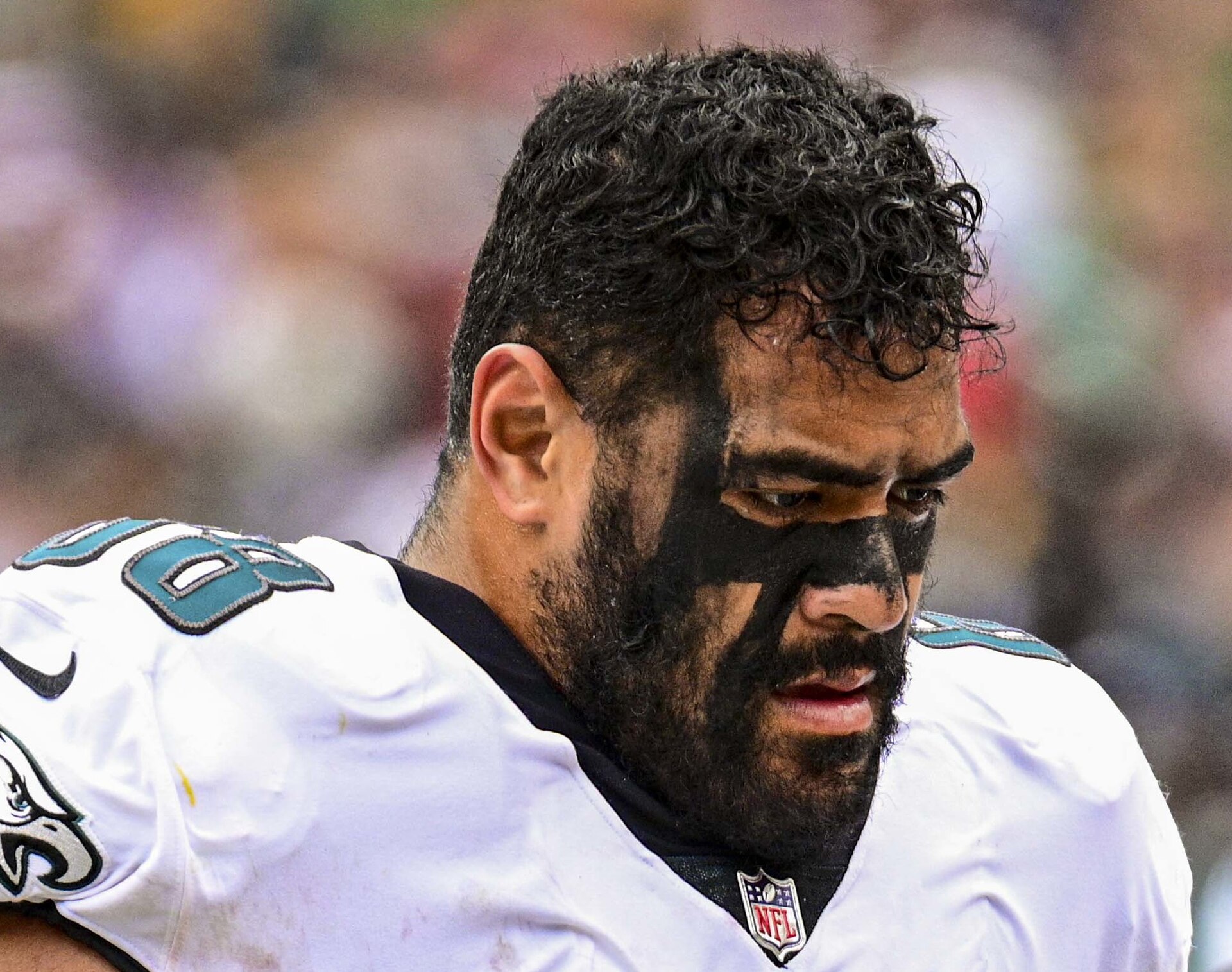
Read article
Jordan Mailata is the NFL’s international proof point — and its least fair standard NFL SUBJECT

Jordan Mailata is the NFL’s international proof point — and its least fair standard

Howie Roseman’s warning after roster cutdowns matters because the Eagles know exactly how unusual Jordan Mailata’s rise was. The NFL’s 2026 International Player Pathway class now enters the league with more support, but also with Mailata’s shadow over every developmental timeline.

Mailata changed the question

Jordan Mailata’s first NFL checkpoint was extraordinary because it arrived almost immediately. Philadelphia drafted the former South Sydney Rabbitohs junior in the seventh round of the 2018 NFL Draft despite his having never played American football. He made the Eagles’ 53-man roster that September, after only a short period of formal football training. (philadelphiaeagles.com)

That was not simply an international player making a roster. Mailata became the clearest demonstration that an athlete could move from an entirely different code into the NFL, absorb the technical demands of offensive tackle and eventually become a core player. Philadelphia later made him its starting left tackle, while reporting around his development has consistently identified the Eagles’ coaching infrastructure — particularly offensive line coach Jeff Stoutland — as central to the conversion. (apnews.com)

The result is a useful proof of concept for the league, but a dangerous measuring stick for everyone who follows him.

Roseman’s point was about time, not talent

Howie Roseman addressed that tension directly after Philadelphia’s 2026 cutdowns. Discussing the Eagles’ international-pathway players, the general manager said it would be difficult to give them a fair chance if they were judged through the lens of former pathway player Jordan Mailata. (philadelphiaeagles.com)

That is a significant admission from the organisation that benefited most from Mailata’s upside. The Eagles’ experience gives them a reason to believe in international development, but it also gives them a clear understanding of how much can remain unfinished when a player is still learning the sport. For a prospect transitioning from rugby, soccer or another football code, the physical translation may be obvious while the football translation is not.

Offensive line is an especially unforgiving example. A player can possess rare size, movement skills and contact instincts yet still need years of work on stance, hand placement, pass-set angles, protections and the speed of NFL communication. Mailata’s body made the experiment plausible; it did not eliminate the learning curve. His unusually rapid progress compressed that curve in public view, creating the impression that international prospects should show meaningful results quickly.

The 2026 class arrives under a different kind of pressure

The NFL announced its 2026 International Player Pathway class on September 2: 13 athletes representing 10 nations. The programme, established in 2017, is designed to give selected international athletes structured access to coaching and development while increasing the number of global players who can earn NFL roster opportunities. (nfl.com)

That scale matters. The pathway is no longer being assessed only as a collection of isolated experiments; it is becoming a repeatable league mechanism. The NFL’s own coverage of the class highlighted prospects such as defensive linemen Uar Bernard and Joshua Weru, tight end Seydou Traore and Japanese kicker Kansei Matsuzawa, reflecting the range of positions and sporting backgrounds now entering the system. (nfl.com)

But a larger intake should not mean an accelerated verdict. The programme’s value may be measured by how many players remain in development long enough to become useful contributors, not by whether the next Mailata appears within a season or two. That is the distinction Roseman was making: Mailata is evidence that the pathway can work, not a timetable for how it must work.

Philadelphia is the relevant case study

The Eagles are well placed to make that argument because Mailata’s development required both patience and a strong positional environment. He was not asked to carry an organisation immediately. He entered as a developmental bet, learned behind established players and benefited from a team willing to treat raw physical potential as a long-term project. His roster breakthrough was fast; his transformation into a starting-calibre tackle took longer.

That distinction should shape how the 2026 class is evaluated. The most important early questions are not whether an international player resembles Mailata, or whether he can dominate a preseason rep. They are whether the club has a credible position plan, whether the player is improving against NFL-specific technique and whether the roster structure allows development without forcing premature exposure.

Mailata’s success has raised the ceiling for the international pathway. It should not lower the patience available to everyone else. The Australian is the league’s clearest success story precisely because his rise was so improbable. Treating it as normal would misunderstand what Philadelphia actually built — and what the newest overseas prospects still need.

SourcesJordan Mailata Earns Spot On Eagles' RosterWelsh rugby star Louis Rees-Zammit was the center of attention at NFL's international player pro dayHowie Roseman recaps roster cutdown weekend: 'We are committed to patience and development'NFL International Player Pathway Program | NFL.comFour International Player Pathway program athletes to know ahead of 2026 NFL Draft | Latest NFL News, Analysis & Updates | NFL.comHowie Roseman recaps roster cutdown weekend: ‘We are committed to patience and development’NFL announces International Player Pathway program Class of 2026Jordan Mailata earns spot on Eagles’ rosterInternational players Jordan Mailata, Obada earn spotsFour International Player Pathway program athletes to know ahead of 2026 NFL Draft
Read article
Jordan Mailata’s next challenge is making Philadelphia’s new run game repeatable NFL SUBJECT

Jordan Mailata’s next challenge is making Philadelphia’s new run game repeatable

Jordan Mailata’s diagnosis of Philadelphia’s uneven work against New England was simple: stop fighting, start executing. After a 24-21 preseason loss, the Eagles’ new run-game structure now needs to turn flashes into habits.

The warning was not about talent

Jordan Mailata did not describe Philadelphia’s inconsistent run game as a personnel problem. He described it as an execution problem — one made worse when joint-practice emotion pushed the Eagles away from their assignments.

“Less boxing and more football,” Mailata said after Philadelphia’s second joint practice with New England on Thursday, August 20. His point was practical rather than theatrical: the pushing and shoving interrupted the offence’s rhythm, and players began thinking about the next confrontation instead of their landmarks and blocks. (inquirer.com)

That distinction matters for an Eagles offence learning a new structure under Sean Mannion. The run game is designed to create multiple entry points for the ball, with the blocking unit moving defenders laterally and the running back making the appropriate read. It offers flexibility, but only if the front reaches its landmarks and wins the first block. Mailata acknowledged that some of those details were missing on Thursday. (inquirer.com)

Mailata sees the picture — and the unfinished work

For Mailata, the appeal of the new scheme is already visible. He said Philadelphia’s Wednesday practice showed how misdirection and the design of the concepts could allow the ball to hit in different places, rather than making the success of every carry dependent on one predetermined crease. (inquirer.com)

That is a meaningful adjustment for a veteran left tackle who has spent years operating within a highly familiar Eagles identity. Earlier in the off-season, Mailata said the arrival of offensive line coach Chris Kuper had given the group new techniques and standards. He described himself as feeling like a rookie again — a revealing admission from one of Philadelphia’s established leaders. (philadelphiaeagles.com)

The challenge now is not understanding that the scheme can work. It is reproducing the correct footwork, angles and combinations when the defence is not providing a clean look and the game becomes less orderly. The new system may create more answers, but it also asks five linemen to arrive at the same answer together.

Saturday offered encouragement, not a verdict

Philadelphia’s second preseason game did not settle the question. The Eagles lost 24-21 at Gillette Stadium on Saturday, August 22, but their scoring summary included a 13-play, 77-yard touchdown drive capped by Will Shipley’s five-yard run. That was a useful response after the choppier second joint practice, even if preseason results are too limited to establish a lasting offensive trend. (philadelphiaeagles.com)

The Patriots’ official account of the game also confirms the context: New England rested several prominent starters after the two joint sessions, while Philadelphia’s game unfolded largely around evaluation of its wider roster. The result therefore provides evidence of progress in stretches, not proof that the new run game is ready for regular-season stress. (patriots.com)

That is where Mailata’s comments become more valuable than the scoreboard. He was not promising instant dominance. He was identifying the standard required for the scheme to become dependable: get to the landmark, win the block, and allow the back to make the read.

The Australian’s responsibility has changed

Mailata’s next challenge is therefore more demanding than simply protecting Philadelphia’s continuity. The recent Eagles story has been about keeping a premier offensive line together; this one is about asking that line to become fluent in a different language.

As the starting left tackle, Mailata remains one of the most important translators of that change. His size and athleticism can help the Eagles create movement on the edge, but the new approach will judge him on more than isolated wins. It will ask whether his block connects with the guard, whether the timing preserves the intended read and whether the same execution survives after an early negative play.

The joint practices showed the volatility: one day Philadelphia found flow and seams, the next it struggled to sustain momentum. Saturday’s winless result offered a partial bounce-back, but not certainty. With Week 1 approaching, Mailata’s message is that the answer is within the group — provided the Eagles stop allowing emotion, missed landmarks or disconnected blocks to turn a promising concept into a one-off play.

SourcesSaquon Barkley and Co. think Eagles hot-and-cold run game can be greatJordan Mailata: ‘I feel like a rookie again. It’s great’Preseason Week 2: Philadelphia Eagles at New England Patriots | Philadelphia Eagles - Philadelphiaeagles.comGame Observations: 9 takeaways from the Patriots preseason victory over the Eagles
Read article
Jordan Mailata’s value is clearer as Philadelphia protects its offensive-line continuity NFL SUBJECT

Jordan Mailata’s value is clearer as Philadelphia protects its offensive-line continuity

Jordan Mailata is unlikely to need a long preseason audition in New England. Philadelphia’s more significant decision is how carefully it manages a starting offensive line whose continuity has become an asset — and whose depth remains under examination.

The development is what Mailata does not need to prove

Philadelphia’s preseason meeting with New England on Saturday, August 22, is not shaping as a conventional evaluation game for Jordan Mailata. The Eagles’ established left tackle remains entrenched with the first unit, while the club’s current questions are concentrated further down the offensive-line depth chart.

That distinction matters. Mailata’s roster position is secure; his value is no longer measured by whether he can survive a few preseason drives. Philadelphia is instead using the summer to determine which reserve linemen can protect the structure around its veteran starters when injuries, rotation or in-game adjustments force changes.

Continuity gives Mailata a stable platform

Philadelphia returned all five projected starting offensive linemen for 2026, with Mailata again listed as the starting left tackle. The Eagles’ own position preview identified that continuity as a defining feature of the group, while also noting that the unit is entering its first training camp under offensive-line coach Chris Kuper.

Mailata was also credited with playing 92 per cent of Philadelphia’s offensive snaps last season. That number is important less as a standalone accolade than as evidence of availability and integration: the Australian is a central part of an offensive line that has operated together extensively, rather than a player still competing for a role.

The early joint-practice reporting supports that picture. Mailata was listed with the first-team offensive line during Philadelphia’s work with New England, alongside Landon Dickerson, Cam Jurgens, Tyler Steen and Lane Johnson. There has been no verified indication in the available reporting of an injury, workload restriction or demotion affecting Mailata ahead of Saturday’s game.

The depth question is the tactical story

Philadelphia’s challenge is not replacing Mailata in the starting lineup. It is making sure the offence does not lose its identity if one of the starters leaves the field.

The Eagles entered the Patriots matchup with several reserve positions still being sorted. Rookie and young interior linemen such as Micah Morris, Jake Majors and Willie Lampkin have been part of that competition, while Markel Bell, Fred Johnson and Drew Kendall have been identified among the more secure players in the broader group. The exact final composition remains unsettled, particularly if Philadelphia elects to carry only 10 offensive linemen.

That uncertainty gives Mailata’s presence a practical tactical value. A fixed left tackle allows the Eagles to evaluate interior combinations and reserve tackles without also changing the blindside protector. It creates a dependable reference point for communication, protection calls and run-blocking angles while younger players compete for the remaining jobs.

Why Saturday still matters

The Patriots’ recent joint-practice coverage described Philadelphia’s offensive line as one of the league’s strongest units, with Mailata and Johnson anchoring the tackle positions. That is a useful external confirmation of Mailata’s status, but it is not the same as a new performance development.

The more relevant observation for Australian NFL followers is whether Philadelphia continues to shield its starters and push the evaluation burden onto the reserves. NFL.com’s preseason log currently records Mailata with no game appearances in 2026, including Philadelphia’s August 15 loss to Baltimore. If that remains unchanged against New England, it should not be read as lost momentum or a concern about his place.

Instead, it would reinforce the Eagles’ allocation of preseason risk: protect the established five, expose the depth chart, and preserve the continuity that makes Mailata’s position valuable in the first place.

The measured conclusion

There is a story here, but it is narrower than a Mailata injury or selection bulletin. The verified development is Philadelphia’s continued treatment of him as a fixed part of its starting infrastructure while the club examines the players behind him.

For Mailata, that is a positive but familiar form of news. His next meaningful test is likely to come when the regular-season offensive system demands sustained protection and movement, not when a preseason scoreboard records whether he played. On August 22, the evidence points to the Eagles protecting continuity — and using the Patriots contest to learn how much of that continuity can survive without their starters.

SourcesEagles 2026 Training Camp Position Preview: Offensive LineEagles training camp 2026, Day 13 practice notes – NBC Sports PhiladelphiaJordan Mailata 2026 Logs StatsTrench Report: 15 takeaways from the Patriots first joint practice with the EaglesEagles with the most on the line in next preseason game vs. Patriots
Read article
Profile

About Jordan

Jordan Mailata is an Australian professional American football offensive tackle for the Philadelphia Eagles of the National Football League. A former rugby league player from Sydney, he entered the NFL without having previously played American football, developed through Philadelphia’s coaching system and became a starting left tackle, Super Bowl champion and second-team All-Pro.

Jordan Lafoga Mailata was born on 31 March 1997 and grew up in the Bankstown and Condell Park area of Sydney, New South Wales. He developed through rugby league and was associated with the South Sydney Rabbitohs before pursuing an unlikely transition to American football. At approximately 20 years of age, Mailata travelled to the United States after NFL scouts identified his exceptional size, athleticism and movement skills. He trained through the NFL’s international development pathway and impressed Philadelphia Eagles offensive line coach Jeff Stoutland despite having no previous American football experience. The Eagles traded up to select him with the 233rd pick in the seventh round of the 2018 NFL Draft. Mailata spent his first two NFL seasons developing and did not appear in a game in 2018 or 2019. He made his NFL debut in 2020 and became a regular starter at left tackle during that season. From 2021 onward, he established himself as a key member of Philadelphia’s offensive line, protecting the quarterback’s blind side and contributing as a powerful run blocker. Mailata started in Philadelphia’s Super Bowl LVII appearance during the 2022 season and helped the Eagles win Super Bowl LIX following the 2024 season. His 2024 campaign brought second-team All-Pro recognition, while his career development became one of the NFL’s best international-player success stories. The supplied provider data lists him as active with the Philadelphia Eagles at offensive tackle; his publicly documented contract extension runs through the 2028 season.

Key stats & awards

Mailata’s NFL.com career summary lists 90 regular-season games and 85 starts from 2020 through 2025. He was a starting left tackle in Philadelphia’s Super Bowl LVII and Super Bowl LIX campaigns. The Eagles’ 2025 Walter Payton NFL Man of the Year nominee profile states that he earned second-team All-Pro honours in 2024. The Eagles also described him as a two-time Pro Bowl alternate by October 2024.

Famous moments

His defining moments include being drafted by Philadelphia in 2018 without prior American football experience; making his NFL debut in 2020; becoming the Eagles’ full-time left tackle; starting in Super Bowl LVII during the 2022 season; returning from a 2024 hamstring injury; and helping Philadelphia win Super Bowl LIX in February 2025. He became the first Australian to play in and win a Super Bowl, according to reputable Australian reporting.