Coverage

Ben in the news

All news
Ben Simmons’ Sacramento comeback ends before opening night after Achilles tear NBA SUBJECT

Ben Simmons’ Sacramento comeback ends before opening night after Achilles tear

Ben Simmons’ encouraging return with the Sacramento Kings has been cut short by a season-ending right Achilles tendon tear, removing the Australian from the 2026–27 season before he could play a regular-season minute.

The comeback stops at the final hurdle

Ben Simmons’ Sacramento comeback has ended before opening night, with the Kings confirming on Sunday, October 18, that an MRI had revealed a torn right Achilles tendon suffered during a live practice drill. The team said Simmons will undergo surgery, while the NBA reported the injury as season-ending. The Kings’ regular season begins on Wednesday, October 21, against the Los Angeles Clippers. (nba.com)

The timing is especially severe because Simmons had completed the most important part of his return: demonstrating that he could handle NBA movement, contact and decision-making again. Sacramento had signed him to a one-year, $3.5 million contract in September after he missed the entire 2025–26 season. The Achilles injury now removes the season that was supposed to establish whether his physical reset could translate into a sustainable role. (nba.com)

Preseason evidence had changed the question

Simmons’ final preseason appearance had offered Sacramento a useful, if limited, sample. He produced 14 points, eight rebounds and seven assists, and the Kings had used him as a starter after he came off the bench for seven points in nine minutes in his first appearance. Across two preseason games, NBA.com listed him at 10.5 points, 4.0 rebounds and 4.0 assists per game. (nba.com)

Those numbers mattered less for their scoring value than for what they suggested about function. Simmons was being evaluated as a large creator who could push the ball, connect actions through the middle of the floor and defend multiple positions. His passing remained the clearest way to raise Sacramento’s offensive floor without requiring him to become a high-volume shooter. The 14-8-7 line was therefore evidence of involvement and workload, not proof that the longer-term questions had been solved.

Sacramento loses a connective piece

The Kings now have to replace more than Simmons’ individual production. His anticipated role gave Sacramento a secondary organiser behind or alongside its primary guards, while his size offered a different defensive shape from a conventional point guard. With Simmons unavailable, the rotation loses a player who could have linked transition, rebounding and half-court creation in the same possession.

NBA.com reported that rookie Darius Acuff Jr. was set to open the season as Sacramento’s starting point guard, with Simmons expected to operate as a backup option. The injury therefore leaves the Kings with less flexibility around their lead-guard minutes and places greater responsibility on the remaining ball-handlers to maintain structure when the first action is contained. (nba.com)

That tactical loss is separate from the personal setback. Simmons had not yet shown that he could sustain a full season, but he had at least reached the point where the discussion had moved from whether he could return to what Sacramento could reasonably ask of him. The Achilles tear resets that conversation entirely.

A longer road than a short-term absence

The Kings have not supplied a detailed rehabilitation timeline beyond confirming surgery and the season-ending diagnosis. That distinction matters: the immediate status is clear, but the future timetable and the level of athletic recovery cannot yet be responsibly projected.

For Simmons, the injury follows a season away from the NBA and a stretch of back and leg problems that had already made availability the central measure of his career. His two preseason games had provided a modest but meaningful sign that he could again occupy a functional NBA role. Instead, his return has stopped three days before Sacramento’s opener, leaving the 30-year-old Australian facing another extended rehabilitation process before he can resume the career revival that had only just begun. (nbcsports.com)

SourcesBen Simmons suffers torn Achilles tendon during practiceBen Simmons agrees to one-year deal with Kings | NBA.comSacramento Kings Team Info and News | NBA.comKings' Ben Simmons suffers torn Achilles at practice Sunday, will miss entire season - NBC SportsKings guard Ben Simmons suffers torn Achilles tendon during practiceKings’ Ben Simmons suffers torn Achilles during practice, will undergo surgeryKings’ Ben Simmons suffers torn Achilles at practice Sunday, will miss entire seasonBen Simmons agrees to one-year deal with Kings

Header image: AI-generated editorial illustration.

Read article
Ben Simmons’ 26-minute finish turns Sacramento’s comeback into an opening-night workload question NBA SUBJECT

Ben Simmons’ 26-minute finish turns Sacramento’s comeback into an opening-night workload question

Ben Simmons’ strongest preseason outing was less important for the 14 points than the 26 minutes behind them. After a year away from the NBA, Sacramento now has to decide how aggressively to deploy its returning point-forward when the games begin to count.

The workload was the development

Ben Simmons closed Sacramento’s preseason with 14 points, eight rebounds and seven assists in 26 minutes against San Antonio on October 16 in the United States, or October 17 Australian time. The Kings lost 126-97 and finished 0-5, but the individual usage was the clearest indication yet that Simmons’ return is moving beyond managed exposure. (aws-prod-web9.rotowire.com)

The box score matters, but the minutes matter more. Simmons had played only nine minutes in his previous preseason appearance, making the jump to almost 26 minutes a meaningful increase in physical and tactical responsibility. He also started the finale, giving Sacramento a chance to evaluate him in a more conventional rotation setting rather than as a short-burst reserve. (aws-prod-web9.rotowire.com)

Production without a scoring burden

Simmons’ 5-of-9 shooting and perfect 4-of-4 at the free-throw line produced an efficient 14 points, but Sacramento’s more important return was his distribution. His seven assists led the Kings, while the eight rebounds reinforced the value of using a 6-foot-10 ball-handler who can initiate transition after defensive possessions. (aws-prod-web9.rotowire.com)

That profile offers Sacramento a different type of offensive organiser. Simmons does not need to dominate the scoring column to influence possessions: he can advance the ball, find cutters and create early-offence opportunities before a defence is set. The limitation is equally clear. The outing included five turnovers, and the Kings were outplayed badly as a team, so the performance cannot be treated as proof that their offence is solved. It is evidence that Simmons can still provide multiple forms of value when he is on the floor. (sactownsports.com)

Sacramento’s decision is not simply starter or bench

The next question is how Sacramento distributes Simmons’ minutes across the opening weeks. A 26-minute preseason test suggests he is physically far enough along to handle a substantial role, but it does not establish that he should immediately play a full starter’s workload after sitting out the 2025-26 season. The Kings must balance his playmaking value against the need to preserve his availability over a longer schedule.

That creates several practical options. Simmons could open games alongside Sacramento’s established creators, operate as a second-unit initiator, or move between both groups depending on matchup and game flow. The final preseason start shows the coaching staff wanted to examine him in a prominent role; it does not, by itself, confirm a permanent starting assignment. The more revealing measure will be whether his minutes remain stable when the Kings face regular-season defensive game-plans and tighter rotation decisions. (aws-prod-web9.rotowire.com)

The result keeps the sample in perspective

Sacramento’s winless preseason should prevent over-reading one productive night. Simmons has appeared in only two games, averaging 10.5 points, four rebounds and four assists across those outings according to basketball.com.au, while the San Antonio performance accounts for much of the stronger final line. (basketball.com.au)

That small sample is nevertheless enough to change the immediate question. Earlier, Sacramento was assessing whether Simmons could participate reliably after his year away. Now the more useful question is how much of his connective play the Kings can use without overloading him or compromising the rest of the rotation. The 26-minute finish did not resolve that issue; it made it unavoidable before opening night.

For Simmons, that is a constructive problem. His comeback is no longer being measured only by whether he can get on the floor. It is now about how the Kings sequence his minutes, where they place the ball in his hands and whether his rebounding and passing can remain valuable when the regular season removes the protection of preseason experimentation.

SourcesBen Simmons News: Packs stat line in loss | RotoWireKings Close Preseason Winless, Fall 126-97 to SpursSimmons primed for Kings home opener has 14-8-7 against Spurs | Basketball.com.auGame Recap: Spurs 126, Kings 97Ben Simmons News: Packs stat line in loss'Not cocky': Ben's back is back and he's 'ready to go'Simmons primed for Kings home opener has 14-8-7 against Spurs

Header image: AI-generated editorial illustration.

Read article
Ben Simmons’ Sacramento comeback has shifted from audition to opening-night responsibility NBA SUBJECT

Ben Simmons’ Sacramento comeback has shifted from audition to opening-night responsibility

Ben Simmons was held out of Sacramento’s latest preseason game, but the Kings’ cautious workload management has not slowed his rise up the depth chart, with the Australian now expected to start the regular-season opener.

The caution is real — so is the role

Ben Simmons’ Sacramento comeback has taken a striking turn. Less than a week after the Australian finally returned to NBA game action following a lost 2025-26 season, he is now expected to start the Kings’ regular-season opener against the Los Angeles Clippers on October 21.

That projection remains reporting rather than an official team announcement, but it marks a major change from the original framing of Simmons’ return. This was supposed to be a controlled audition: limited minutes, a gradual ramp-up and a chance to prove he could stay on the floor. Instead, Sacramento appears to be considering him as part of its first-choice group from day one. (cbssports.com)

The Portland absence does not necessarily change the plan

Simmons sat out Sacramento’s 110-98 preseason loss to Portland on October 13, with the Kings taking a conservative approach to several established players. Sacramento coach Doug Christie said the priority was getting the group healthy and ramped up for the regular season, rather than pushing veterans through every preseason fixture. (si.com)

That distinction matters for Simmons. After missing the entire previous season while managing his injury history, the Kings have little incentive to turn a preseason game into a physical referendum on his readiness. Sitting out Portland is not evidence that his comeback has stalled; it is consistent with a club trying to preserve the player it may now view as a starting-calibre organiser.

The timing also underlines the tension at the heart of Simmons’ return. Sacramento is comfortable enough with his progress to contemplate a starting role, but cautious enough to protect his workload before the games begin to count. Both things can be true at once.

Why Sacramento sees a starting fit

The appeal is straightforward. Simmons gives Sacramento size, defensive versatility and a second ball-handler beside rookie guard Darius Acuff. The Kings’ preferred pairing would allow Acuff to attack away from the ball while Simmons handles, screens, pushes in transition and absorbs some of the playmaking burden.

That is the tactical logic behind the proposed lineup. Simmons can function as a point forward, using his passing to trigger movement and his defensive range to cover for a young guard. Sacramento’s own roster construction also creates a need for someone who can connect possessions without requiring a high volume of shots. The Kings’ stated desire to improve their pace and defensive identity makes Simmons’ skill set particularly relevant. (si.com)

But the fit is not without pressure. Simmons remains a non-shooter, and Sacramento must surround him with enough spacing to prevent half-court possessions from shrinking. Playing him alongside Domantas Sabonis or another non-shooting big could compress the floor, leaving the Kings reliant on their perimeter scorers to punish help defenders. That is the tactical question that will follow him into opening night.

The first minutes still matter more than the label

Simmons’ preseason debut offered only a small sample, and Sacramento has been unusually cautious with its core rotation. The Kings have given their main players limited exposure while prioritising health, leaving plenty unresolved before the October 21 opener. (si.com)

That means the starting projection should be read as a vote of confidence, not a guarantee that Simmons has already reclaimed his old level. His role will be judged through availability, defensive activity and the quality of his decisions more than raw scoring. Sacramento does not need him to become a high-volume offensive creator; it needs him to make the offence cleaner, defend multiple positions and remain available.

For a player who did not appear at all in 2025-26, that is a substantial expectation. The Kings are no longer simply asking whether Ben Simmons can contribute to their comeback season. They are preparing to find out whether he can help set its shape from the opening tip.

SourcesKings' Ben Simmons: Expected to start Opening Night - CBS SportsThree Takeaways From Kings' Blowout Loss to Trail BlazersHow Ben Simmons Can Make A Big Impact On The KingsKings Announce 2026-27 Preseason Schedule and Broadcast Team

Header image: AI-generated editorial illustration.

Read article
Ben Simmons’ Kings return reaches its first real test: availability before role NBA SUBJECT

Ben Simmons’ Kings return reaches its first real test: availability before role

Ben Simmons’ reported form at Sacramento training camp has created optimism, but three missed preseason games have shifted the immediate question from where he fits to whether he can take the floor at all.

The camp praise now needs a game attached

Ben Simmons’ Sacramento return has reached a more revealing stage than the early comeback narrative suggested. The Kings have reportedly been encouraged by his training-camp work, with ESPN’s Marc J. Spears describing Simmons’ camp as outstanding and suggesting a starting role could become realistic within the opening month of the season. That remains reporting, not an established rotation decision. (reddit.com)

The confirmed development is simpler: Simmons was unavailable for Sacramento’s preseason opener against the Los Angeles Lakers on October 5, did not play in the October 8 rematch, and was again ruled out on October 9. That leaves him without a preseason appearance heading into Saturday’s game against the Golden State Warriors. (nba.com)

The distinction matters because positive practice reports can establish that a player is moving well, engaging with teammates and showing enough capacity to attract internal optimism. They cannot establish game readiness, contact tolerance, conditioning across NBA possessions or how a coach will use him when the pace and spacing become real.

Sacramento is describing caution, not a confirmed setback

The available reporting points to a cautious ramp-up rather than a confirmed new injury. NBA.com’s fantasy-news feed reported that the Kings wanted to build Simmons up slowly and that there was no injury listed when he was held out of the opener. A later update said he was not ready for the Lakers rematch but could be in line to debut against Golden State. (nba.com)

That language should not be stretched into a medical conclusion. Sacramento has not, in the sources available, publicly confirmed a specific injury or provided a detailed timetable. Nor has the club confirmed that Simmons will play on October 10. The Warriors game is therefore an availability checkpoint, not a scheduled comeback date.

The role question comes second

Simmons’ reported camp form has made the tactical possibilities easy to imagine. Sacramento can use his size as a ball-handler, allow him to initiate in transition and ask him to defend larger creators or forwards. One report described the Kings experimenting with him across roles rather than fixing him to a conventional position, which would fit a player whose value depends more on passing, defensive versatility and connective play than perimeter shooting. (hoopswire.com)

But the order of questions has changed. Before Sacramento can assess whether Simmons should start, it needs evidence that he can participate consistently. A starting conversation built entirely on camp impressions risks skipping the most basic requirement of a comeback: availability.

The Kings’ preseason schedule gives them opportunities after Golden State, with further games against Portland on October 13 and San Antonio on October 16. Those dates matter because even a short appearance against the Warriors would not, by itself, answer whether Simmons can handle a regular workload. The more useful evidence would be repeated participation, a clear defensive assignment and enough on-ball responsibility to show how his body and role respond over multiple outings. (nba.com)

Saturday is a checkpoint, not a verdict

If Simmons is cleared against Golden State, the significance will be less about headline production than about what Sacramento is willing to test. Does he enter as a primary handler, operate alongside Domantas Sabonis, defend in switchable line-ups or receive a limited stint designed simply to reintroduce NBA contact? Those details would provide more useful information than the starting speculation currently attached to his camp.

If he remains out, the interpretation should still be measured. Three missed preseason games would reinforce the availability concern, but they would not prove that the Kings’ optimism was misplaced or that a long-term problem has returned. It would mean only that the transition from encouraging training-camp reports to competitive basketball has taken longer than first hoped.

For now, Simmons’ Kings story is not yet a role win or a comeback failure. It is a live test of whether reported progress can become repeatable game availability. Until that happens, Sacramento’s most important decision is not where to start him. It is when it can safely start using him.

Sources[Marc J. Spears] I’ve heard that Ben Simmons had an outstanding camp. I wouldn’t be surprised if, within a month, he’s starting. He’s doing that well. He looks like Sixers Ben again.Fantasy News | Stats | NBA.comKings may have decided Ben Simmons doesn’t really need a position - Hoops WireKings Announce 2026-27 Preseason Schedule and Broadcast Team | Sacramento KingsSacramento Kings announce 2026-27 preseason scheduleNBA.com fantasy news: Ben Simmons unavailable for Sacramento’s preseason gamesNBA.com fantasy news: Ben Simmons held out of preseason openerNBA.com 2026-27 Sacramento Kings season previewMarc J. Spears report on Simmons’ training camp

Header image: AI-generated editorial illustration.

Read article
Ben Simmons’ Sacramento comeback now has an availability question attached NBA SUBJECT

Ben Simmons’ Sacramento comeback now has an availability question attached

Ben Simmons’ Kings return did not begin on the court, with Sacramento holding its veteran point-forward out of the October 5 preseason opener as the club manages his ramp-up after a year away.

The first checkpoint was a missed game

Ben Simmons’ Sacramento comeback has already moved into its first uncomfortable phase: availability.

The three-time NBA All-Star was listed as a DNP — coach’s decision for the Kings’ preseason opener against the Los Angeles Lakers on Monday, October 5. Sacramento lost the game 123-114, but the more relevant development for Simmons was that his return remained theoretical while the rest of the rotation began its first live test. (nba.com)

That designation matters because there is no reported injury attached to the decision. NBA.com’s team news feed, citing Marc J. Spears, reported that the Kings were planning to ramp Simmons up cautiously, with October 8 against the Lakers or October 10 against Golden State identified as possible targets. CBS Sports carried the same reporting, describing the absence as unrelated to injury. (nba.com)

Sacramento has been clear about the role

The timing creates a sharper question than a routine preseason rest day. Simmons arrived in Sacramento after sitting out the 2025-26 season, signing a veteran-minimum deal and entering camp as a low-risk reclamation play. The Kings do not need him to recreate the entire Philadelphia version of his game immediately, but they do need to find out whether his size, passing and defensive versatility can stabilise the second unit.

The message from coach Doug Christie and the Kings’ staff has been deliberately uncomplicated: be himself. Simmons said during camp that the instruction was to play naturally, while his early work had him running with the second unit and helping Sacramento’s younger players with the details and decision-making that come with NBA possessions. (basketball.com.au)

That gives the Kings a fairly specific preseason experiment. Simmons is not simply competing for a roster place; his minutes are supposed to show whether he can organise a bench group without dominating the ball, defend across positions and make the game easier for developing teammates. None of that can be properly assessed from the sideline.

October 8 or October 10 is the next marker

Sacramento’s schedule leaves two obvious checkpoints. The Kings travel to Los Angeles for the rematch on Thursday, October 8, before facing the Golden State Warriors at Chase Center on Saturday, October 10. Both games were part of the club’s announced five-game preseason schedule. (nba.com)

If Simmons appears against the Lakers, the headline will not be about a box-score explosion. The useful evidence will be functional: how quickly he gets into actions, whether he is comfortable initiating from the top, how he communicates defensively and whether his body holds up as the pace rises. A short, controlled shift would still provide Sacramento with more information than another practice report.

If the Kings wait until Golden State, that should not automatically be read as a setback. The available reporting points to caution rather than a known injury, and preseason management is often about building a player’s workload toward opening night rather than maximising early appearances. But every missed opportunity narrows the runway for Simmons to establish chemistry with Sacramento’s bench and demonstrate that the club’s faith in his all-around game can translate into a dependable rotation role. (nba.com)

The story is now less about the comeback headline

Simmons’ signing was always going to be judged through availability as much as production. After a season away from the NBA, the Kings need repetitions: live reads, physical defensive possessions and evidence that he can string together professional minutes. The October 5 DNP does not prove that he is unavailable in any lasting sense, but it does make the next appearance more informative.

Sacramento’s stated plan is for Simmons to be himself and support the young group. The immediate test is whether he can get onto the floor often enough for that identity to become useful basketball rather than a camp description. October 8 is the first chance. October 10 is the next one. Until Simmons takes one of those courts, the comeback remains an availability story before it becomes a basketball story.

SourcesLos Angeles Lakers vs Sacramento Kings Oct 5, 2026 Box Scores | NBA.comSacramento Kings Team Info and News | NBA.comKings coaches give Simmons simple message: 'Be me' | Basketball.com.auKings Announce 2026-27 Preseason Schedule and Broadcast Team | Sacramento KingsSacramento Kings — 2026-27 preseason scheduleNBA.com — Kings team news and Ben Simmons updateNBA.com — Lakers at Kings, October 5, 2026 box scoreCBS Sports — Ben Simmons unlikely to debut MondayBasketball.com.au — Kings coaches give Simmons simple message: ‘Be me’

Header image: AI-generated editorial illustration.

Read article
Ben Simmons’ first Kings–Lakers meeting will test how much Sacramento trusts his handling NBA SUBJECT

Ben Simmons’ first Kings–Lakers meeting will test how much Sacramento trusts his handling

Sacramento’s preseason opener is not on October 6, as initially planned, but October 5 in California — and it still gives Ben Simmons an immediate, if limited, read against fellow Australian Matisse Thybulle.

The date has moved, but the question remains

Ben Simmons’ first Sacramento Kings preseason game is scheduled for Monday, October 5, 2026, against the Los Angeles Lakers at Golden 1 Center. The game is listed for 7pm Pacific time, which makes it Tuesday, October 6 in Australia. It is therefore the first confirmed Australia-v-Australia meeting of the NBA preseason involving Simmons, but not a game being played on October 6 in the United States. (nba.com)

The Australian matchup is with Matisse Thybulle, whose Lakers move has placed another defensively minded Australian on the opposite side of the floor. That detail matters less as a personal duel than as a useful piece of context: Sacramento will be examining what Simmons can organise with the ball while Los Angeles has a proven perimeter defender capable of testing his decisions and spacing. (basketball.com.au)

What is confirmed about Simmons’ return

Simmons is officially listed as a Sacramento player after signing with the Kings on September 7. The NBA’s Sacramento team page lists him as a 6-foot-10 guard-forward, a description that reflects the unusual flexibility the Kings are acquiring rather than fixing him to a single position. (nba.com)

The broader significance is his return to NBA competition. The NBA’s 2026-27 Sacramento season preview says Simmons sat out the 2025-26 season after his last campaign was split between Brooklyn and the Los Angeles Clippers. It frames the central issue as whether he can return to his earlier level of impact, rather than presenting a confirmed starting role or defined rotation assignment. (nba.com)

Sacramento coach Doug Christie has also spoken positively about Simmons’ early camp presence. The Kings’ team page reported Christie saying that his prior impressions of Simmons had not matched the player he had encountered in camp. That is evidence of a favourable internal first impression, but it is not evidence that Simmons has already won primary point-guard duties or a particular place in the starting lineup. (nba.com)

The ball-handling test is more specific than the box score

The most revealing part of Monday’s game will be how often Sacramento puts the ball in Simmons’ hands before the offence is fully formed. The Kings can use him as a primary organiser, a connector operating from the elbow or high post, or a transition initiator who pushes the ball after defensive rebounds. Those are different jobs, and a preseason opener may include all three without establishing which one will survive into the regular season.

The first indicator will be whether Simmons begins possessions against a set defence or receives the ball after another guard has already created an advantage. The second will be whether Sacramento’s bigs cut and screen around him, allowing his passing to become a structural part of the offence, or whether he is mostly deployed as a hand-off option and defensive utility piece. The third will be his defensive assignment: guarding a forward, switching across positions or taking the opposing lead handler would each point to a different tactical plan.

None of those conclusions should be drawn from one preseason rotation. Sacramento’s published schedule has the Kings playing the Lakers again on October 8, followed by Golden State, Portland and San Antonio. That sequence should provide a better sample of whether Simmons’ handling load is repeatable and whether the Kings are pairing him consistently with their other primary creators. (nba.com)

A useful first read, not a verdict

The Lakers matchup can establish what Sacramento is willing to try, but it cannot settle whether Simmons is back as a full-time initiator. The confirmed facts are narrower: he has returned to the NBA, he is on the Kings’ roster, Christie has offered an encouraging camp assessment, and the preseason opener is against Thybulle’s Lakers on October 5 in Sacramento. (nba.com)

The worthwhile question for OzBallers readers is consequently not whether Simmons resembles his former All-Star self immediately. It is whether the Kings trust him with enough live possession time to let his passing, defensive versatility and size shape their lineups. Against a Lakers team featuring Thybulle, the first answer should arrive through role and responsibility before it arrives through scoring numbers.

SourcesKings Announce 2026-27 Preseason Schedule and Broadcast Team | Sacramento KingsEvery Australian 2026-27 NBA pre-season game | Basketball.com.auSacramento Kings Team Info and News | NBA.comSeason Preview: Sacramento KingsKings Announce 2026-27 Preseason Schedule and Broadcast TeamLos Angeles Lakers vs Sacramento Kings — October 5, 2026 Game DetailsSeason Preview: Sacramento KingsSacramento Kings Team Info and News

Header image: AI-generated editorial illustration.

Read article
Ben Simmons’ Sacramento brief is simple: be himself, then make the Kings’ big pairing work NBA SUBJECT

Ben Simmons’ Sacramento brief is simple: be himself, then make the Kings’ big pairing work

Sacramento’s message to Ben Simmons is less about restoring his old status than clarifying how his passing, size and defensive range can complement Domantas Sabonis.

The instruction is simpler than the basketball problem

Ben Simmons has been given an unusually direct assignment in Sacramento: play as himself. After Thursday’s practice, Simmons spoke with Kings media about returning to the NBA, with coach Doug Christie also offering a strong early endorsement of the Australian’s engagement and approach. The message is notable because it does not ask Simmons to manufacture a new identity or immediately reproduce the version who made three All-Star teams. It asks him to trust the skills that remain useful. (nba.com)

That distinction matters. Simmons has not played in the NBA since the 2024-25 season, and his one-year agreement with Sacramento is effectively a low-risk test of whether his body and game can support a regular role again. The Kings do not need a nostalgic recreation of his Philadelphia peak. They need a functional, sizeable connector who can move the ball, defend across positions and reduce the burden on their primary creators. (cdn-uat.nba.com)

Sabonis makes the fit more specific

The key tactical question is not whether Simmons can pass. It is where those passing skills sit beside Domantas Sabonis, another frontcourt player whose value is built around initiating offence from the elbow, the top of the floor and handoff actions. Sacramento therefore has to avoid making Simmons and Sabonis duplicate one another. If both players spend possessions waiting for the other to organise the offence, the pairing becomes oversized without becoming meaningfully harder to defend.

The more promising version uses Simmons as the movement piece around Sabonis. He can bring the ball up against slower match-ups, attack a disorganised floor before the defence is set and cut when Sabonis receives the ball as a hub. His height also gives Sacramento a second passer who can see over pressure and deliver advance passes without requiring every possession to begin with Sabonis. That is an inference from their established skill profiles, not a claim that Sacramento has already committed to a specific starting configuration. Sabonis’ career profile includes significant rebounding and playmaking responsibility, while Simmons’ value has historically come from size, transition handling and defensive versatility. (cdn.nba.com)

The spacing concern is obvious. Neither player provides the conventional threat of a high-volume perimeter shooter, so the Kings will need reliable shooting elsewhere and disciplined off-ball movement from Simmons. “Playing as himself” cannot mean standing outside the action when the ball is elsewhere. It has to mean screening, cutting, sealing smaller defenders and making the next pass quickly enough that his lack of shooting does not freeze the possession.

Defence may be the cleanest route to value

Simmons’ defensive role could be less complicated. At 6-foot-10, he gives Sacramento a player capable of taking assignments across the backcourt and frontcourt, allowing the Kings to change match-ups without sacrificing size. That versatility is particularly valuable beside Sabonis, who is most useful when he can stay near the paint and control rebounds rather than repeatedly being dragged into uncomfortable perimeter actions.

The question is not whether Simmons can still produce occasional disruptive possessions. It is whether he can sustain the physical workload and concentration required to influence a defence over a rotation. Sacramento’s preseason opener against the Los Angeles Lakers on October 5 — listed in the Kings’ official schedule, despite the originally planned October 6 reference — should provide the first controlled evidence of his conditioning, defensive communication and willingness to play without dominating the ball. (nba.com)

The first test is connection, not production

Simmons’ numbers against the Lakers will matter less than the shape of his minutes. Sacramento should be looking for three early indicators: whether he can initiate without slowing Sabonis’ decision-making, whether he creates advantages through cuts and short rolls rather than simply holding the ball, and whether his defensive versatility survives repeated possessions. Those details will tell the Kings more than a handful of transition assists or a preseason scoring total.

That is why the camp message is sharper than another generic comeback narrative. Sacramento is not merely asking whether Simmons can return. It is testing which version of him can coexist with Sabonis and support a roster that needs size without losing offensive flow. If Simmons accepts that narrower, connective role, “being himself” may be enough. If the pairing demands that he become a reliable shooter or a full-time lead guard again, the Kings’ experiment will become much harder to sustain.

SourcesSacramento Kings Team Info and News | NBA.comBen Simmons agrees to one-year deal with Kings | NBA.comDOMANTAS SABONISKings Announce 2026-27 Preseason Schedule and Broadcast Team | Sacramento KingsSacramento Kings announce 2026-27 preseason scheduleBen Simmons agrees to one-year deal with KingsSacramento Kings team news and roster informationDomantas Sabonis 2025-26 Sacramento Kings media guide

Header image: AI-generated editorial illustration.

Read article
Ben Simmons is entering the NBA’s veteran reclamation window with something to prove NBA SUBJECT

Ben Simmons is entering the NBA’s veteran reclamation window with something to prove

As NBA teams use camp and preseason to test low-cost veteran bets around younger cores, Ben Simmons’ Sacramento return offers a sharper question than whether he can still resemble his former self.

The NBA’s cheapest experiments are now under examination

Training camp opened across most of the NBA on September 29, beginning a short evaluation window in which established veterans can be tested without necessarily being handed a defined regular-season role. The league’s 2026-27 calendar allows rosters to remain at camp size before they are finalised for opening night on October 19, creating space for teams to trial players whose upside is familiar but whose reliability is not. (nba.com)

The pattern is visible in the market, even if it is too early to call it a formal league-wide strategy. New York, for example, has brought several experienced players into camp on low-commitment deals, including former high picks and rotation veterans. Cleveland has also reportedly structured Mario Hezonja’s return around a delayed financial trigger, giving the Cavaliers time to assess whether his NBA value has returned. Those moves reflect the calculation: a veteran’s previous level can be worth investigating when the financial downside and roster commitment are limited. (cavaliersnation.com)

That is why Simmons matters to the conversation now. The Sacramento Kings are not simply giving a former star another platform; they are placing a recognisable reclamation bet inside a young roster that needs structure, defensive size and secondary playmaking.

Simmons is a test case, not a finished comeback story

Ben Simmons’ return is confirmed. Sacramento lists him on its roster after he signed on September 7, while the NBA’s Kings season preview identifies him as one of the team’s key additions. What remains unconfirmed is the size of his role, his physical availability across the preseason and whether the Kings view him as a rotation player or insurance behind their younger ball-handlers. (nba.com)

The context is unusually stark. Simmons sat out the entire 2025-26 season after averaging 5.0 points, 4.7 rebounds and 5.6 assists across his split 2024-25 campaign, according to the NBA’s season preview. He is now 30 and joining a Sacramento group built around Domantas Sabonis, Zach LaVine, Keegan Murray and seventh pick Darius Acuff Jr. The Kings’ own outlook describes Acuff as the intended long-term lead-guard solution, meaning Simmons is unlikely to be judged on whether he can reclaim the offence as his own. (nba.com)

The more useful question is whether he can make the game easier for that group. His positional versatility remains the theoretical attraction: Simmons can initiate offence, defend multiple positions and operate as a connective passer without needing high usage. But those are capabilities, not evidence of current form. Sacramento’s five-game preseason schedule, beginning against the Los Angeles Lakers on October 5, should provide the first public clues about his conditioning, defensive range and willingness to occupy useful spaces away from the ball. (nba.com)

Shooting intent will be judged by consequence, not declarations

The shooting component is more difficult to assess responsibly. Simmons’ increased willingness to shoot, if it appears in camp or preseason, would be meaningful only if it changes how opponents guard him and how Sacramento’s offence functions around him. A few attempts will not establish a mechanical breakthrough, and there is no verified evidence yet that he has become a dependable perimeter shooter.

That distinction matters because Sacramento’s roster already contains a young lead-guard question. NBA.com describes Acuff as the player expected to take control of the offence, while also noting that the Kings must manage minutes across a deep group. Simmons therefore has a plausible path that does not require him to dominate possessions: defend bigger creators, rebound from the guard line, make the first pass and survive in line-ups with Sabonis or Acuff. (nba.com)

For Simmons, the opening-night deadline turns confidence into a practical test. Can renewed belief produce repeatable defensive possessions, decisive passing and enough offensive aggression to prevent teams from ignoring him? If the answer is yes, Sacramento may have found a low-cost veteran who can stabilise a developing team. If not, the Kings’ experiment will look like the same league-wide wager in reverse: a former star’s name can earn an audition, but only dependable possessions can earn a role.

Sources2026-27 NBA key datesReport: Cavs built an escape hatch into Mario Hezonja's contract - Cavaliers NationSacramento Kings Team Info and News | NBA.comSeason Preview: Sacramento KingsKings Announce 2026-27 Preseason Schedule and Broadcast Team | Sacramento Kings2026-27 NBA key datesNBA camps set to open with Media Day in most cities Monday, then practices TuesdayKings Announce 2026-27 Preseason ScheduleBen Simmons 2026 Media Day Press Conference

Header image: AI-generated editorial illustration.

Read article
Ben Simmons’ first Sacramento preseason will test whether his game still connects the Kings’ pieces NBA SUBJECT

Ben Simmons’ first Sacramento preseason will test whether his game still connects the Kings’ pieces

For Ben Simmons, the first question in Sacramento is not whether he can resemble his old self. It is whether his size, passing and defensive range can make the Kings’ existing frontcourt more coherent.

The experiment starts before the results do

Ben Simmons arrives in Sacramento with something more demanding than a comeback narrative. He has to show that the skills which once made him unusual can still connect a functioning NBA lineup.

The Kings’ one-year agreement, confirmed on September 8, brought Simmons back to the league after he sat out the entire 2025–26 season. His last NBA season, in 2024–25, ended with modest offensive production but a recognisable all-round profile: 5.0 points, 5.6 assists and 4.7 rebounds in 22.0 minutes across 51 games. (nba.com)

That makes Sacramento’s opening weeks less about restoring his old status than establishing a usable shape. The first opportunity to see that shape in public is now scheduled for October 5 against the Los Angeles Lakers at Golden 1 Center, rather than October 6. The Kings then play the Lakers again on October 8, Golden State on October 10, Portland on October 13 and San Antonio on October 16. (nba.com)

The ball has to move through him, not around him

The most important offensive observation will be where Simmons handles the ball and what happens after the first action. Sacramento does not need him to recreate the high-usage initiator of his Philadelphia years. It needs a 6-foot-10 passer who can take responsibility for a possession without freezing the rest of the lineup.

That distinction matters beside Domantas Sabonis, whose offence already runs through the elbows, hand-offs and short-roll decisions that organise much of the Kings’ half-court attack. Simmons can complement that structure if he attacks unsettled defences, pushes after rebounds and makes quick connective passes. He becomes harder to accommodate if every possession asks him to stand outside the action while opponents ignore him.

Sacramento’s own season preview identifies Simmons as one of its key additions and places him within a roster that also includes Sabonis, Keegan Murray and De’Andre Hunter. The question is therefore practical: can Simmons create advantages without demanding that the Kings abandon the frontcourt relationships they already rely on? (nba.com)

Defence may be the cleanest route back

The defensive test should be simpler to read. Simmons’ size allows Sacramento to change match-ups without changing personnel, provided his movement and commitment hold up. He can potentially take possessions against guards, forwards or bigger creators, allowing the Kings to switch more selectively and protect smaller line-ups from being hunted.

That utility is especially valuable for a player whose offensive fit contains an obvious limitation: spacing. Sacramento cannot assume that Simmons’ presence alone will improve its half-court geometry. It can, however, ask him to win minutes by containing the ball, disrupting passing lanes, rebounding his position and turning stops into early offence.

The Kings’ roster information lists Simmons as a 6-foot-10 guard-forward, while recent Sacramento reporting has framed him as another playmaker competing for second-unit opportunity. Those descriptions point towards a role built around versatility rather than a fixed position. (nba.com)

Preseason is where the compromise becomes visible

Simmons’ comeback will not be judged by whether he looks spectacular against reserve line-ups. It will be judged by whether Sacramento can leave him on the floor without losing the balance between creation, spacing and defensive coverage.

The early combinations will matter: Simmons with Sabonis, Simmons beside the Kings’ established forwards, and Simmons leading units where his passing can have greater influence. The useful signs will be quiet ones — a defensive assignment held for several possessions, a rebound carried into transition, a second-side pass that keeps the offence alive, or a possession in which Sabonis receives the ball in a better spot because Simmons moved the defence first.

For an Australian who has spent the past year outside the NBA’s weekly rhythm, that is the human meaning of this return. The comeback does not require Ben Simmons to become the player he was at his peak. It requires him to become dependable enough for Sacramento to trust the player he is now.

The Kings’ preseason window will offer the first honest evidence. Not of a resurrection, but of whether Simmons’ ball-handling and defensive intelligence can still make other NBA players more functional around him.

SourcesBen Simmons agrees to one-year deal with Kings | NBA.comKings Announce 2026-27 Preseason Schedule and Broadcast Team | Sacramento KingsSeason Preview: Sacramento KingsSacramento Kings Team Info and News | NBA.comBen Simmons agrees to one-year deal with KingsKings Announce 2026-27 Preseason Schedule and Broadcast TeamSeason Preview: Sacramento KingsSacramento Kings Team Info and NewsMalik Monk News, Updates & Latest Videos

Header image: AI-generated editorial illustration.

Read article
Ben Simmons’ Sacramento opportunity is about stabilising the Kings, not recreating the superstar NBA SUBJECT

Ben Simmons’ Sacramento opportunity is about stabilising the Kings, not recreating the superstar

After a year away from the NBA, Ben Simmons arrives in Sacramento with a very different challenge: help a young Kings roster function, defend and connect — even if the scoring never returns to its old level.

A different kind of comeback

Ben Simmons is not walking into Sacramento as the answer to every question. He is walking into it as a potential answer to several smaller ones.

The Kings’ September 22 season preview framed Simmons as one of the major additions to a roster pivoting towards youth. Sacramento went 22-60 last season, has handed the offensive keys to seventh pick Darius Acuff Jr., and is trying to establish a new identity around returning pieces including Zach LaVine, Keegan Murray and Domantas Sabonis. (nba.com)

That is an important distinction for Simmons. The Kings do not need the 30-year-old to recreate the version who made three All-Star teams and earned All-NBA honours. They need him to make the team more coherent while its younger players learn how to carry bigger responsibilities.

The veteran stabiliser question

Simmons’ one-year, $3.5 million contract, officially confirmed by Sacramento on September 8, is a low-risk bet with a potentially useful tactical payoff. He returns after sitting out the entire 2025-26 season, having last played during the 2024-25 campaign with Brooklyn and the LA Clippers. (nba.com)

His most recent production tells the story of the role he may now have to embrace. Simmons averaged 5.0 points, 5.6 assists and 4.7 rebounds in 51 games in 2024-25, operating in 22 minutes per contest. Those numbers do not describe an offensive centrepiece, but they do point towards a connective player: someone who can move the ball, rebound above his position and defend multiple kinds of match-up when his body is right. (nba.com)

Sacramento’s need is especially clear after the departures of Russell Westbrook and DeMar DeRozan. The NBA’s season preview specifically identified those veteran exits as part of the challenge facing a younger Kings group. Westbrook’s energy and organisation, and DeRozan’s scoring and late-game experience, cannot simply be replaced by one player. But Simmons can potentially cover fragments of what has been lost: size in the backcourt, defensive communication, transition play and calm decision-making.

Where the fit becomes real

The intriguing question is not whether Simmons starts. It is whether Doug Christie can use him to make Sacramento’s line-ups easier to play in.

With Acuff expected to command the offence, Simmons could operate as a secondary handler rather than a traditional point guard. That would allow him to push the ball, find cutters and punish smaller defenders without requiring him to dominate possessions. Playing alongside Sabonis could also create passing angles and hand-off options, although the spacing challenge is obvious if Simmons’ jumper is ignored by defences.

The Kings’ roster already contains plenty of players who need touches or development reps. NBA.com noted that 21 Kings players averaged at least 10 minutes last season, with 10 returning players having logged 20 or more minutes per game. Simmons therefore enters a genuine camp competition, not a guaranteed starring role. (nba.com)

That competition may ultimately work in his favour. If his defence and passing are reliable, he can earn minutes without needing to win the scoring battle against Acuff, LaVine or Malik Monk. Sacramento’s official team information lists Simmons as a guard-forward, a description that reflects the flexibility the Kings may want to test. (nba.com)

The standard is usefulness

Simmons’ comeback will still be judged against his past. That is unavoidable. But Sacramento offers a cleaner, more realistic test than a return to his Philadelphia peak: can he stay available, defend with purpose, rebound, make the next pass and give a young team an adult presence?

The answer will shape more than his individual future. It will help determine whether the Kings can develop Acuff without asking the rookie to solve every possession, whether Sabonis receives enough support as a hub, and whether Sacramento’s youth movement has the structure to survive difficult stretches.

For Simmons, the opportunity is therefore less about proving he is still a star than proving he can still tilt a game without scoring 20 points. If he can become the veteran stabiliser this roster lacks, the Kings will have found value well beyond the headline attached to his name.

SourcesSeason Preview: Sacramento KingsBen Simmons agrees to one-year deal with Kings | NBA.comSacramento Kings Team Info and News | NBA.com2026-27 Season Preview: Sacramento KingsBen Simmons agrees to one-year deal with KingsSacramento Kings Team Info and NewsBen Simmons | Guard-Forward | Sacramento Kings

Header image: AI-generated editorial illustration.
Read article
Ben Simmons’ Sacramento return is now tied to a bigger Boomers selection question NBA SUBJECT

Ben Simmons’ Sacramento return is now tied to a bigger Boomers selection question

Ben Simmons has the NBA lifeline he needed. Now the Sacramento season becomes the clearest test of whether Australia can trust him with a major Boomers role at the 2027 FIBA World Cup.

The NBA return changes the Boomers conversation

Ben Simmons is back in the NBA, but Sacramento’s one-year deal has immediately created a second test: can he turn an opportunity into evidence that Australia should build around him at the 2027 FIBA World Cup?

The Sacramento Kings officially signed Simmons on September 8, confirming a return after he missed the entire 2025-26 season. NBA.com reported the agreement as a one-year, US$3.5 million contract, while the Kings described the terms as undisclosed. Either way, the important part for the Boomers is that Simmons has a competitive runway again — and a chance to prove his body can withstand the demands of regular professional basketball. (nba.com)

Australia has already made its interest clear

This is not a speculative national-team storyline manufactured from a contract announcement. Simmons has publicly identified the Boomers as part of his comeback plans, attending the player-led CourtSide Melbourne camp alongside Josh Giddey, Dyson Daniels and Jock Landale. FIBA reported in November 2025 that Simmons had spoken openly about wanting to play for Australia, while NBL.com.au later reported that he had impressed during the Melbourne camp. (fiba.basketball)

The endorsement has also come from inside the Boomers orbit. Brian Goorjian said Simmons could transform Australia if his Sacramento comeback marked a healthy new chapter, while Andrew Gaze named him as his “smokey” to make the 2027 World Cup squad. Those comments establish the ceiling of the discussion: Simmons is not being viewed merely as another experienced option, but as a player who could alter the team’s structure. (league.nbl.com.au)

Sacramento becomes the selection evidence

The question now is not whether Simmons remains talented enough to be considered. It is whether he can produce a season substantial enough for Adam Caporn and the Boomers selectors to make him part of the main rotation without compromising the team’s balance.

Simmons’ value to Australia has always been tied to his ability to do several jobs at once: initiate offence, defend bigger players, rebound from the guard line and push the ball in transition. That skill set could complement Giddey rather than compete directly with him, allowing Australia to place two large playmakers on the floor and attack mismatches before defences are set. Daniels would add point-of-attack pressure, while Landale could benefit from quicker decisions and more direct interior passing.

But that is the theoretical version of Simmons. Sacramento must first show that the practical version is available. NBA.com noted that his last NBA action came in the 2024-25 season, when he averaged 5.0 points, 5.6 assists and 4.7 rebounds across 51 games for Brooklyn and the LA Clippers. He then sat out the following season while dealing with back and leg issues. (nba.com)

What Australia needs to see

The Boomers do not necessarily need Simmons to become an All-Star again. They need a reliable body, a functional defensive role and enough offensive aggression to stop opponents ignoring him away from the ball.

That makes Sacramento’s season meaningful even if Simmons’ box-score production stays modest. A consistent workload, availability through the NBA calendar and evidence that he can defend multiple positions would strengthen the case for selection. So would a willingness to attack space, finish possessions and make quick reads alongside another primary ball-handler.

The risk is obvious. If his minutes remain restricted, his health becomes a weekly question or his offensive limitations force Australia to reshape its spacing, the Boomers may decide that his reputation is carrying more weight than his current form. The national team’s preparation cannot be built around what Simmons was in Philadelphia; it has to reflect what he is able to do in Sacramento in 2026-27.

The verdict will come later, not now

Simmons is not yet a confirmed Boomers selection, and no official World Cup roster decision has been made. The current reporting supports interest, preparation and strong internal optimism — not a guaranteed place. (fiba.basketball)

That distinction is crucial. Sacramento has given Simmons the platform, but Australia will need the evidence. If he stays healthy and re-establishes himself as a useful, versatile NBA contributor, the Boomers will have a genuine selection decision on their hands: whether to place a former first overall pick at the centre of a new-look playmaking group with Giddey and Daniels. If he cannot, the conversation will shift from transformation to contingency.

For now, the Kings comeback is more than an NBA rehabilitation project. It is the first sustained audition for whether Ben Simmons can finally become the international force Australian basketball has been waiting to see.

SourcesKings Sign Ben Simmons | Sacramento KingsBen Simmons eyes Boomers debut: "That's why I'm here" - FIBA Basketball World Cup 2027 Asian Qualifiers | FIBA BasketballGoorjian says Simmons could transform BoomersBen Simmons agrees to one-year deal with Kings | NBA.comKings Sign Ben Simmons — Sacramento KingsBen Simmons agrees to one-year deal with Kings — NBA.comBen Simmons eyes Boomers debut — FIBA BasketballGoorjian says Simmons could transform Boomers — NBL.com.auGaze selects his 'World Cup smokey' — NBL.com.au

Header image: AI-generated editorial illustration.
Read article
Ben Simmons’ Sacramento comeback now has a direct backup-point-guard test NBA SUBJECT

Ben Simmons’ Sacramento comeback now has a direct backup-point-guard test

Ben Simmons has returned to the NBA on a one-year deal, but Sacramento’s signing of Elfrid Payton makes the tactical question clearer: can Simmons still control possessions well enough to own the Kings’ second-unit offence?

The roster battle is more specific than the comeback narrative

Ben Simmons’ return to the NBA was already a prove-it season. Sacramento’s decision to bring Elfrid Payton into training camp now gives the test a defined shape: Simmons is not simply competing for minutes, but for the Kings’ backup point-guard role behind No. 7 pick Darius Acuff Jr.

Payton has signed a one-year, non-guaranteed camp contract and will compete for a roster spot. NBC Sports identified Simmons and Payton as rivals for the same role, while noting that Sacramento could theoretically keep both but would sacrifice financial flexibility. (nbcsports.com)

That is important because the Kings’ most credible use of Simmons is not as a conventional wing or small-ball centre. It is as a large initiating guard who can defend across positions, rebound from the backcourt and organise offence without needing a high volume of shots. If he cannot consistently perform those jobs, the value of his 6-foot-10 frame becomes harder to convert into rotation security.

Simmons’ on-ball case depends on pace and structure

Sacramento does not need Simmons to recreate his Philadelphia scoring numbers. It needs him to make the second unit functional. That means pushing after defensive rebounds, getting the ball to shooters early and using his size to force switches before the defence is set.

The complication is that his last NBA season, split between Brooklyn and the LA Clippers in 2024-25, produced only 5.0 points, 5.6 assists and 4.7 rebounds in 22.0 minutes across 51 games. Those numbers show residual playmaking value, but they do not establish that he can still carry a bench offence for long stretches. (nba.com)

Simmons’ best path is therefore a controlled, role-specific one. Sacramento can put the ball in his hands against second units, run dribble-handoffs and delay actions through Domantas Sabonis, and use Simmons as a screener rather than asking him to manufacture half-court offence possession after possession. The spacing around him will determine whether those possessions become advantages or simply allow opponents to shrink the floor.

Payton changes the margin for error

Payton is not an overwhelming threat to Simmons’ role. He has played only 24 NBA games across the past four seasons and was out of the league last season. NBC Sports reported that he averaged 3.5 points and 6.9 assists in 24 games split between New Orleans and Charlotte in 2024-25, while shooting 32.8 per cent from the field. (nbcsports.com)

But Payton’s presence still matters. He is a conventional point guard with established experience organising a team, and Sacramento’s front office knows him from previous stops. If Simmons looks tentative with the ball, Payton offers a simpler alternative: a smaller guard who can run the offence, even if he creates fewer matchup problems defensively.

The Kings can also use Acuff’s development to influence the decision. Sacramento’s 2026 draft profile described the long-term point-guard vacancy left by De’Aaron Fox’s departure as a central roster issue, and Acuff is now the organisation’s clearest investment at that position. Simmons’ minutes will have to support that development rather than obscure it. (nba.com)

The first proof will be functional, not statistical

The external noise around Simmons’ comeback has become louder after Patrick Beverley questioned whether he deserved another NBA opportunity. Simmons publicly rejected the suggestion that his absence was a choice to leave basketball, saying he had played through physical problems and worked to return. Beverley later doubled down while still wishing him success. (sports.yahoo.com)

The useful response will come in Sacramento’s live reps. Can Simmons get downhill without losing his balance or rhythm? Can he make quick decisions when opponents go under screens? Can he defend point guards for stretches without sacrificing his ability to protect the rim or rebound? And can he remain engaged when he is not the primary creator?

Those are the questions that will decide whether this becomes a genuine revival or a short-term roster experiment. Simmons has the clearest physical mismatch in Sacramento’s reserve group, but Payton’s arrival means he cannot rely on reputation, size or past production. The Kings have created a direct competition for the ball. His comeback now depends on showing he can use it decisively.

SourcesElfrid Payton signs camp contract with Sacramento, has chance to make roster - NBC SportsBen Simmons agrees to one-year deal with Kings | NBA.comNBA 2026 Draft Prospects | NBA.comPatrick Beverley responds to Ben Simmons after calling him out: "I think your response shows a lot about the person you really are" - Yahoo SportsBen Simmons agrees to one-year deal with Kings — NBA.comElfrid Payton signs camp contract with Sacramento — NBC SportsSacramento Kings 2026 Draft Profile — NBA.comPatrick Beverley responds to Ben Simmons — Yahoo Sports

Header image: AI-generated editorial illustration.
Read article
Josh Giddey’s $100 million status now carries a Boomers leadership question NBA MENTIONED

Josh Giddey’s $100 million status now carries a Boomers leadership question

Josh Giddey is no longer simply one of Australia’s most promising NBA players. With Chicago’s long-term commitment secured and a player-led Boomers camp bringing the national team’s leading voices together, his next challenge is helping define what Australia’s established core looks like — including where Ben Simmons fits.

The contract is old news. The responsibility is not.

Josh Giddey’s four-year, US$100 million agreement with the Chicago Bulls was completed in September 2025, not this week. That distinction matters because the contract itself is no longer the development story. It is now the baseline against which Giddey’s status, influence and expectations are judged entering the 2026-27 NBA season. ESPN reported at the time that the deal established Giddey as Chicago’s cornerstone starting point guard, while the NBA’s official release documented the production that underpinned the investment: 14.6 points, 8.1 rebounds and 7.2 assists per game in his first Bulls season. (espn.com)

For Australia, the significance is broader than the salary figure. Basketball.com.au’s recent contract overview identifies Giddey and Dyson Daniels as the country’s joint-highest-paid active NBA players, each on four-year, US$100 million deals. That gives the Boomers two young perimeter players with financial security and organisational status before their primes — a different foundation from the previous cycle, which was built around established veterans such as Patty Mills, Joe Ingles and Matthew Dellavedova. (basketball.com.au)

Why Giddey is the useful lens

Giddey is the clearest lens because his value to Australia is not confined to scoring or positional labels. His size, rebounding from the guard position and passing make him a connective player: someone who can organise possessions, advance the ball and create advantages without needing every attack to end with his own shot. That is also why his national-team role is likely to be discussed in leadership terms rather than simply as a question of selection.

The recent player-led mini-camp in Melbourne made that shift visible. NBL.com.au reported that approximately 20 Australian players attended, including Giddey, Daniels, Jock Landale and Ben Simmons, with the group preparing for the 2027 FIBA World Cup and the 2028 Los Angeles Olympics. The camp was not a Basketball Australia event, which limits what can be inferred about formal selection or hierarchy. But it does confirm that the players themselves are investing in continuity between major tournaments — and that Giddey is part of the group helping to create it. (nbl.com.au)

Simmons changes the conversation, not Giddey’s place

Ben Simmons’ presence complicates the Boomers’ leadership picture without automatically displacing Giddey. Simmons’ return remains partly prospective: his participation in the August camp was confirmed, but his future national-team role and eventual tournament availability are not guaranteed. NBL.com.au reported that the camp was Simmons’ first involvement around the senior Boomers setup, after his last Australian appearance came at under-17 level. That makes any claim that he has already re-entered the team’s hierarchy premature. (nbl.com.au)

What is confirmed is that Giddey has publicly welcomed the possibility. After seeing Simmons at camp, Giddey described him as looking physically impressive and said Australia would want him involved if he put his hand up. Those comments are significant less as a prediction of selection than as evidence of Giddey’s emerging role inside the national-team conversation: he is discussing how a major returning talent can be integrated, rather than treating the Boomers as a closed group built only around the current NBA players. (nbl.com.au)

The next test is leadership with evidence behind it

That is why the financial and leadership discussion is arriving now. Australia’s NBA core is becoming more secure on paper, but contracts do not automatically produce national-team authority. Giddey’s US$25 million annual average gives him status; Chicago’s decision to build around his playmaking gives him responsibility; the Melbourne camp suggests he is willing to invest in the Boomers beyond tournament windows. The next step is proving that influence through availability, organisation and performance when the national team’s roles become contested.

Simmons’ potential return could ultimately help rather than hinder Giddey if the hierarchy is defined by complementary skills. Simmons could offer size, defensive versatility and transition play, while Giddey remains a primary organiser and half-court connector. That is an inference, not a confirmed Boomers plan. The formal decisions will belong to Basketball Australia and the coaching staff. But the current evidence supports a more precise conclusion: Giddey is no longer merely waiting to inherit leadership from Australia’s older generation. He is already part of the group that must decide how the next one functions.

SourcesJosh Giddey agrees to 4-year, $100M extension with Bulls - ESPNNine Aussies locked in to multi-million '26-27 NBA deals | Basketball.com.auBoomers camp a statement of intentGiddey backs Boomer BenBulls re-sign Josh Giddey to multi-year deal — NBA.comJosh Giddey agrees to 4-year, $100M extension with Bulls — ESPNBoomers camp a statement of intent — NBL.com.auGiddey backs Boomer Ben — NBL.com.auNine Aussies locked in to multi-million ’26-27 NBA deals — Basketball.com.au

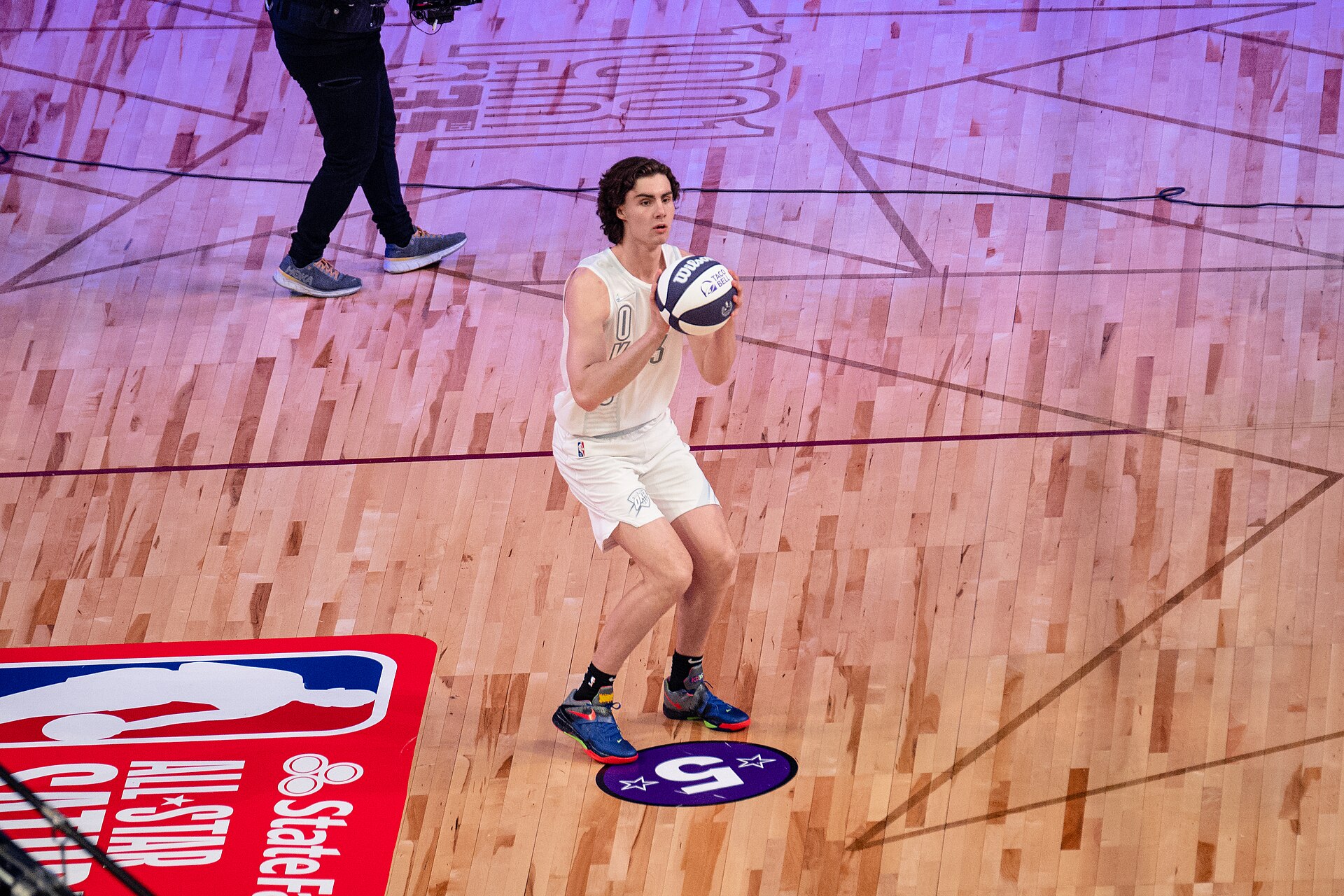
Header image: Josh Giddey (CC BY 2.0) — Wikimedia Commons · CC BY 2.0

Read article
Dyson Daniels gives the Boomers’ Ben Simmons debate a defensive starting point NBA MENTIONED

Dyson Daniels gives the Boomers’ Ben Simmons debate a defensive starting point

Australia’s national-team rebuild is no longer just about fitting every NBA name into one lineup. With Ben Simmons signalling a return and Dyson Daniels emerging as an All-Defensive NBA guard, the Boomers are confronting a more interesting question: who sets the defensive terms, and how does the backcourt share the ball?

The debate has moved beyond selection

The recent player-led Boomers camp in Melbourne has sharpened a conversation that was already coming: Australia’s next national-team version will be built around an unusually deep NBA core, but depth does not automatically create clarity.

Ben Simmons’ public desire to represent Australia again is the obvious catalyst. The 30-year-old has not played for the senior Boomers, while Josh Giddey, Dyson Daniels, Jock Landale and other established or emerging internationals have now created a genuine NBA spine. Simmons’ appearance at the camp, alongside about 20 Australian players, made his return a live basketball discussion rather than a distant possibility. It remains reporting and aspiration, not a confirmed tournament selection. (league.nbl.com.au)

That is why Daniels is the most useful Australian lens. The question is not simply whether Simmons should be picked. It is how Australia’s defensive identity and backcourt hierarchy change if Simmons is available, healthy and willing to accept a role within a group that has developed without him.

Daniels is no longer a theoretical fit

Daniels enters that discussion with considerably more leverage than he had during Australia’s last major tournament cycle. In Atlanta, he has become the reference point for a defence built on length, anticipation and pressure at the point of attack. The Hawks’ 2025-26 notes list him among the league leaders in steals and deflections, while also highlighting his rebounding and his role in Atlanta’s improved defensive rating after the All-Star break. He was also named to the NBA’s All-Defensive Second Team. (nba.com)

That matters for the Boomers because Daniels is not merely a guard who can defend. He is a lineup organiser on that end. He can pick up the ball early, switch across positions, rebound above his position and turn a deflection into transition before an opponent can establish its halfcourt shape. Atlanta’s own coverage of its defensive surge described Daniels and Nickeil Alexander-Walker as the starting point for the Hawks’ perimeter pressure. (nba.com)

Australia has long valued defensive versatility, but Daniels’ NBA development gives the next Boomers group a specialist with enough size and instincts to let the rest of the lineup become more aggressive. His role should not be reduced to chasing opposing point guards while everyone else plays offence. He can be the defensive trigger.

Where Simmons changes the geometry

Simmons would complicate — and potentially improve — that design. At his best, he gives Australia a 6-foot-10 ball-handler who can rebound, defend multiple positions and get downhill without needing a high volume of halfcourt touches. That profile could allow Daniels to spend more possessions as a disruptive secondary creator rather than carrying every initiation responsibility.

The spacing question is unavoidable. A Simmons-Daniels-Giddey grouping would place three oversized playmakers on the floor, but it would also ask opponents to respect enough shooting and cutting to prevent the Boomers from becoming too easy to load up against. The answer may be role clarity rather than a rigid first-choice lineup: Daniels attacking tilted defences, Giddey controlling the tempo and Simmons screening, facilitating, defending and punishing smaller matchups.

Simmons’ camp form has been positively described by Giddey and Daniels, but those observations do not settle the international question. The meaningful test will be sustained professional availability, defensive mobility and whether his offensive role can fit beside Australia’s current creators. (league.nbl.com.au)

The hierarchy Australia can build around

The encouraging part is that Daniels does not need Simmons to validate his place. His NBA trajectory has already shifted him from promising defensive prospect to established defensive piece: Atlanta signed him to a multiyear extension after his breakout 2024-25 season, when he won Most Improved Player and earned All-Defensive First Team recognition. (nba.com)

That gives the Boomers a useful foundation for the selection debate. Simmons’ potential return should not displace Daniels from the team’s defensive centre of gravity; it should force Australia to decide how much creation it wants from each oversized guard and how aggressively it can defend behind them.

The camp matters now because the 2027 FIBA World Cup and 2028 Olympics provide a clear runway, while the player-led format suggests the NBA core is taking ownership of its alignment. The next step is not collecting names. It is building a system in which Daniels’ pressure, Giddey’s orchestration and Simmons’ possible two-way versatility reinforce one another rather than compete for the same oxygen. For Australia, that is the real rebuild: not finding room for every star, but defining what the Boomers want to be when all of them are available.

SourcesBoomers stars back Ben's green and gold returnWembanyama, Holmgren lead 2025-26 Kia NBA All-Defensive Teams | NBA.comDyson Daniels & Nickeil Alexander-Walker forming dynamic defensive duo for Hawks | Atlanta HawksDyson Daniels signs four-year extension with Hawks | NBA.comBoomers stars back Ben's green and gold returnGiddey backs Boomer Ben2025-26 REG. SEASON — Atlanta Hawks game notesWembanyama, Holmgren lead 2025-26 Kia NBA All-Defensive TeamsDyson Daniels & Nickeil Alexander-Walker forming dynamic defensive duo for Hawks

Header image: YouTube : https://www.youtube.com/watch?v=2oYqZiMws3Y – View/save archived versions on archive.org (0:16) (CC BY 3.0) — Wikimedia Commons · CC BY 3.0

Read article
Min Woo Lee’s BMW debut puts the playoff pressure test under a microscope PGA MENTIONED

Min Woo Lee’s BMW debut puts the playoff pressure test under a microscope

For players such as Min Woo Lee, reaching the BMW Championship is evidence of a breakthrough season. It is not yet evidence that they have mastered the compressed demands of the FedExCup’s final stages.

Access is only the first examination

The FedExCup Playoffs are increasingly being discussed as a test of whether emerging players can convert opportunity into repeatable high-pressure performance. Min Woo Lee is a useful Australian lens because his 2026 season has already established him as more than a fringe contender: the 28-year-old entered the BMW Championship ranked 16th in the FedExCup, with four top-10 finishes, including runner-up results at the AT&T Pebble Beach Pro-Am and Genesis Scottish Open. (pgatour.com)

But the structure of the playoffs changes the question. The regular season rewards accumulation; the playoffs compress the consequences. The field falls from 70 players at the FedEx St Jude Championship to 50 at the BMW Championship, then to 30 for the TOUR Championship. The BMW has no halfway cut, but only the top 30 in the standings after Sunday will advance to East Lake. (pgatour.com)

Why the BMW feels different

A conventional PGA TOUR week gives a player two related forms of relief: make the cut, then build momentum over the weekend. The BMW removes the first checkpoint. Every player is guaranteed four rounds, but every round contributes directly to a season-ending calculation. There is no opportunity to reset after a poor Thursday or Friday, and no larger field to provide statistical cover.

That is why the event can be more psychologically severe than its no-cut label suggests. A player who is safely inside the top 30 can be tempted to protect position; a player near the line may feel compelled to manufacture birdies. Both responses can create tension between conservative tournament management and the need to gain points. The PGA TOUR’s own explanation underlines the volatility: the first two playoff events award quadruple points, with 2,000 points available to the winner, while regular-season points carry into the BMW. (pgatour.com)

Lee’s season makes the contrast sharper

Lee’s profile is particularly revealing because his best golf has come in elite, limited-field environments. He finished second at Pebble Beach, tied sixth at the Arnold Palmer Invitational and third at the Texas Children’s Houston Open before adding a second-place finish in Scotland. The results show that he can compete against strong fields; they do not automatically answer how he will handle a week where a respectable result may still leave his TOUR Championship hopes vulnerable. (pgatour.com)

That distinction matters for a player making his BMW Championship debut. Lee has already earned playoff access through sustained performance, and reaching the top 50 also carries a substantial 2027 benefit: BMW competitors secure eligibility for the TOUR’s Signature Events next season. The event therefore combines immediate qualification pressure with a longer-term status reward. (pgatour.com)

The first-timer question is now unavoidable

The wider conversation is not simply about youth or inexperience. It is about the difficulty of transferring regular-season form into a format where the field is stronger, the margin is narrower and the calendar is nearly exhausted. PGA TOUR playoff coverage has explicitly identified players seeking their first BMW Championship as a storyline, while the TOUR’s scenarios coverage framed movement around the top-50 line as a week-to-week survival exercise. (pgatourmedia.pgatourhq.com)

That does not prove that first-time contenders underperform. It does show why the subject is being raised now: the 2026 BMW Championship is the point at which a successful season becomes a short-form examination of decision-making, patience and closing ability. Lee’s challenge is not merely to play well at Bellerive Country Club. It is to avoid treating qualification as the achievement, rather than the beginning of the most demanding part of the campaign.

What to watch from Lee

For Lee, the most instructive indicators will be less dramatic than a single leaderboard position. Can he stay committed to his normal aggressive approach without forcing the issue? Can he absorb a difficult stretch without allowing the FedExCup arithmetic to dominate every decision? And, if he reaches Sunday within range of the top 30, can he play the final round as a tournament rather than as a referendum on his season?

Those are unconfirmed questions, not claims about his mindset. The confirmed evidence is more modest but meaningful: Lee has produced a high-level season, earned his first BMW appearance and arrived with a genuine chance of a first TOUR Championship berth. The BMW will show whether that access is the foundation of a new level, or simply the point at which the pressure finally becomes visible.

SourcesMin Woo Lee PGA TOUR Player Profile, Stats, Bio, CareerThe First Look: First leg of FedExCup Playoffs kicks off at FedEx St. Jude Championship - PGA TOURHow it works: FedExCup Playoffs - PGA TOURTable of ContentsPGA TOUR: How it works — FedExCup PlayoffsPGA TOUR: 2026 FedExCup Playoffs first lookPGA TOUR: Min Woo Lee player profile and 2026 resultsPGA TOUR: FedExCup Playoffs scenarios
Read article
Profile

About Ben

Ben Simmons is an Australian NBA guard-forward from Melbourne who became the 2016 NBA Draft’s first overall selection and the 2017-18 NBA Rookie of the Year. A 208-centimetre left-handed playmaker, Simmons has built his game around transition ball-handling, positional versatility, rebounding, passing and perimeter defence. Provider data identifies him as an inactive LA Clippers player as of 18 August 2026.

Benjamin David Simmons was born in Melbourne, Victoria, on 20 July 1996. He developed in Australia before moving to the United States, attending Montverde Academy in Florida and becoming one of the country’s highest-rated high-school prospects. He played one season of college basketball at Louisiana State University in 2015-16, where he operated as a point-forward and produced 19.2 points, 11.8 rebounds and 4.8 assists per game according to LSU’s published records. Philadelphia selected him first overall in the 2016 NBA Draft. After missing the 2016-17 season with a foot injury, he made his NBA debut in 2017-18 and immediately became a primary ball-handler, earning Rookie of the Year and All-Rookie First Team honours. Simmons was selected to three NBA All-Star teams and twice to the NBA All-Defensive First Team. His best statistical NBA season was 2019-20, when he averaged 16.4 points, 7.8 rebounds, 8.0 assists and 2.1 steals per game for Philadelphia. He was also a third-team All-NBA selection that season. Simmons was traded from Philadelphia to Brooklyn in February 2022. Back problems significantly disrupted his Brooklyn tenure, including a March 2024 microscopic partial discectomy for left lower-back nerve impingement. He returned to play in 2024-25, appearing for Brooklyn and later the LA Clippers. Provider data lists him with the Clippers, at guard-forward, and inactive on 18 August 2026. Internationally, Simmons represented Australia at junior level and played for the senior Boomers at the 2013 FIBA Oceania Championship, but has not been a regular senior national-team participant in recent years.

Key stats & awards

NBA regular-season career through the 2024-25 season: 383 games, 13.1 points, 7.4 rebounds, 7.2 assists and 1.5 steals per game, with 55.8% field-goal shooting. Major honours include three NBA All-Star selections, 2017-18 NBA Rookie of the Year, 2017-18 All-Rookie First Team, 2019-20 All-NBA Third Team, two NBA All-Defensive First Team selections and the 2019-20 NBA steals title.

Famous moments

Defining moments include being selected first overall by Philadelphia in 2016; winning Rookie of the Year after missing the 2016-17 season; recording a 22-point, 10-rebound, 10-assist triple-double for LSU against North Florida in December 2015; and producing an elite two-way 2019-20 season that placed him second in Defensive Player of the Year voting and earned All-NBA recognition.