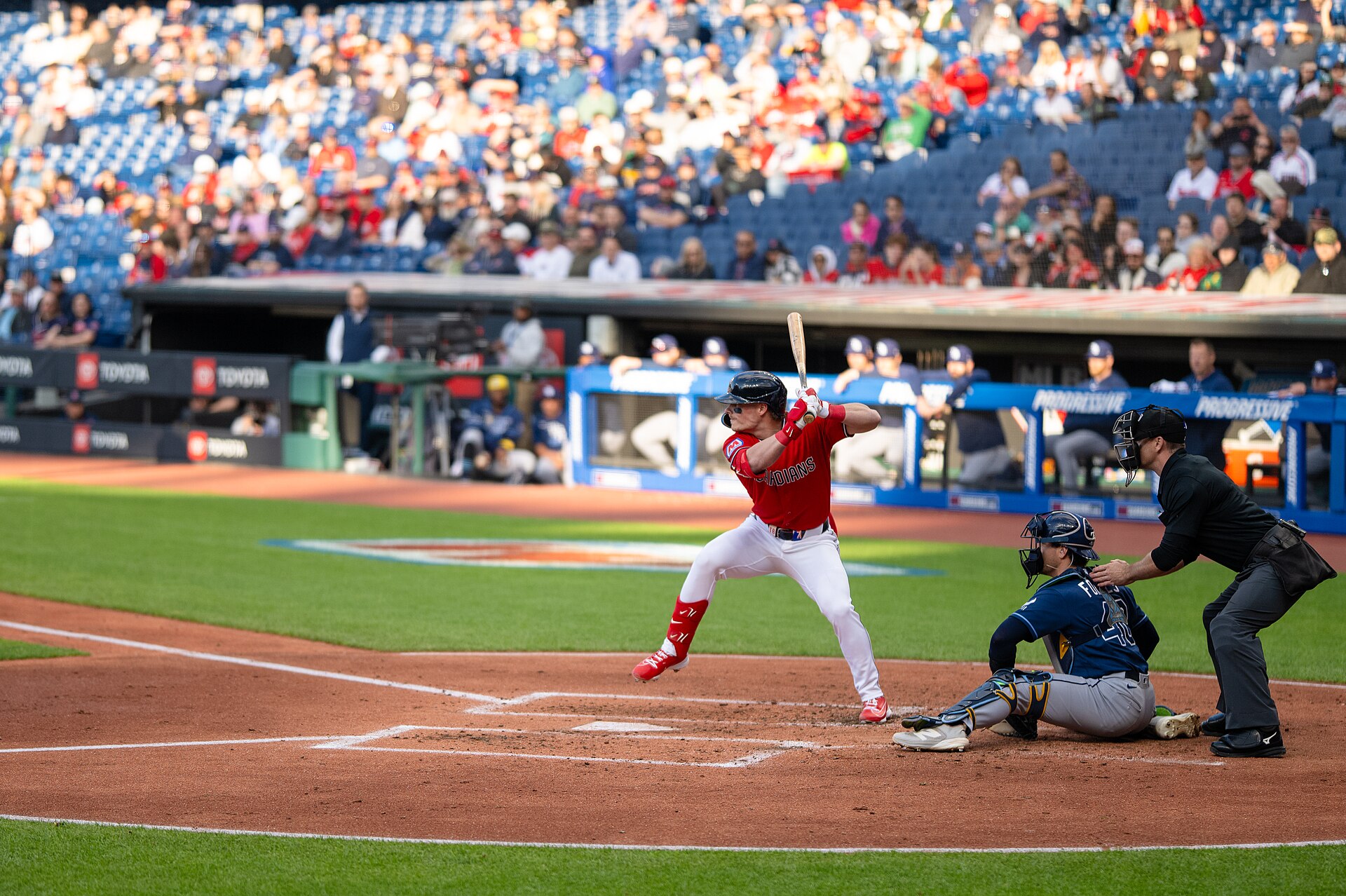
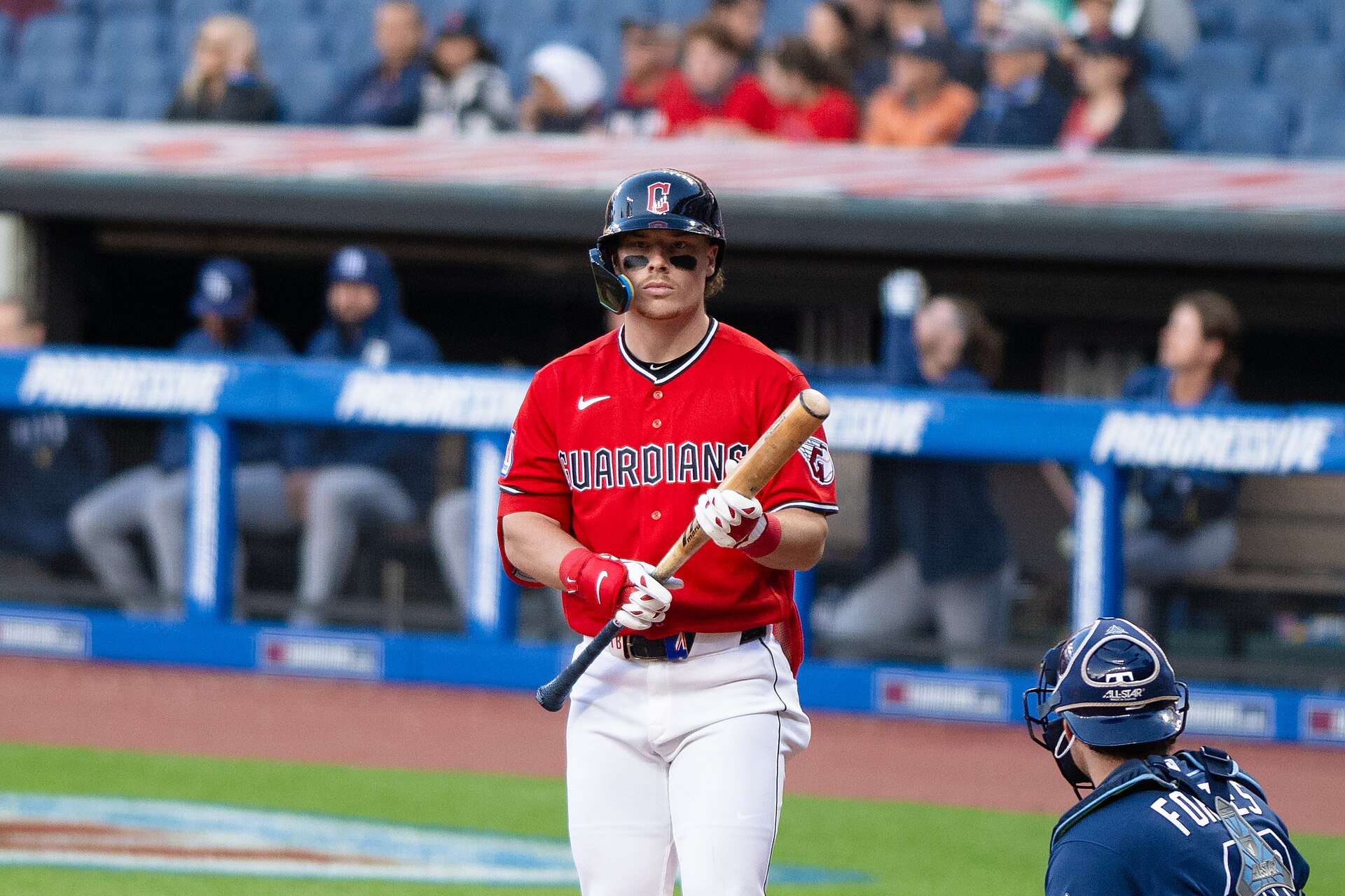
Bazzana’s first major baseball breakthrough came after an October 2018 showcase in Arizona, where Oregon State staff gained a close look at him through a connection involving Australian baseball mentors and Oregon State pitching coach Rich Dorman. He subsequently committed to Oregon State and became a highly ranked college prospect. His defining professional breakthrough followed on July 14, 2024, when the Cleveland Guardians selected him first overall in the MLB Draft. Sources: https://www.mlb.com/guardians/news/travis-bazzana-guide ; https://www.mlb.com/guardians/news/travis-bazzana-drafted-no-1-by-guardians-in-2024-mlb-draft
Travis in the news
MLB
Travis Bazzana’s Game 6 test is about staying aggressive as Cleveland faces ALCS elimination
A hitless Game 5 has left Travis Bazzana and Cleveland one defeat from the end of their October run, but the rookie remains locked into the Guardians’ middle order for Monday’s must-win clash with Tampa Bay.
Cleveland keeps Bazzana in the pressure zoneTravis Bazzana will bat sixth and start at second base when Cleveland meets Tampa Bay in ALCS Game 6 on Monday, October 19, with the Rays holding a 3-2 series lead. The Guardians have kept the same nine-player lineup together through Games 3-5, and manager Stephen Vogt has again left Bazzana in the heart of the order rather than shielding the rookie from the matchup. (mlb.com)
That decision matters because Cleveland is not simply asking Bazzana to fill a position. He is being trusted to help turn over the lineup behind Nathaniel Lowe and ahead of Patrick Bailey in a game where every empty plate appearance carries extra weight. The Australian’s response to Game 5 will be watched closely, but the message from the lineup card is clear: Cleveland still views his left-handed bat and defensive range as part of its best route to Game 7.
A quiet Game 5, and a difficult final at-batBazzana went 0-for-4 with two strikeouts in Cleveland’s 3-1 loss on October 18. His final plate appearance came against Bryan Baker with two outs in the ninth, when the Rays closer induced a groundout to second base to finish Tampa Bay’s win. (mlb.com)
It was a stark contrast to the two-hit, home-run performance he produced in Game 4, but the broader postseason line is the more useful measure of the challenge in front of him. MLB’s player page lists Bazzana at 33 at-bats, a .182 average, one home run, two RBIs, one stolen base and a .603 OPS in the 2026 postseason. (mlb.com)
Those numbers do not erase the impact of his first October homer or the flashes of quality contact he has shown. They do underline the margin for error against Tampa Bay’s pitching staff, which has repeatedly forced Cleveland’s hitters to win individual battles rather than wait for the game to open up.
The tactical challenge: Peralta and the Rays’ late-inning wallGame 6 sends Cleveland to Tropicana Field for an elimination contest against Freddy Peralta, who enters with a 0.79 ERA and nine strikeouts in the postseason. Tampa Bay also has a fully rested late-inning group after Drew Rasmussen worked seven innings in Game 5 and the Rays needed only three relievers to close it out. (mlb.com)
For Bazzana, the priority is likely to be simple but demanding: avoid chasing the first difficult pitch, force Peralta to work, and put a quality swing on anything he can handle. His position in the order gives him opportunities to influence the game with traffic on base, but it also means the Rays can attack him with high-leverage arms if Cleveland is trailing late.
The Guardians’ Game 6 plan is a bullpen game, with Slade Cecconi a potential opener and several high-leverage relievers expected to be available. That creates a tactical contrast: Cleveland may need to manufacture an early advantage before Tampa Bay’s pitching depth takes over, while Bazzana could see a mix of right- and left-handed matchups across multiple trips to the plate. (mlb.com)
One more chance to extend the rookie’s OctoberCleveland has already proved it can survive with its back against the wall, rallying from an 0-2 deficit against the White Sox in the Division Series. Vogt described the current situation as difficult but familiar, saying the Guardians have been in that position for a long time and that this is when the group thrives. (mlb.com)
For Bazzana, Game 6 is not about reproducing the exact swing that produced his first ALCS homer. It is about resetting quickly after a hitless night, controlling the strike zone and making the Rays pay if they give him a pitch in his hitting window.
The 24-year-old will again be asked to do that from the No. 6 spot, with Cleveland’s season potentially resting on the next productive at-bat. Tampa Bay is one win from the World Series. Bazzana and the Guardians need one more win simply to earn another night.
SourcesWhen is Guardians vs. Rays ALCS Game 6? Date, Time and LineupsBryan Baker earns the save in Game 5 | 10/18/2026 | MLB.comTravis Bazzana Stats, Age, Position, Height, Weight, Fantasy & News | Cleveland GuardiansGuardians-Rays ALCS Game 6 FAQ and starting lineupsTravis Bazzana 2026 postseason statisticsBryan Baker earns the save in Game 5Rays vs. Guardians Game 5 highlightsHeader image: Travis Bazzana (CC BY 4.0) — Wikimedia Commons · CC BY 4.0
MLB
Travis Bazzana’s first ALCS homer cannot hide Cleveland’s Game 5 problem
Travis Bazzana gave Cleveland a late lift with his first ALCS home run, but the Guardians’ 7–3 loss to Tampa Bay has turned Sunday’s Game 5 into a sharper test of their margin for error.
A real offensive spark, at the wrong momentTravis Bazzana’s seventh-inning home run was the cleanest positive Cleveland could take from a night that otherwise exposed how quickly this ALCS can move away from them. Facing left-hander Ian Seymour with two outs, Bazzana drove a 90.7 mph sinker to right field at 107.8 mph, with a 21-degree launch angle and an estimated distance of 374 feet. It was his first postseason homer and cut Tampa Bay’s lead to 5–2. (mlb.com)
The swing mattered because it was not a cheap late-inning marker. Bazzana got on top of a pitch in the zone and produced the type of controlled damage Cleveland needs from the bottom half of its order. He finished 1-for-5, with the homer accounting for the Guardians’ first run of the seventh-inning response. Brayan Rocchio followed with an RBI single, but Cleveland had already allowed Tampa Bay to build too much separation. (mlb.com)
The game’s leverage had already passedBazzana’s homer arrived after the Rays had extended their advantage in the top of the seventh. Jonathan Aranda’s single produced two runs in the inning, with an error on a ball that got past Chase DeLauter adding to the damage. Tampa Bay’s 7–3 win levelled the series at 2–2, making Cleveland’s earlier home-field advantage irrelevant heading into Sunday. (mlb.com)
That context is important for evaluating Bazzana’s night. The homer was evidence that he could still create impact against a fresh left-handed reliever, but it did not alter the tactical shape of the game. Cleveland needed traffic before Seymour entered, or a bigger contribution against Nick Martinez, who held the Guardians to one run over 5⅓ innings and retired 11 Cleveland hitters in a row after an early wobble. Bazzana later reached on a walk against Martinez, but the Guardians could not turn those isolated moments into sustained pressure. (mlb.com)
Game 5 brings a different questionThe immediate issue for Bazzana is not whether the home run has solved his October adjustment. That was the subject of Cleveland’s earlier postseason narrative, and one swing cannot settle it. The more specific question now is whether the Guardians can use him as a stable pressure point when Tampa Bay’s pitching plan becomes more aggressive.
MLB’s pre-game planning had Bazzana locked into the sixth spot at second base, behind Nathaniel Lowe and ahead of Patrick Bailey, in the same lineup Cleveland had used through Game 3. That placement gives him meaningful at-bats without asking him to carry the top of the order, while preserving the left-handed matchup flexibility Cleveland has preferred in October. (mlb.com)
The opposing plan is expected to be substantially different. Drew Rasmussen was lined up to start Game 5 after the weather postponement gave him an extra day of rest, while Freddy Peralta remained available for Game 6 if the series returned to Tampa Bay. Rasmussen had already faced Cleveland in Game 1 of the ALCS, making Bazzana’s ability to adjust within the series more relevant than the novelty of his first championship-series homer. (mlb.com)
Cleveland needs repeatable value, not a highlightFor Bazzana, Sunday’s task is narrower and more demanding: force Tampa Bay to account for him before the late innings. That means making Rasmussen work, controlling the strike zone and turning any mistake over the plate into damage before Cleveland is chasing the game.
The Guardians are not in elimination territory, but the series has shifted. A 3–2 lead would put them one win from the World Series; a 2–3 deficit would send them to Tampa Bay needing to win on the road. Bazzana’s homer supplied a useful individual answer in Game 4. Game 5 will test whether that answer can become part of Cleveland’s offensive plan rather than remain an isolated bright spot in a loss.
SourcesTravis Bazzana's solo home run | 10/17/2026 | Cleveland GuardiansTampa Bay Rays at Cleveland Guardians Game Story, Scores/Highlights - 10/17/2026 - MLB StoriesRays win ALCS Game 4 2026Nick Martinez allows 1 run in 2026 ALCS Game 4When is Rays vs. Guardians ALCS Game 4? Date, Time and LineupsRays stick with Nick Martinez for ALCS Game 4 after postponementRays slip past Guards in Game 4 to knot up ALCSTravis Bazzana’s solo home run, October 17, 2026Nick Martinez allows one run in 2026 ALCS Game 4Rays’ and Guardians’ pitching plans for ALCS Game 4Header image: Travis Bazzana (CC BY 4.0) — Wikimedia Commons · CC BY 4.0
MLB
Travis Bazzana’s first October becomes an adjustment test, not a coronation
Cleveland’s ALDS comeback has moved Travis Bazzana’s postseason from breakthrough story to tactical examination: can a first-year hitter keep contributing when October opponents repeatedly probe the same weaknesses?
The question has changedTravis Bazzana arrived in October as one of Australia’s rare MLB position players to reach the postseason, a milestone MLB’s October 2 feature presented as both personal fulfilment and national significance. Cleveland’s five-game American League Division Series against the Chicago White Sox has now made the more useful question considerably narrower: how does a rookie hitter adapt when every plate appearance is treated as a tactical problem? (mlb.com)
The Guardians lost the first two games before winning three straight, including a 9-3 victory in Game 4 and a 2-0 clinching win on October 10. That comeback is the headline, but it also created the conditions for a more revealing evaluation of Bazzana. Cleveland did not need one player to carry the series; it needed its younger contributors to absorb changing match-ups, defensive pressure and increasingly unforgiving at-bats. (mlb.com)
A live test of the rookie marginBazzana’s first October at-bats matter less as a verdict on his talent than as evidence of how quickly he can adjust. In the regular season, a hitter can survive a poor series because the schedule supplies another opponent, another starter and another week. In the postseason, the same club can return to a weakness almost immediately, while elite relievers compress the margin between a competitive swing and a harmless out.
That is why the wider discussion around first-year position players has sharpened now. MLB’s own review of the 2026 rookie class described October as a stage for new hitters to establish themselves, while broader analysis of this year’s rookies has highlighted an unusually strong group of first-year bats. The attention is not simply about whether rookies can produce a memorable hit; it is about whether they can avoid becoming predictable once opponents have a small sample of information to exploit. (mlb.com)
For Bazzana, the Cleveland series supplied both sides of that examination. His defensive work was visible in Game 1 of the October 7–10 stretch, when he helped turn a double play to escape a fifth-inning threat. That play does not prove that his bat has solved October, but it does show why a rookie position player can remain valuable even when the offensive returns are uneven: the contribution is distributed across positioning, range, baserunning decisions and the ability to execute under pressure. (mlb.com)
The at-bats are the evidence, not the narrativeBazzana’s regular-season line — .245 with a .335 on-base percentage, a .408 slugging percentage and 110 OPS+ across 124 games, according to Baseball-Reference — describes a useful but unfinished hitter rather than a fully formed middle-of-the-order force. His first postseason is therefore best read as an extension of the development process, only with less time to make corrections and greater consequences attached to each mistake. (baseball-reference.com)
The key adjustment is not necessarily a dramatic swing change. It may be the quieter work of identifying which pitches opponents are withholding, refusing to chase the pitch designed to end the plate appearance, and accepting that a walk or hard out can be a meaningful October contribution. Cleveland’s offensive recovery in Games 3 and 4 was collective, and its Game 5 win was driven principally by José Ramírez and an extraordinary pitching performance. Bazzana was part of the environment, not the sole explanation for it. (mlb.com)
That distinction matters because the earlier breakthrough storyline has already been used. The more demanding story is whether Bazzana can turn information into adjustment before the next series gives him another chance. Cleveland’s opponents will have access to his October swings; the response must come from the hitter and the Guardians’ preparation staff. That is the pressure facing first-year position players in October: not simply performing once, but proving that the opponent’s first answer will not remain the final one.
Australia’s lens on a broader October problemFor Australian baseball, Bazzana’s presence remains historically important. But his value as a case study is now more specific. He is showing what the transition from prospect expectation to postseason responsibility looks like when the game slows mentally and speeds up competitively.
The Guardians’ ALDS comeback means Bazzana’s first October has not ended in a simple breakthrough-or-failure judgment. Instead, it has become an adjustment test: can the first-year second baseman contribute while pitchers attack him with a repeatable plan, and can Cleveland keep finding ways to use his defence, contact skills and decision-making when the bat is under scrutiny? The answer will be shaped in the ALCS, but the question is already live.
SourcesTravis Bazzana reflects on journey from Australia to MLB postseason with GuardiansGuardians win ALDS Game 4 2026Rookies in 2026 MLB playoffsTravis Bazzana doubles up Vargas to escape jam in the | 10/07/2026 | Cleveland GuardiansTravis Bazzana Stats, Height, Weight, Position, Rookie Status & More | Baseball-Reference.comFrom watching October in Australia to starring in it, Bazzana comes full circleGuardians win ALDS Game 4 20266 incredible stats from the Guardians’ 21-K, Ramírez-fueled clincherRookies in 2026 MLB playoffsTravis Bazzana Stats, Height, Weight, Position, Rookie Status & MoreHeader image: Travis Bazzana (CC BY 4.0) — Wikimedia Commons · CC BY 4.0
MLB
Travis Bazzana enters Cleveland’s next test: when a rookie’s October role gets harder
The Guardians’ ALCS matchup with Tampa Bay shifts the question around Travis Bazzana from survival to translation: can a first-year regular carry his adaptable, contact-driven game into a series where every matchup is likely to be sharper?
The pressure has changed, even if the job has notTravis Bazzana has made it through Cleveland’s five-game American League Division Series against the Chicago White Sox as a genuine regular. The next challenge is more subtle than simply repeating the achievement: translating that trust into the American League Championship Series, where Tampa Bay’s depth, matchup planning and home-field advantage will test whether Cleveland can keep him in the middle of its October structure.
That is why rookie position players are becoming a useful postseason talking point. A breakthrough series can establish that a young hitter belongs in October. The league championship round asks a more demanding question: can the player remain useful after opponents have seen him, adjusted their attack and built a series plan around the smallest weaknesses?
Bazzana’s value is broader than one hot nightThe Australian second baseman’s 2026 regular season gave Cleveland a platform to trust him. He played 124 games, recorded 110 hits, 22 doubles, 15 home runs and 19 stolen bases, finishing with a .335 on-base percentage and a .742 OPS. Those numbers do not promise an offensive explosion in the ALCS, but they do explain why Bazzana’s role is not dependent on one postseason swing. He offers contact, movement and the possibility of turning a single baserunner into pressure. (baseball-reference.com)
His Division Series production has been quieter — two hits in 19 plate appearances, including two doubles and three walks — but Cleveland has continued to use him as a starting infielder. That distinction matters. The Guardians are not treating him as a specialist to be hidden from difficult situations; they are asking him to absorb them. (baseball-reference.com)
The ALCS will expose the adjustment cycleBazzana had already been talking publicly about Cleveland’s offensive adjustments before the winner-take-all game, with the Guardians posting his October 9 discussion of Game 5 expectations and the changes needed after the offence broke through in Game 4. That conversation is a useful marker of where the rookie now sits: not merely reacting to major-league pitching, but considering how an entire lineup must alter its plan from one game to the next. (mlb.com)
Against Tampa Bay, that adjustment cycle accelerates. The Rays were the American League’s top seed and Cleveland’s regular-season meetings were generally tight apart from Tampa Bay’s 11-3 win on July 24, according to MLB’s series preview. That suggests the Guardians are not entering an unfamiliar mismatch, but a contest likely to be decided by execution in narrow margins. (mlb.com)
What Cleveland needs from its Australian lensThe immediate temptation will be to judge Bazzana by whether he produces a defining ALCS hit. That is too narrow. His more important task is to remain playable while the Rays force Cleveland to make uncomfortable choices: left-on-left matchups, defensive substitutions, extra-base prevention and the constant threat of turning a quiet inning into a scoring chance.
For a first-year regular, that is the real progression from the Division Series to the championship stage. Bazzana does not need to become Cleveland’s biggest October star. He needs to keep his at-bats competitive, take the extra base when it is available, defend his position cleanly and prevent Tampa Bay from extracting easy outs. If he does that, his ALCS role will represent something more valuable than a brief postseason breakout: proof that Cleveland can build its next contender around a young Australian who has already learned to adjust once, and is now being asked to do it again.
SourcesTravis Bazzana Stats, Height, Weight, Position, Rookie Status & More | Baseball-Reference.comTravis Bazzana on expectations for Game 5, offense | 10/09/2026 | Cleveland GuardiansWhat you need to know about the 2026 League Championship Series matchupsWhat you need to know about the 2026 League Championship Series matchupsTravis Bazzana Stats, Age, Position, Height, Weight, Fantasy & NewsTravis Bazzana Stats, Height, Weight, Position, Rookie Status & MoreTravis Bazzana on expectations for Game 5, offenseTravis Bazzana called up by GuardiansHeader image: Travis Bazzana (CC BY 4.0) — Wikimedia Commons · CC BY 4.0
MLB
Travis Bazzana and Cleveland’s collective reset after an impossible-looking 0-2 hole
Cleveland’s comeback against the White Sox has renewed the postseason debate around momentum, adaptability and home-field recovery. For Travis Bazzana, the important contribution was not a single defining play, but his place in a lineup that steadily changed the series’ terms.
A rare comeback, built one adjustment at a timeCleveland’s 2-0 win over the Chicago White Sox on October 10 completed one of baseball’s least common postseason recoveries. The Guardians became only the 11th team to win a best-of-five playoff series after losing the opening two games, and the first since the 2017 New York Yankees. (mlb.com)
The headline statistic matters because a best-of-five series offers almost no margin for a reset. Once a team falls behind 2-0, it must win three consecutive games, including the decisive fifth game. Cleveland also had to recover at home after losing the opening two contests at Progressive Field, making the turnaround more demanding than the basic series record suggests. The Guardians joined only a small group to lose Games 1 and 2 at home before recovering to win Game 5 in their own ballpark. (foxsports.com)
That is why the result has become a wider October talking point. The comeback is not evidence that momentum overrides everything in baseball. It is evidence that a team can use the structure of the format — two road games, then a home decider — to create room for tactical and emotional correction. After Cleveland won Games 3 and 4, the historical numbers suggested a genuine contest rather than a completed miracle: of the previous 18 teams to level a best-of-five series after falling 0-2, 10 had gone on to win Game 5. (mlb.com)
Bazzana’s role was connective, not theatricalFor Travis Bazzana, the series was a useful example of how a rookie can contribute to a collective reset without becoming the entire story. Cleveland’s second baseman was involved in the decisive stretch of Game 4, driving in Angel Martínez with a double during the sixth-inning rally that turned a 4-3 deficit into a 9-5 win. That hit did not win the series, but it helped extend it to a game in which Cleveland’s pitching and home-field advantage could matter again. (mlb.com)
Bazzana’s value across the comeback was therefore broader than one box-score moment. In Game 3, he completed a double play from second base after catching a line drive, ending a White Sox threat with runners on second and third. In Game 5, he remained part of the starting infield and lineup as Cleveland produced a controlled 2-0 victory behind Gavin Williams and a bullpen that protected the lead. (mlb.com)
The distinction is important. Cleveland did not ask its rookie to solve the series by himself. The Guardians changed the pressure points collectively: their offence recovered after scoring only three runs across the opening two games; their pitching staff created more manageable innings; and manager Stephen Vogt used the roster flexibly enough to survive a short series in which every game carried elimination consequences. Bazzana’s contribution sat inside that process rather than replacing it.
Home field helped, but recovery required adaptabilityThe current best-of-five format is a 2-2-1 arrangement, meaning the higher-seeded team hosts Games 1, 2 and 5. That structure can make home field look paradoxical: Cleveland lost the first two games in front of its own crowd, then returned home for the only game that mattered more. The advantage was not automatic. Historical winner-take-all games in the home ballpark have been close to even overall, and Division Series deciders have tilted slightly against the home team. (mlb.com)
Cleveland’s recovery instead came from making its environment useful again. Game 4’s six-run sixth inning showed a lineup willing to continue taking its opportunities after an early deficit, while Game 5 showed the other side of adaptability: Williams struck out 12, the Guardians set a Cleveland single-game postseason record with 21 strikeouts, and José Ramírez’s two-run homer supplied all the offence required. (mlb.com)
That is the more relevant lesson for Bazzana’s first October run. A rookie does not need to provide a cinematic turning point every night. He needs to remain playable, respond to the series’ changing demands and allow the larger roster to function around him. Bazzana did that while producing a key Game 4 hit and participating in the defensive and offensive details that kept Cleveland alive.
The Guardians’ comeback will be remembered as a historical rarity. For Cleveland, however, its practical meaning is more immediate: an early postseason hole can be overturned when a team stops treating the deficit as a verdict and starts treating each game as a separate tactical problem. Bazzana was one part of that reset — not its symbol, but evidence that Cleveland’s future and present were able to operate together under pressure.
SourcesChicago White Sox at Cleveland Guardians Game Story, Scores/Highlights - 10/10/2026 - MLB StoriesMLB Playoffs: Each Time Teams Have Overcame A Division Series 0-2 Deficit | FOX SportsGuardians win ALDS Game 4 2026White Sox drop Game 3 of the 2026 ALDS to Guardians0-2 comebacks in MLB Division SeriesGuardians advance to 2026 ALCS; MLB Game Story, October 10, 2026Not done yet! Guardians storm back to force Game 5 in ClevelandWhite Sox drop Game 3 of the 2026 ALDS to Guardians0-2 comebacks in MLB Division SeriesGuardians complete ALDS comeback to eliminate White SoxHeader image: Travis Bazzana (CC BY 4.0) — Wikimedia Commons · CC BY 4.0
MLB
Travis Bazzana’s defensive read gives Cleveland breathing room in ALDS survival win
A fifth-inning double play from Travis Bazzana helped Cleveland end a White Sox threat as the Guardians won Game 3, 9-3, to keep their ALDS alive.
A small play with a large consequenceTravis Bazzana’s most important contribution in Cleveland’s 9-3 Game 3 win over the Chicago White Sox came without a hit.
With the Guardians leading but still navigating a potentially dangerous fifth inning, Bazzana completed a double play that removed Miguel Vargas at second base after Kyle Teel’s line drive was caught. The play ended the inning and prevented Chicago from extending the pressure on Cleveland’s pitching staff. MLB’s video description confirms Bazzana was involved in the double play that escaped the jam. (mlb.com)
It was not the defining moment of the entire game — Cleveland’s nine-run attack ultimately created the separation — but it was the kind of defensive intervention that matters in a postseason contest before the scoreboard becomes comfortable.
Development beyond the box scoreBazzana finished Game 3 without a hit, going 0-for-2, but reached base twice via walks and scored twice. Across the first three games of the Division Series, he is 1-for-9 with a double, three walks and two runs. Those numbers are not yet evidence of an offensive breakout, but they do show a player remaining involved while his bat searches for timing. (statmuse.com)
The defensive sequence offered a different measure of his postseason value. A second baseman has to process the ball, identify the force situation and deliver the exchange quickly enough to convert an opportunity before the runners can reset. The available video confirms the result; it does not, by itself, establish the precise tactical instruction or responsibility assigned to Bazzana. That distinction matters when assessing one play rather than turning it into a broader defensive verdict.
Cleveland has changed the shape of the seriesThe Guardians entered Game 3 facing elimination after losing the opening two games, but their 9-3 victory reduced the deficit to 2-1. MLB’s official postseason schedule lists Cleveland and Chicago at that margin heading into Game 4 on Thursday, October 8, with the next game scheduled in Chicago. (mlb.com)
That context raises the value of routine execution. Cleveland did not need Bazzana to carry the offence in Game 3; it needed him to avoid giving Chicago extra outs and extra opportunities. His double play arrived in precisely that type of situation, when a clean defensive sequence could keep the game from becoming more complicated than it needed to be.
The Guardians’ broader postseason plan has also placed significant emphasis on controlling the margins. Cleveland won the AL Central and received a first-round bye, while Chicago arrived after sweeping Houston in the Wild Card Series. The series was already framed as a closely matched divisional contest before Game 1, making defensive conversion particularly important in the narrow stretches between scoring bursts. (mlb.com)
The next test is whether the detail holdsBazzana’s Game 3 performance should therefore be read as a development marker, not a turning point. The Australian did not suddenly resolve the offensive problems that have followed him through the series, nor does one double play prove that he has transformed Cleveland’s infield defence.
What it does show is that his path to postseason influence is broader than his hitting line. Reaching base, taking responsible defensive positions and completing a pressure play can all help a rookie remain useful while opponents attack his swing. With Cleveland one loss from elimination on October 8, those contributions may again be judged in small, high-leverage moments rather than through headline statistics.
For Bazzana, the immediate challenge is to sustain that all-round involvement. Game 3 gave Cleveland a reprieve. Game 4 will show whether the Guardians can turn that reprieve into a genuine series reset.
SourcesTravis Bazzana doubles up Vargas to escape jam in the | 10/07/2026 | MLB.comTravis Bazzana 2026 Game Log | StatMuse2026 MLB Playoff and World Series scheduleGuardians 2026 postseason FAQTravis Bazzana doubles up Vargas to escape jam in the 5th2026 MLB Playoff and World Series schedule2026 Postseason Schedule and BracketGuardians 2026 postseason FAQWhat you need to know about the 2026 MLB Division Series matchupsHeader image: Travis Bazzana (CC BY 4.0) — Wikimedia Commons · CC BY 4.0
MLB
Travis Bazzana’s Game 2 response now matters as Cleveland tries to reset its ALDS
After Cleveland’s three-hit shutout loss to Chicago, Travis Bazzana enters Game 2 with the Guardians needing more than a first October hit: they need their young second baseman to help change the shape of the series.
The first pressure point is now realTravis Bazzana’s first postseason game produced a useful contribution, but not the result Cleveland needed. The Australian second baseman doubled with two outs in the fourth inning, becoming the Guardians’ first hit of the afternoon, and later reached base again as Cleveland created its clearest threat. The problem was that the opportunity ended without a run. (mlb.com)
That distinction matters. Bazzana was not absent from the game, but his production did not alter a contest in which Cleveland finished with only three hits, went 0-for-3 with runners in scoring position and left seven runners on base. The Guardians were shut out 3-0 by the Chicago White Sox on October 3, leaving Cleveland one defeat from a 2-0 series hole. (mlb.com)
Cleveland needs a different offensive gameThe immediate response test is less about asking Bazzana to carry the lineup than about whether he can remain involved against a White Sox pitching plan designed to deny Cleveland clean scoring chances. Chicago used starter Hagen Smith as an opener before relying on its bullpen, and the combination held the Guardians hitless through the first 2⅔ innings. Grant Taylor then completed a four-inning save, preserving a structure that limited Cleveland to three hits overall. (mlb.com)
That approach placed extra value on every baserunner. Bazzana’s double and his presence in the middle of Cleveland’s order gave the Guardians a path into the game, but the club could not convert. For Game 2, his tactical importance is therefore straightforward: reach base, force Chicago to work from the stretch and help turn isolated traffic into pressure before the White Sox can cycle through their relievers.
The role remains substantial, not symbolicBazzana is listed as Cleveland’s second baseman and is again in the starting lineup for Game 2 on October 5. That continued role is significant because the Guardians’ postseason roster was not built around hiding their rookie; it was built with him as a regular position player in the lineup. (mlb.com)
The numbers around Cleveland’s offence explain why his at-bats carry added weight. The Guardians finished the regular season in the bottom third of MLB in runs per game, at 4.19, and in team OPS, at .696. In a low-scoring series, a young hitter does not need to produce a spectacular game to influence the result. A walk, a hard single, a productive out or a double that moves the lineup into a scoring position can materially change the inning. (mlb.com)
What a response should look likeThe useful measure for Bazzana in Game 2 is not whether he immediately matches the personal significance of his first October appearance. It is whether he can make Cleveland’s at-bats more difficult to navigate. Game 1 showed that he can find a gap against Chicago’s coverage; it also showed that one hit is not enough when the rest of the offence cannot convert pressure.
A stronger response would involve controlling the strike zone, extending plate appearances and giving Cleveland’s run producers more opportunities with men on base. That is a modest standard, but it is the correct one. The Guardians do not need Bazzana to become a different player overnight. They need the version who helped make him a postseason selection to appear in a game where the margin for error is already narrowing.
Chicago leads the best-of-five American League Division Series 1-0, and teams that take the opening game have historically held the advantage in the format. MLB has recorded 116 series wins in 160 best-of-five Division Series for teams that won Game 1, a 73 per cent success rate. That does not decide this series, but it clarifies the pressure around Cleveland’s next nine innings. (mlb.com)
For Bazzana, the assignment is therefore specific rather than theatrical: turn early contact into sustained traffic, and help prevent Cleveland’s first October from becoming a short exercise in promise.
SourcesMLB Gameday: White Sox 3, Guardians 0 Final Score (10/03/2026)Guardians shut out by White Sox in ALDS Game 1 lossGuardians 2026 postseason FAQGuardians shut out by White Sox in ALDS Game 1 lossMLB Gameday: White Sox 3, Guardians 0 — October 3, 2026Grant Taylor records four-inning save in White Sox win in Game 1 of 2026 ALDSWhen is White Sox vs. Guardians ALDS Game 2?Guardians 2026 postseason FAQHeader image: Travis Bazzana (CC BY 4.0) — Wikimedia Commons · CC BY 4.0
MLB
Travis Bazzana’s first October test now comes with Cleveland under pressure
A double and a key defensive play gave Travis Bazzana a measured start to his first ALDS, but Cleveland’s 3-0 loss means Game 2 carries an immediate tactical demand for the Australian rookie.
The result changes the contextTravis Bazzana’s first postseason appearance was quieter than Cleveland needed, but it was not empty. The Australian second baseman doubled in the fourth inning, helping load the bases with two outs, before the Guardians failed to convert against Chicago’s bullpen-heavy plan. Cleveland managed only three hits in a 3-0 Game 1 loss at Progressive Field on October 3. (mlb.com)
The more memorable moment came in the field. Bazzana took the relay from Angel Martínez and completed a double play after Tommy Pham’s drive was caught at the wall, preventing the White Sox from extending their lead. It was a routine finish to an unusually athletic sequence, but it underlined why Cleveland trusts him at second base in a series where defensive range and clean positioning matter. (mlb.com)
That is the useful read from Bazzana’s opening night: his first October plate appearances did not produce a defining offensive contribution, yet he was involved in Cleveland’s best offensive chance and one of its most important defensive plays. The immediate response is now less about proving he belongs on the roster and more about giving the Guardians usable at-bats earlier in the game.
Chicago’s pitching plan exposed the challengeThe White Sox did not present Bazzana with a conventional starter-versus-line-up matchup for long. Hagen Smith opened, then Grant Taylor handled the final four innings and finished with six strikeouts. Taylor threw 42 pitches, generated seven whiffs on nine curves and induced a swinging strike three from Bazzana to end the game. (mlb.com)
That final plate appearance was a useful October lesson rather than a standalone failure. Taylor’s curveball was buried below the zone, and Bazzana committed to a pitch designed to force an awkward decision. Against a bullpen game, the adjustment is not simply to attack earlier; it is to identify which relievers are trying to win with chase and which are willing to challenge the zone. Cleveland’s hitters repeatedly failed to turn limited opportunities into damage, and Bazzana’s double was the exception rather than the start of a rally.
Game 2 should therefore test whether the Guardians can move him into more favourable counts and whether Bazzana can resist expanding down and away when Chicago changes its look. His regular-season line — .245 with 15 home runs, 57 runs batted in, 19 stolen bases and a .743 OPS across 449 at-bats — points to a player capable of contributing in several ways, but not one who can be isolated from the club’s broader contact problem. (mlb.com)
The role is secure; the margin is notBazzana remains on Cleveland’s 26-man ALDS roster as one of six infielders, and the club’s selection confirms that his value is not limited to a developmental cameo. He is the everyday second baseman, a left-handed bat with enough speed to pressure the bases and enough defensive mobility to stay involved when his swing is quiet. (mlb.com)
But the 3-0 defeat removes much of the luxury from Game 2. Cleveland cannot afford another game in which its rookie’s best offensive contribution is a fourth-inning double that goes unrewarded. The Guardians will need Bazzana to help turn over the order, force Chicago’s relievers to work in the strike zone and make the White Sox pay if they again lean heavily on breaking balls below the barrel.
The tactical question is not whether Bazzana can suddenly become Cleveland’s offensive centrepiece. It is whether he can make his at-bats sufficiently difficult for Chicago to alter its plan. A hard line drive, a controlled take on the buried curve or a well-timed stolen-base attempt would all represent the kind of response Cleveland needs. His first October night was quiet. Game 2 will show whether it was merely an introduction or the beginning of a pressure point Chicago can keep attacking.
SourcesMLB Gameday: White Sox 3, Guardians 0 Final Score (10/03/2026)Angel Martínez makes leaping catch, starts double play in ALDS Game 1Grant Taylor records four-inning save in White Sox win in Game 1 of 2026 ALDSTravis Bazzana Stats, Age, Position, Height, Weight, Fantasy & News | Cleveland GuardiansGuardians 2026 AL Division Series rosterMLB Gameday: White Sox 3, Guardians 0 — October 3, 2026MLB: Angel Martínez makes leaping catch, starts double play in ALDS Game 1Header image: Travis Bazzana (CC BY 4.0) — Wikimedia Commons · CC BY 4.0
MLB
Travis Bazzana shows when a rookie stops being a subplot and becomes part of October’s equation
Cleveland’s Australian second baseman is entering the ALDS not as a developmental experiment, but as one piece of a rookie class the Guardians may need to function immediately against the White Sox.
The question has changedFor much of the season, Travis Bazzana’s presence in Cleveland was easy to frame as a glimpse of the future. The former first overall pick was learning the daily demands of Major League Baseball, while the Guardians assessed how quickly their new core could mature around José Ramírez and Steven Kwan.
That framing is no longer sufficient. Cleveland’s ALDS against the Chicago White Sox begins on Saturday, October 3, and the conversation around the series has placed Bazzana alongside fellow rookies Chase DeLauter and Parker Messick as central figures in the Guardians’ season. Messick is scheduled to start Game 1; DeLauter and Bazzana represent a young left-handed presence in the lineup. (sports.yahoo.com)
The distinction matters. A prospect can be important to a club’s direction without being important to a particular game. Cleveland’s rookies have crossed that line. Their development is no longer being discussed only in terms of what it might mean in 2027. It is now part of the immediate problem the Guardians must solve in October.
Why rookie position players are suddenly part of the postseason conversationThe wider talking point across this postseason is not simply that rookies are making rosters. It is that first-year position players are being asked to influence series outcomes rather than fill out benches or provide emergency depth.
That shift is visible in the recent history of October. MLB Pipeline’s survey of the 2026 playoff rookies points back to Evan Carter and Jace Jung helping Texas reach the 2023 World Series, Corbin Carroll driving Arizona’s run that same autumn, and Trey Yesavage setting a World Series rookie strikeout record in 2025. The examples are different, but the pattern is recognisable: contenders are increasingly willing to live with the volatility of young players when those players offer impact that cannot be replicated by a safer veteran option. (mlb.com)
The reason the subject feels especially current is that this year’s contenders are presenting the same choice in more than one form. Tampa Bay’s rookie right-hander Ryan Hopkins has become a meaningful bullpen piece, while Cleveland’s position-player group has supplied depth and production across the order. The question is no longer whether a rookie can survive October. It is whether a contender can afford not to use the player who helped get it there. (mlb.com)
Bazzana’s value is about more than a single swingBazzana’s role captures the tension perfectly. Cleveland did not promote him on April 28 merely to accumulate experience; he was inserted at second base and into the batting order immediately. By the time the Guardians reached the postseason, his presence had become part of the lineup’s shape rather than a novelty attached to the schedule. (mlb.com)
That does not mean the Australian is expected to carry Cleveland’s offence. It means the Guardians can ask a more serious question: what does Bazzana give them that is worth accepting the uncertainty of a rookie at the centre of a best-of-five series? His answer will be found in the smaller details as much as in the headline moments — quality at-bats, defensive positioning, baserunning decisions and the ability to remain available after the first difficult night.
Cleveland’s recent production has come from a broader young group. A late-season series preview listed DeLauter, Angel Martínez and Bazzana among the Guardians’ most productive bats since the trade deadline, with Bazzana carrying a 111 wRC+ over that period. That is not the profile of a player being carried into October for sentiment. It is the profile of a contributor whose performance has helped make the roster decision meaningful. (staging-aws.sports.yahoo.com)
The human meaning of the momentFor Bazzana, the emotional shift is substantial. The Australian who arrived in Cleveland as the organisation’s most visible investment is now sharing a postseason stage with teammates who have travelled a similar path from projection to responsibility. The Guardians’ rookie class is not just a collection of individual stories; it is becoming a test of whether development can happen while a team is trying to win now.
That is why the White Sox series matters beyond the result. It will show whether Cleveland’s young position players can turn regular-season trust into October usefulness. Bazzana does not need to produce a defining hit to validate the path. But he does need to look like what the Guardians increasingly believe he can be: not a future contributor waiting for his turn, but a present-tense part of the club’s competitive identity.
The broader lesson is equally important. In a sport that often treats rookies as protected assets, the best young position players are being judged by a harder standard. They are no longer merely evidence that an organisation’s pipeline works. In October, they are being asked to prove that the pipeline can win games.
SourcesMLB playoffs 2026: Division series preview, X-factors, predictions and more for Braves-Dodgers, Padres-Brewers, Yankees-Rays and White Sox-Guardians - Yahoo SportsRookies in 2026 MLB playoffsTravis Bazzana called up by GuardiansSeries Preview: White Sox at Guardians - Yahoo SportsMLB playoffs 2026: Division series preview, X-factors, predictions and moreRookies in 2026 MLB playoffsTravis Bazzana called up by GuardiansSeries Preview: White Sox at GuardiansWhat you need to know about the 2026 MLB Division Series matchupsHeader image: Travis Bazzana (CC BY 4.0) — Wikimedia Commons · CC BY 4.0
MLB
The bye-week balancing act puts Travis Bazzana’s October routine under the microscope
Cleveland’s AL Central title has removed the Wild Card Series from the schedule. For rookie Travis Bazzana, the five-day pause before the Division Series creates a preparation problem as much as a recovery opportunity.
A useful advantage with a built-in riskThe Cleveland Guardians’ AL Central title on September 27 gave them more than a division flag. It secured the No. 2 seed in the American League and a direct path to the Division Series, meaning Cleveland will not play during the best-of-three Wild Card Series. The club’s first postseason game is scheduled for October 3. (mlb.com)
That is why the first-round bye has become a live baseball discussion again. The reward is obvious: Cleveland’s players receive several days to recover from a 162-game season, and the club can set its Division Series rotation without spending pitching resources in an earlier round. The complication is equally clear. Hitters who have played almost every day must now maintain timing without the competitive repetition of a game.
Why the pause matters for BazzanaTravis Bazzana has not arrived at October as a passenger. The 23-year-old Australian has been a regular part of Cleveland’s lineup after beginning the season at Triple-A Columbus, and his 2026 Major League line includes 113 games, 475 plate appearances, 102 hits, 12 home runs, 54 RBIs and 19 stolen bases. His .343 on-base percentage and 110 OPS+ indicate a rookie who has contributed above league-average offensive value, even while adjusting to the highest level. (baseball-reference.com)
The numbers also explain why his preparation is more important than simply deciding whether to rest him. Bazzana’s value is tied to at-bat quality, on-base ability and speed. Those skills depend on rhythm: seeing velocity, recognising breaking-ball shapes and making decisions under game conditions. A week without meaningful competition can provide physical relief, but it can also make the first Division Series at-bats feel like a new beginning. That is the central tension Cleveland must manage.
The likely workload questionThe bye should not automatically mean Bazzana disappears from the field until Game 1. Recent postseason experience shows clubs trying to split the difference between recovery and rust. The 2025 Seattle Mariners, who also received a bye, scheduled two six-inning scrimmages during their layoff so hitters could retain game-like timing while the roster recovered. (mlb.com)
For Cleveland, that creates several practical choices. Bazzana could receive lighter defensive and running workloads while continuing to take controlled at-bats. He could also play in an internal game or face live pitching during the break. None of those plans has been publicly confirmed for him, so they should be treated as possible preparation methods rather than announced decisions.
The final regular-season games may therefore become less about chasing personal numbers and more about establishing his October routine. Cleveland can reduce exposure to unnecessary fatigue, but it will want Bazzana’s swing decisions and defensive work to remain sharp. His workload may be managed, not abandoned.
A rookie role that has already expandedThe timing is significant because Bazzana’s role has developed from prospect evaluation into postseason selection. MLB’s account of Cleveland’s clinching run described him and fellow rookie Chase DeLauter as lineup fixtures, while Bazzana finished the division-clinching win a home run short of the cycle. (mlb.com)
That does not guarantee a fixed October position or batting-order spot. Postseason clubs shorten benches, target platoon match-ups and place greater value on defensive certainty and baserunning decisions. But Cleveland’s regular-season usage has given Bazzana a credible claim to a meaningful role rather than a ceremonial roster place. His preparation will be judged against that expectation.
The broader lesson is that a first-round bye changes the rookie’s calendar before it changes his status. Bazzana has already done the work required to become part of Cleveland’s October plan. The next challenge is preserving the timing and physical readiness that made him useful through the regular season, while taking advantage of the rest the Guardians earned. For an Australian entering his first MLB postseason, the bye is both a benefit and a test of professional routine.
SourcesGuardians clinch 2026 AL Central titleTravis Bazzana Stats, Height, Weight, Position, Rookie Status & More | Baseball-Reference.comJerry Dipoto discusses Bryan Woo and upcoming playoffsGuardians clinch 2026 AL Central titleHow to determine MLB playoff tiebreakersTravis Bazzana Stats, Height, Weight, Position, Rookie Status & MoreDipoto: Mariners will wait for Woo's bullpen to set ALDS rotationGuardians clinch 2026 playoff berthHeader image: Travis Bazzana (CC BY 4.0) — Wikimedia Commons · CC BY 4.0
MLB
Travis Bazzana’s first October will test how far his rookie role has come
Cleveland’s postseason berth has changed the stakes around Travis Bazzana’s rookie season, with the Australian second baseman now moving from regular-season contributor to a potential October piece for a Guardians team still chasing a deeper American League run.
A new phase for Bazzana’s rookie seasonTravis Bazzana’s rookie season now has a clear next chapter: October baseball. Cleveland secured its third consecutive postseason berth with a 1–0 win over the Boston Red Sox at Fenway Park on September 24, bringing the Australian into his first Major League Baseball playoff campaign. (mlb.com)
The achievement itself is a team result, not evidence that Bazzana has suddenly become Cleveland’s central offensive player. But it materially changes the context around his development. A season that began with the demands of establishing himself as a Major League regular will now finish with the Guardians evaluating whether his contact, running game and defensive work at second base can translate against playoff-calibre pitching.
Regular at second base, useful on the basesCleveland’s postseason FAQ lists Bazzana as its second baseman, a strong indication that he remains part of the club’s expected October structure rather than merely a depth option. (mlb.com) He has started 103 games at second base this season, according to Baseball-Reference, while also making a smaller number of appearances as a designated hitter. (baseball-reference.com)
That role matters because the Guardians do not need to manufacture a special job for him. Bazzana has already spent most of the season handling the ordinary responsibilities of an everyday player: taking regular at-bats, covering the middle infield and providing a left-handed presence capable of reaching base and creating pressure with his speed.
The defensive record is not flawless. Baseball-Reference credits him with seven errors and a .981 fielding percentage across his second-base appearances. Those figures should not be treated as a complete assessment of his work, but they do underline the issue Cleveland will weigh in October: whether the value of keeping his bat and athleticism in the lineup outweighs any defensive volatility in high-leverage games.
September moments have sharpened the questionBazzana’s late-season contribution has included the type of moments that make a postseason role easier to imagine. On September 12, he scored the go-ahead run on a wild pitch against Minnesota after reaching base, a play that reflected his ability to influence an inning without necessarily driving the ball himself. (mlb.com) The following day, he went 2-for-4 with a home run, three runs batted in, a walk and a stolen base in a 9–2 win over the Twins. (baseball-reference.com)
Those games are not proof that Bazzana has solved every part of his offensive adjustment. His season line, as recorded by Baseball-Reference, stands at .249/.343/.396 with 12 home runs, 54 RBIs and 19 stolen bases. The production is respectable for a rookie, but it also describes a player whose value is broader than slugging alone. (baseball-reference.com)
That distinction could be important in October. The Guardians may value Bazzana most when he is controlling the strike zone, getting on base ahead of the middle of the order and forcing defenders to make decisions. His speed gives Cleveland another way to convert a single or walk into scoring position, while his left-handed swing can offer a different look in matchup-driven line-ups.
October opportunity, not October certaintyThe immediate conclusion should be measured. Cleveland has clinched a playoff berth, but Bazzana’s place in every high-leverage situation is not guaranteed. The Guardians’ postseason roster, batting order and defensive alignments will depend on matchups, health and the club’s final positioning. No official source has confirmed that he will occupy a fixed place in the playoff batting order.
What is confirmed is that Bazzana has reached the point the Guardians hoped to create when they selected him first overall in 2024: he is a young position player with a regular Major League role, and that role will now be tested in games where small weaknesses are more aggressively targeted.
For the Australian, the first postseason is therefore less a coronation than an examination. Cleveland has earned the right to continue playing, and Bazzana has earned a realistic chance to help. His October value will be determined not by the novelty of his arrival, but by whether the everyday habits of his rookie season hold up when every plate appearance carries a heavier cost.
SourcesGuardians clinch 2026 playoff berthGuardians 2026 postseason FAQTravis Bazzana Stats, Height, Weight, Position, Rookie Status & More | Baseball-Reference.comTravis Bazzana scores go-ahead run on wild pitchTravis Bazzana News Archive | Baseball-Reference.comGuardians clinch 3rd consecutive playoff berth with another late surgePostseason FAQ: What’s next for the Guardians?Travis Bazzana scores go-ahead run on wild pitchTravis Bazzana Stats, Height, Weight, Position, Rookie Status & MoreTravis Bazzana News ArchiveHeader image: Travis Bazzana (CC BY 4.0) — Wikimedia Commons · CC BY 4.0
MLB
Travis Bazzana’s rookie season is becoming a wider Australian baseball story
The Cleveland second baseman’s September power has already been documented. A new profile instead traces the disciplined route from Sydney to the majors — and why his arrival matters beyond one player’s box scores.
The story behind the arrivalTravis Bazzana’s rookie season has reached the point where the numbers no longer need to carry the entire argument. The Cleveland Guardians infielder has been an All-Star, a regular at second base and a meaningful contributor during the club’s September push. But the more revealing development this week has been the way his arrival is being understood: not simply as the breakthrough of a highly rated prospect, but as the latest product of an Australian pathway that is becoming easier to see. (mlb.com)
A Guardian feature published on September 18 placed that pathway at the centre of Bazzana’s story. It traced his baseball education from Sydney, including his early years with the Ku-Ring-Gai Stealers and later involvement with the Sydney Blue Sox, through his move to Oregon State University in 2021. The emphasis was not on a single swing or one dramatic September result, but on the habits that made the progression possible: deliberate practice, close attention to coaching and an unusually sustained investment in learning the game. (reddit.com)
A route built across systemsThat distinction matters because Bazzana did not arrive in Cleveland through one conventional domestic pipeline. His development crossed community baseball, the New South Wales system, the Australian Baseball League, American college baseball and the professional minor leagues. Each stage supplied something different: early access to structured coaching, exposure to older competition, a high-level collegiate environment and then the daily demands of professional development.
Baseball Australia has described Bazzana’s rise as part of a broader increase in Australian players entering American college programs and professional systems. Its 2025 annual report recorded 24 Australians in NCAA Division I programs, alongside a much larger group spread across other college levels. That does not make Bazzana’s route typical — he remains an exceptional talent and was selected first overall by Cleveland in 2024 — but it does show that his story is connected to a larger base of players seeking a route overseas. (assets.baseball.com.au)
The confirmed milestones are significant. Bazzana became the first Australian-born player chosen first overall in the MLB Draft, reached the majors with Cleveland on April 28, 2026, and was later selected for the American League All-Star team. Baseball Australia has also listed him among the Australians who represented the country at the 2026 World Baseball Classic. Those achievements place him in a rare category, but they also give younger Australian players a sequence they can understand: local club baseball, representative opportunities, college or overseas development, then professional selection. (mlb.com)
Why the September context still mattersThe profile does not diminish what Bazzana is doing on the field. MLB’s official coverage recorded his two-homer game against the Chicago White Sox on September 15 and his 15th home run of the season against Oakland on September 18. Those performances have made his late-season contribution impossible to overlook, but they are better treated as evidence of an established major-league role than as the entire explanation for his importance. (mlb.com)
The more careful conclusion is that Bazzana has become both a player and a reference point. His success cannot, by itself, prove that Australia’s baseball system has solved its access or development problems. Nor should one first-round selection be presented as a guarantee that a new generation will follow. What can be confirmed is narrower and more useful: Australian players now have a highly visible example of someone who developed at home, left for a demanding American environment, returned to the national team and reached MLB as a central figure for a contender.
That visibility was underscored during August’s Little League World Series, when Bazzana sent a message to the Ryde Hawks and later hosted the Australian team at Progressive Field. The Guardian reported a young player from the Hawks saying Bazzana showed that someone from Sydney could reach the major leagues. That is not evidence of a measurable participation boom, and it should not be inflated into one. It is, however, a clear illustration of the symbolic value of his arrival: the distance between Australian junior baseball and MLB now has a recognisable Australian face. (reddit.com)
A landmark, with limitsBazzana’s rookie year remains a sporting achievement before it is a national one. Cleveland’s decision to trust him with a major-league role, his All-Star selection and his September production are the hard evidence. The wider Australian meaning is an informed interpretation of those facts, strengthened by the pathway he travelled and the players who can now see it more clearly.
That is why this week’s profile is timely. It moves the conversation beyond whether Bazzana has found his power stroke and towards a more durable question: what does a successful Australian route into MLB look like when it is examined in full? In Bazzana’s case, the answer is not a shortcut. It is years of local involvement, purposeful coaching, overseas education and adaptation — now made visible at the highest level of the sport.
SourcesTravis Bazzana Stats, Age, Position, Height, Weight, Fantasy & News | Cleveland GuardiansGuardian article about Travis Bazanna 9/18AUSSIES ABROADTravis Bazzana recalls journey from Australia to MLBTravis Bazzana slugs two homers vs. the White Sox | 09/15/2026 | MLB.comFrom ‘nappies at the ballpark’ to the MLB: how Australia’s Travis Bazzana made baseball’s big league — The GuardianBazzana driven by passion for baseball from Down Under to MLB — MLB.comAustralian infielder Travis Bazzana named MLB All-Star — Baseball.com.auTravis Bazzana’s solo homer (15) — MLB.comTravis Bazzana slugs two homers vs. the White Sox — MLB.comHeader image: Travis Bazzana (CC BY 4.0) — Wikimedia Commons · CC BY 4.0
MLB
Mitchell Neunborn shows why Australia’s baseball pipeline now needs a wider lens
Mitchell Neunborn’s return to Philadelphia’s Triple-A group is not a call-up story. It is more useful than that: a clear example of how Australia’s developing professional depth is increasingly being tested in the upper minor leagues.
The more revealing Australian baseball story is no longer limited to the next MLB debutMitchell Neunborn is back with the Lehigh Valley IronPigs, Philadelphia’s Triple-A affiliate, after spending part of the season moving through rehabilitation and the organisation’s lower levels. The official minor-league record confirms that Lehigh Valley activated the right-hander from the seven-day injured list on August 1, and its current roster lists him as active. (milb.com)
That is a useful correction to the way Australian progress is often discussed. Neunborn is not currently presented as an imminent major-league call-up, and his 2026 numbers do not justify turning this into a breakthrough narrative. MiLB lists him with 26 appearances, 30.1 innings, 28 strikeouts and a 4.45 earned-run average across the season. His Lehigh Valley line is stronger by ERA, but still comes with a 1.58 WHIP in the official summary. (milb.com)
The point is not that those figures establish Neunborn as a future Phillies reliever. They do not. The point is that he remains active at the highest affiliate level, after an interrupted season, in a system that has continued to use him across different assignments. That is the sort of development that can be missed when the Australian conversation is organised only around major-league debuts.
Why the discussion has sharpened nowThe timing matters. Baseball.com.au’s September coverage describes Neunborn pitching for Lehigh Valley and places him within a wider group of Australians spread through the affiliated system. Its season review says 26 Australians are currently signed to MLB or MLB-affiliate contracts, while four Australians entered the minor-league system in 2026. The same report identifies three Australians who have played in the majors this season: Travis Bazzana, Curtis Mead and Brandan Bidois. (baseball.com.au)
Those figures are not evidence that Australia has suddenly become a deep professional baseball nation. They are, however, evidence of a broader base than the headline names alone suggest. Baseball Australia’s overseas-player listing says there are more than 40 Australians with professional contracts in North American or Japanese leagues, and notes that 38 Australians have reached the majors. (baseball.com.au)
The distinction is important. The established MLB names provide visibility, but the upper-minor-league population shows whether that visibility is being converted into a repeatable pathway. Players do not need to be immediate call-up candidates to matter to that pathway. They need to remain in affiliated baseball long enough to be evaluated, adjusted and reconsidered. Neunborn’s current position fits that less glamorous but more durable category.
Neunborn’s value as an Australian lensNeunborn’s 2026 route has been unusually instructive. MiLB records show an assignment to Reading in April, rehabilitation appearances with the Florida Complex League and Jersey Shore in May, a return to Reading, a move back to Lehigh Valley in June, and then another injured-list stint before his August activation. (milb.com)
That sequence should not be overstated as a success story. It is a season of disruption, and the available statistics do not show an unequivocal performance breakthrough. But it does show the practical meaning of organisational depth: a player can be injured, rebuilt through lower levels and still return to Triple-A rather than disappearing from the affiliated picture.
Baseball.com.au’s coverage also places Neunborn alongside Australians such as Blake Townsend, Nikau Pouaka-Grego and Drew Davies, whose seasons represent different stages of the same broader pipeline. Townsend has been tested in Double-A after changing organisations and being converted towards starting, while Davies has produced an eye-catching on-base season in Single-A. Those are not equivalent cases, but together they demonstrate that Australian progress is no longer a single staircase leading directly to the majors. It is a network of routes, setbacks and level-specific tests. (baseball.com.au)
Depth is not the same as certaintyThe sensible conclusion is therefore narrower than the most enthusiastic version of the trend. Australia has more players moving through affiliated baseball, and more of them are reaching the levels where organisations make serious decisions about role and retention. That is why the pipeline is being discussed now, with the 2026 season producing both major-league visibility and a larger supporting cast below it. (baseball.com.au)
But depth does not guarantee debuts. Neunborn’s season is a reminder that Triple-A status can represent opportunity, recovery and continued evaluation at the same time. For Australian baseball, that may be precisely why he is a useful lens: his importance is not that he is next in line for Philadelphia, but that he remains in the conversation at all.
The next meaningful measure will be whether this group converts upper-minor-league presence into sustained roles, promotions or renewed contracts. Until then, Neunborn offers a grounded way to read the trend — not as another Australian MLB arrival, but as evidence that the country’s professional story is becoming broader, more complicated and less dependent on a handful of names.
SourcesMitch Neunborn Stats, Age, Position, Height, Weight, Fantasy & News | MiLB.comA few Headline Stories from Australians in Baseball: Wednesday 9 September | Baseball.com.auProfessional Australian Baseball Players Abroad | Baseball.com.auNews | Baseball.com.auMitch Neunborn Stats, Age, Position, Height, Weight, Fantasy & News — MiLB.comLehigh Valley IronPigs roster — MiLB.comProfessional Australian Baseball Players Abroad — Baseball.com.auA few Headline Stories from Australians in Baseball: Wednesday 9 September — Baseball.com.auMiLB transactions, August 1, 2026 — MiLB.comHeader image: AI-generated editorial illustration.

MLB
Travis Bazzana’s September power is now changing Cleveland’s playoff equation
A second multi-home-run game of the season did more than add another line to Travis Bazzana’s rookie record. In Cleveland’s 7-6 win over Chicago, the Australian helped turn a division race from background pressure into the context for his growing influence.
The setting has changedTravis Bazzana’s two-home-run night against the Chicago White Sox was not simply another marker in an encouraging rookie season. It arrived in the kind of game Cleveland can no longer treat as ordinary: a one-run win against the team sitting directly above it in the American League Central race.
The Guardians eventually prevailed 7-6 at Progressive Field on September 15, 2026 — the result reported in Australia on September 16 — but the shape of the game mattered as much as the final score. Cleveland built an early lead, surrendered it, then recovered late. Bazzana’s second homer came after Chicago had moved in front 6-4, restoring momentum before Brayan Rocchio’s walk-off double completed the comeback. (mlb.com)
That sequence gives the performance a different meaning from the recent focus on Bazzana’s latest long ball. His power was not merely decoration on a comfortable victory. It arrived as Cleveland needed an answer, against a divisional opponent, with the margin for error narrowing.
A second peak, not a one-night noveltyThe two homers were Bazzana’s second multi-home-run performance of 2026. His first came in June, when he went 4-for-4 with two home runs and five RBIs against Houston. That night was a career-making outburst from an emerging rookie. This one was more revealing because it showed the same explosive outcome appearing in a different competitive environment: late in the season, inside a playoff chase and against a direct rival. (mlb.com)
Bazzana finished 2-for-4 with two runs and two home runs, taking his season total to 14. The first was a solo shot in the opening inning, part of back-to-back homers with Jo Adell. The second came in the sixth, after the White Sox had turned a 4-2 deficit into a 6-4 advantage. Those were not identical at-bats, but together they showed Cleveland receiving value from him both as an early tone-setter and as a response to adversity. (mlb.com)
The distinction is important for a young player whose September has increasingly been judged through the prism of contention. A power surge can be dismissed as a hot stretch if it only produces highlights. Bazzana’s more complete recent contribution has included reaching base, scoring important runs and creating pressure before the decisive swing. In the six games before the White Sox series, MLB reported nine hits and four walks, while his September game log records several multi-hit and extra-base performances. (mlb.com)
Cleveland’s new calculationFor Cleveland, the attraction is not simply that Bazzana can hit a ball over the fence. It is that his offensive profile is broadening at the precise moment the Guardians need more ways to win. He can influence an inning by getting on base, stretch a defence with his speed, or change the score with one swing. The White Sox game required the last of those, but it was the surrounding pressure that made it meaningful.
Bazzana’s season line after the game — 104 hits, 14 homers, 56 RBIs and a .252 average across 114 games, according to the available game log — still belongs to a player learning the demands of a full major-league season. The numbers do not describe a finished product. They describe a young second baseman whose impact is becoming less dependent on a single type of contribution. (boxscore.email)
That is the development Cleveland can carry into the final weeks. The Guardians were listed at 77-75 and second in the AL Central after the win, close enough to the White Sox for every head-to-head game to carry consequence. Bazzana’s two-homer performance did not settle the division, and it should not be used to claim that his September form has permanently changed his ceiling. But it did provide something more valuable than another isolated blast: evidence that he can be part of the answer when the game itself becomes heavier. (boxscore.email)
The Australian’s next challenge is therefore not to keep producing spectacular nights on demand. It is to keep making himself relevant to games that ask different questions. Against Chicago, Cleveland needed early damage, a counterpunch and composure in a contest that kept shifting. Bazzana supplied the first two. In a playoff race, that expanding range may matter more than the home-run count alone.
SourcesChicago White Sox at Cleveland Guardians Game Story, Scores/Highlights - 09/15/2026 - MLB StoriesTravis Bazzana has first career multihomer gameTravis Bazzana's solo home run (13) | 09/15/2026 | MLB.comTravis Bazzana scores go-ahead run on wild pitchTravis Bazzana — 2026 Game Log and Stats | boxscoreTravis Bazzana slugs two homers vs. the White SoxChicago White Sox at Cleveland Guardians Game Story, Scores/Highlights — September 15, 2026Bazzana, Guards move just half-game behind White Sox in AL CentralTravis Bazzana has first career multihomer gameTravis Bazzana scores two home runs in vital MLB win for GuardiansHeader image: Travis Bazzana (CC BY 4.0) — Wikimedia Commons · CC BY 4.0
MLB
Travis Bazzana’s late-game punch is giving Cleveland a new October option
The Guardians rookie did more than produce a memorable night against Detroit: his eighth-inning homer, 10th-inning walk-off single and recent defensive range point to a player Cleveland can deploy when games tighten.
One game, two different answersTravis Bazzana did not simply finish Cleveland’s 4-3 win over Detroit on September 4, 2026. He changed the shape of it twice. With the Guardians trailing in the eighth inning, Bazzana drove a two-run homer to right-centre field to level the game at 3-3. Two innings later, he singled to centre to bring home Brayan Rocchio and end the game. (mlb.com)
The distinction matters. The home run required damage against a late-game deficit; the single required a simpler, more controlled solution with the winning run on base. Together, the at-bats offered Cleveland two versions of Bazzana’s developing offensive value: impact power when a mistake must be punished, and contact when the situation demands that the ball be put in play.
The October question is role, not hypeIt would be too early to declare one dramatic night proof that Bazzana is already a postseason specialist. Situational hitting is difficult to separate from opportunity, opponent and sample size, and the Guardians will need far more evidence before treating clutch production as a stable skill.
But the sequence does strengthen a more practical argument. Cleveland does not need Bazzana to carry an offence every night for him to become an October weapon. It needs him to offer credible answers in high-leverage moments: a left-handed bat capable of changing a game with one swing, while still having the discipline and bat control to win a plate appearance without chasing the spectacular option.
That flexibility is what made September 4 more revealing than a routine multi-hit game. Bazzana was not locked into one approach or one kind of contribution. He supplied the tying runs in the eighth, then delivered the winning run in extra innings. The Guardians can build late-game decisions around that range of outcomes rather than waiting for one particular swing.
The glove keeps widening the packageThe offensive drama also arrived alongside a defensive play that MLB highlighted from September 2, when Bazzana made a diving stop to retire Alejandro Kirk in the ninth inning. (mlb.com) That play matters because a potential October role is not created by batting alone. A player who can cover ground at second base and convert difficult balls into outs gives a manager another reason to keep him on the field when the game enters its most volatile innings.
Cleveland’s own mid-season coverage identified Bazzana’s steadiness at second base as one of the foundations of the Guardians’ 2026 season, alongside Parker Messick and Cade Smith. (mlb.com) That is a broader assessment than the September 4 highlight, but it provides useful context: the defensive range is not an entirely new development invented by one spectacular dive.
The combination is the important part. Bazzana’s range can save a run; his bat can create one. In a playoff game, where one misplayed ground ball or one empty late-inning at-bat can decide the night, that two-way value becomes more useful than a profile built around offence alone.
A weapon still needs to be testedThe sensible conclusion is not that Bazzana has solved late-game baseball. It is that Cleveland has seen enough to test him in those moments. The Guardians can continue giving him meaningful at-bats against late relievers, place him in situations where contact matters as much as power, and trust his defence rather than treating him as a bat-first passenger.
That is a significant development in a rookie season already under a bright spotlight. Bazzana’s September 4 performance gave the Guardians a comeback swing and a winning swing in the same night. His recent defensive range adds another layer. Whether it becomes a genuine October weapon will depend on repetition, but the shape of the possibility is now clear: Bazzana can influence a tight game with the bat, the glove, or both.
SourcesTravis Bazzana 683953 - MLB StoriesLatest Guardians News | Cleveland GuardiansCleveland Guardians — latest team coverage highlighting Bazzana’s season-long steadinessHeader image: Travis Bazzana (CC BY 4.0) — Wikimedia Commons · CC BY 4.0
MLB
Travis Bazzana turns Cleveland’s doubleheader drama into another major-league milestone
The Australian second baseman delivered twice in the late innings on September 4, tying Cleveland’s second game against Detroit before winning it — a performance that gave his rookie season a sharper shape.
A night that demanded another answerTravis Bazzana had already seen Cleveland manufacture one improbable finish on September 4. The Guardians had won the opening game of their doubleheader against Detroit with a walk-off, then found themselves needing another late response in the nightcap.
They got it from the Australian. With Cleveland trailing 3-1 in the eighth inning, Bazzana drove a two-run homer to level the game. Two innings later, after the Tigers failed to score in the top of the 10th, he returned to the plate and singled home the winning run for a 4-3 victory. MLB’s official game story recorded both moments, while its highlight package identified Bazzana’s sequence as a game-tying homer followed by a walk-off single. (mlb.com)
More than one swingThe value of the performance was not simply that Bazzana produced two headline moments. It was that the moments required different forms of control.
The eighth-inning homer demanded damage. Cleveland needed to erase a two-run deficit, and Bazzana did so with one swing against Jacob Waguespack. The 10th-inning at-bat was a different assignment: recognise the situation, handle the pressure of an automatic runner and a win available with a productive ball in play, then finish the game against Kenley Jansen. The result was not another attempt to hit the ball out. It was a single that did exactly what Cleveland needed.
That distinction matters for a young hitter. Late-game impact is often reduced to courage or feel, but Bazzana’s contribution showed a more useful progression: he could supply power when the game required a reset, then simplify the task when the winning run was within reach. MLB’s postgame interview specifically centred on his approach before both at-bats. (mlb.com)
The Australian in the middle of Cleveland’s plansFor Bazzana, the night was another major-league milestone in a season that has asked him to learn in public. He was not a cameo player placed into a carefully protected role; Cleveland had him starting at second base in the doubleheader, and his decisive opportunities arrived because he remained in the game deep into the night. The official lineup record lists him in the Guardians’ starting group for September 4. (mlb.com)
That is the more important development beneath the celebration. Bazzana’s role is expanding from prospect to participant. Cleveland is not merely giving its Australian first overall pick exposure to a playoff-pressure environment; it is trusting him to take meaningful at-bats when the margin is narrow and the stadium is waiting for a result.
The caution is that one night cannot prove a permanent transformation. It does not erase the uneven stretches that preceded it, nor does it settle every question about how Cleveland will deploy him against different pitching or across the final weeks. But it does provide something more concrete than a vague rebound narrative: evidence that Bazzana can adjust the shape of an at-bat to the game’s demand, and that the Guardians are willing to let him carry that responsibility.
A milestone with a team meaningCleveland’s doubleheader sweep was notable in its own right. MLB recorded that the Guardians had produced two walk-off wins in a doubleheader for the first time since August 19, 1984, against Milwaukee. Bazzana’s single supplied the second finish, but his earlier homer made sure the night did not reach that finish quietly. (mlb.com)
For an Australian player still establishing what his major-league career will become, that is the human meaning of the result. Bazzana did not simply appear in a memorable team statistic. He became one of the reasons the memory will last.
The next test will be whether Cleveland can keep using him in these moments without asking a rookie to become a finished player overnight. On September 4, though, Bazzana showed the part that cannot be taught by a highlight package: when the game changed, he changed with it.
SourcesDetroit Tigers at Cleveland Guardians Game Story, Scores/Highlights - 09/04/2026 - MLB StoriesTravis Bazzana on clutch game-tying homer, walk-off | 09/04/2026 | MLB.comMLB Starting Lineups Today | Cleveland GuardiansDetroit Tigers at Cleveland Guardians Game Story — September 4, 2026Travis Bazzana ties game, then walks it off — MLB.comCleveland Guardians starting lineups — September 4, 2026Header image: Travis Bazzana (CC BY 4.0) — Wikimedia Commons · CC BY 4.0
MLB
Travis Bazzana’s September contribution is real — but a rebound is not yet proven
An RBI single helped Cleveland beat Detroit on September 4, but Travis Bazzana’s recent numbers suggest the Guardians are still assessing a broader question: how best to use his contact, speed and defensive versatility while his bat remains inconsistent.
A useful day, not yet a turning pointTravis Bazzana opened September with a modest but meaningful contribution in Cleveland’s split doubleheader against Detroit on Friday, September 4, driving in the Guardians’ second run with a fourth-inning single against Tigers right-hander Keider Montero. The ball came off the bat at 84.1 mph and travelled 246 feet, according to MLB’s Statcast data. (mlb.com)
The hit mattered because it arrived in a close stretch of the season, but it should not yet be treated as proof that Bazzana has solved the offensive issues that have followed his promising start to the year. Cleveland’s own statistical page still had him batting .158 over his previous seven games and .224 over his previous 15, with a .286 on-base percentage and .265 slugging percentage across that longer sample. (mlb.com)
That is the tension around Bazzana’s September. The 23-year-old Australian can affect games without producing a run of loud contact, but the Guardians need more than isolated moments if they are to rely on him as a regular offensive piece during a playoff chase.
The value is broader than the box scoreBazzana’s contribution against Detroit also fits the more practical version of his rookie role. Cleveland has continued to find ways to keep him involved while managing the unevenness of his bat, using his left-handed contact profile, speed and ability to contribute around the infield rather than asking him to carry the offence.
MLB’s player data lists Bazzana with 17 stolen bases in 2026, good for 10th in the American League, alongside two triples. Those figures do not erase the batting slump, but they show why his overall value is not limited to slugging percentage. (mlb.com)
The distinction is important. A single that moves a runner, a stolen base that changes a defensive alignment or a clean defensive play can help Cleveland win a game even when Bazzana is not driving the ball. But those contributions are complementary. For a former No. 1 overall pick, the longer-term question remains whether the underlying offensive impact will catch up with the role the Guardians envisioned.
September needs a patternBazzana has already shown that a big performance is possible. On August 21 against Colorado, he recorded four hits, drove in three runs and stole a base, producing the type of complete offensive game Cleveland hoped would become more frequent. The Guardians described that performance as part of an up-and-down rookie campaign, noting that he had struggled to build sustained momentum since an earlier hot start. (mlb.com)
The Detroit game therefore sits between two conclusions. It is evidence that Bazzana can still deliver a timely at-bat and remain useful in important games. It is not, on its own, evidence of a September surge. The official numbers after the Tigers series continued to show a hitter searching for consistency rather than one who had clearly turned a corner. (mlb.com)
For Cleveland, the immediate objective is not necessarily to make Bazzana the centre of its offence. It is to preserve the parts of his game that already translate — contact, running and defensive mobility — while giving him enough meaningful at-bats to determine whether the bat can stabilise under September pressure. Friday’s RBI single helped that process. The next several games will decide whether it was a useful contribution or the first sign of something larger.
SourcesTravis Bazzana's RBI single plates second run | 09/04/2026 | MLB.comTravis Bazzana Stats, Age, Position, Height, Weight, Fantasy & News | Cleveland GuardiansTravis Bazzana Stats, Age, Position, Height, Weight, Fantasy & News | Cleveland GuardiansTravis Bazzana records four hits in win vs. RockiesTravis Bazzana’s RBI single plates second run — MLB.comTravis Bazzana Stats, Age, Position, Height, Weight, Fantasy & News — Cleveland Guardians/MLB.comTravis Bazzana records four hits in win vs. Rockies — MLB.comHeader image: Travis Bazzana (CC BY 4.0) — Wikimedia Commons · CC BY 4.0
MLB
Travis Bazzana’s September question: how much learning can Cleveland afford in a playoff race?
Cleveland’s faith in its young core has helped carry the Guardians into September. Travis Bazzana’s August downturn now tests whether development and October ambition can coexist in the same lineup.
September changes the calculationTravis Bazzana enters September as more than Cleveland’s highly drafted second baseman. He is now a useful test of a wider baseball problem: what happens when a club built around young talent reaches the point where every developmental decision has immediate playoff consequences?
That question is being discussed now because the Guardians are no longer operating in a low-pressure rebuilding environment. Cleveland opened September with a 6-1 win over Toronto on September 1, improving to 70-68 and moving into the leading position in the American League Wild Card standings. The Blue Jays were not simply another opponent; the three-game series began with both clubs in the postseason mix. (mlb.com)
The timing matters. September turns a young player’s normal adjustment period into a roster-management decision. A club can accept uneven results in April or May because the longer season provides room for correction. In the final month, every at-bat is measured against the alternative: a veteran, a platoon option or a different defensive alignment.
Bazzana’s numbers expose the tensionBazzana’s August OPS of .566, following a .874 OPS in May, gives the debate its clearest statistical shape. The split does not prove that his first-year performance has collapsed, nor does it explain the cause of the downturn by itself. It does show why Cleveland’s decision-making has become more complicated: the organisation is asking a rookie to keep learning while the team’s margin for error narrows.
MLB.com’s September 1 Guardians coverage placed Bazzana’s August slide inside the broader question of whether Cleveland’s young talent can carry the club into the postseason. That framing is significant because it treats the issue as structural rather than personal. Bazzana is one part of a young group whose value is tied not only to present production, but also to the organisation’s decision to give those players meaningful exposure now. (mlb.com)
The alternative would be to reduce the volatility. Cleveland could narrow Bazzana’s role, shelter him from particular match-ups or lean more heavily on experienced players. But doing so would also reduce the information the Guardians gain before October. Development is not only about accumulating plate appearances; it is about finding out which skills survive when opponents adjust and the game environment becomes less forgiving.
Why Cleveland keeps playing the long gameThere is a reason the Guardians have continued to invest in their young core despite the uneven returns. Earlier coverage described Cleveland’s 2026 success as being fuelled by homegrown talent, with Bazzana joining other young contributors such as Gavin Williams and Chase DeLauter. The organisation’s model depends on those players becoming useful before the club can simply buy certainty at every position. (mlb.com)
That approach creates a specific September trade-off. If Bazzana plays through difficult stretches, Cleveland accepts short-term offensive risk in exchange for a clearer view of his readiness. If the Guardians reduce his exposure whenever the results dip, they may protect a few late-season plate appearances but learn less about how he handles pressure, adjustments and fatigue.
His four-hit game against Colorado on August 21 offered the other side of the argument. It was not evidence that every problem had been solved, but it showed why the club continues to see upside in giving him opportunities. MLB.com described his rookie season as uneven while also noting the impact he had in Cleveland’s win. That combination—real volatility alongside real capability—is precisely what makes the September decision difficult. (mlb.com)
The Australian lens is about process, not rescueFor Australian baseball, Bazzana’s September is important because it moves the conversation beyond the achievement of reaching MLB. He is now being evaluated in the same uncomfortable context as any young American or international player: can his tools translate when the club needs reliable innings and at-bats immediately?
The answer will not be found in one game against Toronto, nor in the August OPS alone. Cleveland’s more useful test is whether Bazzana’s underlying approach, defensive work and ability to respond to opposing adjustments justify continued trust while the Wild Card race remains tight.
That is why this is a trend story rather than another game recap. The Guardians’ young-player strategy has succeeded well enough to put them in contention, but contention changes the cost of patience. Bazzana is the Australian lens on that problem: Cleveland must decide not whether he belongs in its future, but how much of the present it is willing to place in his hands.
SourcesLatest Guardians News | Cleveland GuardiansGavin Williams, Chase DeLauter, Travis Bazzana fueling Guardians' 2026 successTravis Bazzana records four hits in win vs. RockiesCan Guards’ young talent ride runway to postseason berth?Guardians latest news and September 1 game coverage2026 Cleveland Guardians Wild Card standingsTravis Bazzana records four hits in win vs. RockiesGavin Williams, Chase DeLauter, Travis Bazzana fueling Guardians’ 2026 successAbout Travis
Australian 2B Travis Bazzana competing for Cleveland Guardians in MLB.
Travis William Bazzana was born on August 28, 2002, in Hornsby, New South Wales, Australia, and attended Turramurra High School in Sydney. He developed through Australian baseball while also playing cricket, track and field, basketball, soccer and rugby. A showcase appearance in Arizona in October 2018 helped bring him to the attention of Oregon State, where he became an influential left-handed hitter and second baseman. Across three collegiate seasons from 2022 to 2024, Bazzana established himself as one of the leading players in college baseball before entering the professional ranks. Cleveland selected him first overall in the 2024 MLB Draft, making him the first Australian-born No. 1 pick in MLB history. He began his professional career with High-A Lake County, later reached Double-A Akron and Triple-A Columbus, and made his Cleveland debut in 2026. His profile is built around plate discipline, on-base ability, left-handed hitting, speed and positional versatility within the infield. Sources: https://www.mlb.com/player/travis-bazzana-683953 ; https://www.mlb.com/news/travis-bazzana-guide ; https://osubeavers.com/news/2024/7/14/baseball-travis-bazzana-goes-first-overall-in-mlb-draft
At Oregon State from 2022 to 2024, Bazzana hit .360 with 251 hits, 52 doubles, 45 home runs, 165 runs batted in, 66 stolen bases, 180 walks, a .497 on-base percentage, a .660 slugging percentage and a 1.157 OPS. In 2024 he hit .407/.568/.911 with 28 home runs and a 1.479 OPS in 60 games. He set Oregon State single-season records for runs scored, home runs and slugging percentage in 2024 and left as the school’s all-time leader in hits, doubles, home runs, total bases, stolen bases and walks. He was named Pac-12 Player of the Year, a finalist for the Golden Spikes Award and a first-team All-American by Baseball America, Perfect Game, ABCA, NCBWA and D1Baseball.com. In his first recorded 2026 MLB regular season statistics available from MLB, he had 260 at-bats, 64 hits, nine home runs, 32 RBI, 13 stolen bases, a .246 batting average, .337 on-base percentage and .756 OPS. Sources: https://www.mlb.com/player/travis-bazzana-683953 ; https://osubeavers.com/news/2024/7/14/baseball-travis-bazzana-goes-first-overall-in-mlb-draft
Bazzana’s most significant career moment was becoming the first Australian-born player selected first overall in MLB Draft history when the Cleveland Guardians chose him on July 14, 2024. He also became Oregon State’s second No. 1 overall MLB Draft selection after Adley Rutschman. Another defining milestone was his Major League debut for Cleveland on April 28, 2026, making him the 45th Oregon State Beaver to reach MLB. Sources: https://www.mlb.com/guardians/news/travis-bazzana-drafted-no-1-by-guardians-in-2024-mlb-draft ; https://osubeavers.com/news/2026/4/29/baseball-travis-bazzana-makes-mlb-debut-becomes-45th-beaver-at-games-highest-level
Get Travis Bazzana updates
Local start times, yesterday’s best performances and the major stories worth opening.