Nestory Irankunda’s answer exposes the fault line in Australia’s football identity
The Socceroos forward’s response to Pauline Hanson has reopened a debate that football has been living for years: who gets to represent Australia, and on whose terms?
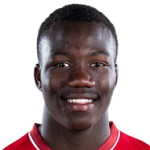

The Socceroos forward’s response to Pauline Hanson has reopened a debate that football has been living for years: who gets to represent Australia, and on whose terms?
A political claim, answered personally Nestory Irankunda did not set out to become the latest participant in Australia’s argument over multiculturalism. On Wednesday, August 19, the Socceroos forward said Pauline Hanson’s claim that the national team represented a “monocultural” Australia had made “a lot of us boys angry”. He also described feeling emotional, particularly because young players from migrant and refugee backgrounds look to the team as evidence that they belong. (theguardian.com)
That response matters because Irankunda is not an abstract example in this debate. Born in a Tanzanian refugee camp to Burundian parents and raised in Adelaide, he scored Australia’s opening goal of the 2026 World Cup on his tournament debut. His story is both personal and public: a family’s migration history, an Adelaide football education and a place at the centre of the national team’s biggest stage. (theguardian.com)
Why the issue has returned now Hanson’s comments first became a football story in June, during the World Cup. After arguing that Australia should be “multiracial” but not “multicultural”, the One Nation leader said the Socceroos represented her vision of a monocultural country because they were united under one flag. The timing made the claim difficult to separate from the team actually on screen: Irankunda, Awer Mabil and Mohamed Touré were among the players whose backgrounds directly challenged the idea that national unity requires cultural sameness. (abc.net.au)
The team itself had already made the counterargument. During the tournament, players released a video embracing their migrant roots, while Jackson Irvine described the Socceroos as a reflection of modern Australia. Mabil later rejected Hanson’s suggestion as “bullshit”, and Irankunda’s comments this week show that the issue did not disappear when the World Cup ended. It remained a live question inside the dressing room, even as the players tried to focus on football. (theguardian.com)
The contradiction at the centre of football The contradiction is straightforward. Hanson used the Socceroos as an image of common purpose, but the team’s composition shows that common purpose does not depend on one ancestry, one religion or one inherited culture. The players are united by representing Australia; they are not made Australian by becoming culturally identical.
That distinction is especially important for Irankunda. His visibility has grown rapidly since his World Cup goal, but he has also spoken about the unease of seeing young Black Australians like himself become the face of the Socceroos. ABC reported before the tournament that Irankunda was still adjusting to that prominence, with six players of African descent included in Australia’s 26-man squad. The development is not merely symbolic: it changes which Australian children can imagine themselves in the gold shirt. (abc.net.au)
There is a danger, however, in presenting Irankunda only as a symbol of national progress. He is a footballer first: a 20-year-old attacker whose breakthrough World Cup performance brought technical quality, speed and confidence to Australia’s campaign. His background should not be used to flatten him into a political talking point. The significance lies in the fact that he can speak about identity on his own terms while continuing to be judged as an elite player.
Belonging is no longer a side conversation That is why this conversation has resurfaced around Irankunda rather than remaining a short-lived political controversy. Football has become one of the clearest public spaces in which Australia’s changing identity is visible. The national team’s migrant histories are not a promotional add-on; they are part of how the team has been built and how its players understand their responsibility to supporters.
Irankunda said he did not usually want to enter political controversy and was not seeking a confrontation with Hanson. But his willingness to explain the effect of her words gives the debate a sharper centre. Representation is not only about who appears in a squad photo. It is also about whether those players are allowed to define Australian belonging themselves, rather than being claimed by politicians whose ideas may be fundamentally opposed to the diversity that produced the team.
For OzBallers, the broader trend is clear but should be stated carefully. The Socceroos are not proof that every question about racism, access or inclusion has been solved. They are proof that Australian football’s identity has changed — and that the people embodying that change are increasingly prepared to say what it means. Irankunda’s answer has reopened the argument because it came from inside the team, in the voice of a player who knows exactly what is at stake.
Sources Nestory Irankunda says Pauline Hanson’s Socceroos monocultural claim made ‘us boys angry’ | Australia national football team – Socceroos | The Guardian Pauline Hanson says her vision of 'monoculture' is like the Socceroos - ABC News Nestory Irankunda the face of the Socceroos at FIFA World Cup 2026 - ABC News Nestory Irankunda says Pauline Hanson’s Socceroos monocultural claim made ‘us boys angry’ Pauline Hanson says her vision of ‘monoculture’ is like the Socceroos Hanson’s ‘monoculture’ own goal should have been a free kick for Taylor Nestory Irankunda the face of the Socceroos at FIFA World Cup 2026 Socceroos’ African heritage offers timely reminder of Australia’s diversity