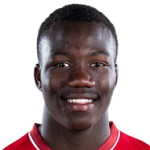
Nestory Irankunda
Football Australia

Nestory Irankunda

Sporting CPAttacker
Height
5 ft 9 in · 175 cm
Weight
74 kg · 163 lb
Age
20
Born
9 Feb 2006
Birthplace
Kigoma
Coverage

Nestory in the news

All news
Nestory Irankunda’s Sporting cameo turns raw speed into a first-team proposition FOOTBALL SUBJECT

Nestory Irankunda’s Sporting cameo turns raw speed into a first-team proposition

Three created chances in 22 minutes did not deliver a goal or assist, but Nestory Irankunda’s Sporting CP debut showed why Rui Borges believes the Australian can become an important attacking weapon in Lisbon.

A cameo with real bite

Nestory Irankunda did not need long to make himself felt at Alvalade. Introduced during Sporting CP’s 3-1 Primeira Liga victory over FC Alverca on Saturday, August 22, the Australian winger had only 22 minutes to announce himself — and still managed to leave the game with three chances created.

That output captured the appeal of the move. Irankunda was not simply brought on to protect a lead or add fresh legs to a settled performance. Sporting used him as a direct attacking threat against an Alverca defence that was beginning to leave space behind. He responded with the explosive running and aggressive ball-carrying that have become central to his reputation.

According to Fox Sports Australia’s match breakdown, Irankunda recorded 19 touches, 11 carries, won all three of his ground duels and drew two fouls. His most dangerous moment arrived in stoppage time, when he burst into space and cut the ball back across goal, presenting Issa Doumbia with a strong opportunity that went unfinished. (foxsports.com.au)

Borges sees a different tool

The most significant part of the evening may have been the reason Irankunda was selected. Rui Borges said Alverca’s defensive shape offered the Australian the type of game in which his pace could hurt opponents, particularly compared with Jesse Derry’s profile.

“The FC Alverca was more exposed and Nestory Irankunda is more about depth than Jesse Derry, and that was the reason,” Borges said after the match. He added that Irankunda had “very good characteristics” which Sporting liked “immensely”, before projecting that the winger would be “quite important” for the team in the future. (sporting.pt)

That is more revealing than generic debut praise. Borges was identifying a specific tactical function: Irankunda as the runner who stretches a back line, attacks the channel and changes the geometry of a match. Sporting’s attack can become more vertical with him on the pitch, especially when opponents push their full-backs higher or leave their centre-backs defending large spaces.

The next challenge is repeatability

One lively cameo does not make Irankunda a first-choice starter, particularly at a club where the attacking competition is substantial. Sporting’s squad includes established options such as Geny Catamo, Pedro Gonçalves, Rodrigo Zalazar and Luís Guilherme, while Borges has been clear that the club’s new-look team is still learning how its different profiles fit together. (sporting.pt)

That context makes the debut useful rather than definitive. Irankunda’s first task is not to reproduce three created chances every week; it is to show that he can offer the same threat against different defensive problems. Can he contribute when Sporting face a compact block? Can he maintain his defensive responsibilities when the team loses the ball? Can his decision-making keep pace with the speed of his acceleration?

Those are the demands that separate a dangerous substitute from a reliable first-team attacker. The early signs are encouraging because his cameo was not built solely on one spectacular run. He carried the ball repeatedly, competed physically and created danger in several phases of the appearance.

A measured step after the World Cup

Irankunda arrived in Lisbon with considerable momentum. Sporting completed his move from Watford on a contract running until 2031, with an €80 million release clause, after his Championship campaign and a breakthrough World Cup with Australia. The club’s own announcement described him as a winger capable of playing across the attack, while Irankunda presented himself as powerful, fast and able to score or provide assists. (sporting.pt)

The Alverca cameo offered the first practical test of those claims in Sporting colours. It also suggested that his transition will be managed through clearly defined opportunities rather than expectation alone. Borges did not ask Irankunda to control the match; he asked him to attack the space. The Australian did exactly that.

Sporting’s next league fixture is away to Rio Ave on Friday, August 28. Whether Irankunda starts or again arrives from the bench, the selection question has already shifted. He is no longer merely the exciting World Cup recruit waiting for his chance. He has shown Borges a specific way he can change games — and now he must make that weapon impossible to leave unused.

SourcesFootball 2026: Nestory Irankunda creates three chances in 22 minutes on Sporting CP debut, Patrick Beach makes game-saving stop, Paul Izzo opens up on future at Randers, latest newsRui Borges: "Jogo consistente e equilibrado" | Site oficial do Sporting Clube de PortugalNestory Irankunda signs through to 2031 | Official website of Sporting Clube de Portugal
Read article
Nestory Irankunda’s answer exposes the fault line in Australia’s football identity FOOTBALL SUBJECT

Nestory Irankunda’s answer exposes the fault line in Australia’s football identity

The Socceroos forward’s response to Pauline Hanson has reopened a debate that football has been living for years: who gets to represent Australia, and on whose terms?

A political claim, answered personally

Nestory Irankunda did not set out to become the latest participant in Australia’s argument over multiculturalism. On Wednesday, August 19, the Socceroos forward said Pauline Hanson’s claim that the national team represented a “monocultural” Australia had made “a lot of us boys angry”. He also described feeling emotional, particularly because young players from migrant and refugee backgrounds look to the team as evidence that they belong. (theguardian.com)

That response matters because Irankunda is not an abstract example in this debate. Born in a Tanzanian refugee camp to Burundian parents and raised in Adelaide, he scored Australia’s opening goal of the 2026 World Cup on his tournament debut. His story is both personal and public: a family’s migration history, an Adelaide football education and a place at the centre of the national team’s biggest stage. (theguardian.com)

Why the issue has returned now

Hanson’s comments first became a football story in June, during the World Cup. After arguing that Australia should be “multiracial” but not “multicultural”, the One Nation leader said the Socceroos represented her vision of a monocultural country because they were united under one flag. The timing made the claim difficult to separate from the team actually on screen: Irankunda, Awer Mabil and Mohamed Touré were among the players whose backgrounds directly challenged the idea that national unity requires cultural sameness. (abc.net.au)

The team itself had already made the counterargument. During the tournament, players released a video embracing their migrant roots, while Jackson Irvine described the Socceroos as a reflection of modern Australia. Mabil later rejected Hanson’s suggestion as “bullshit”, and Irankunda’s comments this week show that the issue did not disappear when the World Cup ended. It remained a live question inside the dressing room, even as the players tried to focus on football. (theguardian.com)

The contradiction at the centre of football

The contradiction is straightforward. Hanson used the Socceroos as an image of common purpose, but the team’s composition shows that common purpose does not depend on one ancestry, one religion or one inherited culture. The players are united by representing Australia; they are not made Australian by becoming culturally identical.

That distinction is especially important for Irankunda. His visibility has grown rapidly since his World Cup goal, but he has also spoken about the unease of seeing young Black Australians like himself become the face of the Socceroos. ABC reported before the tournament that Irankunda was still adjusting to that prominence, with six players of African descent included in Australia’s 26-man squad. The development is not merely symbolic: it changes which Australian children can imagine themselves in the gold shirt. (abc.net.au)

There is a danger, however, in presenting Irankunda only as a symbol of national progress. He is a footballer first: a 20-year-old attacker whose breakthrough World Cup performance brought technical quality, speed and confidence to Australia’s campaign. His background should not be used to flatten him into a political talking point. The significance lies in the fact that he can speak about identity on his own terms while continuing to be judged as an elite player.

Belonging is no longer a side conversation

That is why this conversation has resurfaced around Irankunda rather than remaining a short-lived political controversy. Football has become one of the clearest public spaces in which Australia’s changing identity is visible. The national team’s migrant histories are not a promotional add-on; they are part of how the team has been built and how its players understand their responsibility to supporters.

Irankunda said he did not usually want to enter political controversy and was not seeking a confrontation with Hanson. But his willingness to explain the effect of her words gives the debate a sharper centre. Representation is not only about who appears in a squad photo. It is also about whether those players are allowed to define Australian belonging themselves, rather than being claimed by politicians whose ideas may be fundamentally opposed to the diversity that produced the team.

For OzBallers, the broader trend is clear but should be stated carefully. The Socceroos are not proof that every question about racism, access or inclusion has been solved. They are proof that Australian football’s identity has changed — and that the people embodying that change are increasingly prepared to say what it means. Irankunda’s answer has reopened the argument because it came from inside the team, in the voice of a player who knows exactly what is at stake.

SourcesNestory Irankunda says Pauline Hanson’s Socceroos monocultural claim made ‘us boys angry’ | Australia national football team – Socceroos | The GuardianPauline Hanson says her vision of 'monoculture' is like the Socceroos - ABC NewsNestory Irankunda the face of the Socceroos at FIFA World Cup 2026 - ABC NewsNestory Irankunda says Pauline Hanson’s Socceroos monocultural claim made ‘us boys angry’Pauline Hanson says her vision of ‘monoculture’ is like the SocceroosHanson’s ‘monoculture’ own goal should have been a free kick for TaylorNestory Irankunda the face of the Socceroos at FIFA World Cup 2026Socceroos’ African heritage offers timely reminder of Australia’s diversity
Read article
Profile

About Nestory

Australian F Nestory Irankunda competing for Watford in football.

Born in Kigoma, Tanzania, to a Burundian family, Nestory Irankunda grew up in Adelaide, South Australia. He developed through Adelaide-based football, including Adelaide Croatia Raiders and Adelaide United’s youth pathway, before signing a scholarship contract with Adelaide United in September 2021 at age 15. Irankunda is an explosive attacker capable of operating as a winger or forward. His game is built around acceleration, direct running, one-on-one ability and powerful finishing, with set-piece delivery also a notable part of his attacking repertoire. He broke into Adelaide United’s senior side during the 2022–23 period and quickly became one of the A-League Men’s most prominent young players. His performances earned a transfer to Bayern Munich, where he trained with the first team and played for Bayern Munich II. He later gained senior European experience with Grasshopper Club Zürich before joining Watford on a long-term permanent deal in July 2025. Internationally, he debuted for Australia against Bangladesh on 6 June 2024 and scored his first senior international goal against Palestine five days later. By 2026, he had become part of Australia’s World Cup squad and scored in the Socceroos’ opening FIFA World Cup 2026 match against Türkiye.

Key stats & awards

The Socceroos profile lists Irankunda with 14 senior appearances and five goals for Australia as of the profile’s latest update. He scored on his second senior international appearance against Palestine in June 2024. His A-League breakthrough included becoming the second-youngest scorer in competition history and, in March 2024, the youngest A-League Men hat-trick scorer at 18 years and 49 days. FIFA named him Player of the Tournament for the Australia round of the FIFA Series 2026 after he scored a brace against Curaçao. He also scored Australia’s opening goal of the 2026 FIFA World Cup against Türkiye.

Famous moments

His defining early moment was the 29 March 2024 hat-trick in Adelaide United’s 4–1 win over Western United. The performance made him the youngest hat-trick scorer in A-League Men history at 18 years and 49 days. His international breakthrough followed in June 2024, when he scored against Palestine in a FIFA World Cup qualifier. His most prominent international moment to date came on 13 June 2026, when he scored Australia’s opening goal in a 2–0 FIFA World Cup victory over Türkiye. FIFA reported that the goal made him Australia’s youngest FIFA World Cup goalscorer.